Languages
Friday, November 13, 2026



News and Views from the Global South

Ecobreves – GUATEMALA:: Reforestation of Two River Basins
Some 4,000 hectares of Los Esclavos and María Linda river basins, in central and southern Guatemala, will be reforested by the ministries of Agriculture and of Energy and MinesEcobreves – HONDURAS: Illness Blamed on US Mining Firm
Residents of Valle de Siria, in the central department of Francisco Morazán, suffer skin diseases and respiratory illnesses, which they blame on the mining activities of the U.S.-based transnational Entre Mares.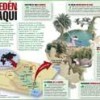
Eden in the Line of Fire
Ninety-three percent of the wetlands have disappeared in Mesopotamia, the great oasis of the Middle East. Now, war threatens to destroy what little remains.Ecobreves – BRAZIL: Dam Dilemma Resurfaces
Brazil faces the dilemma of whether to build big hydroelectric dams, weighing the need to keep up with the demand for greater electricity generating capacity -- to avoid a repeat of the 2001 energy crisis -- and the fears of environmental and social harm.Squid under Siege
Foreign ships clandestinely fish for this profitable species in Argentine waters.Ecobreves – HONDURAS: Fires Devastate Forest
- Honduras lost around 2,500 hectares of pine forest in February to fires, report officials from the government's Honduran Corporation for Forest Development.“Will the U.S. clean up the environment?”
There is no such thing as a clean bomb, points out Guatemalan Nobel Peace laureate Rigoberta Menchú in a dialogue with Tierramérica. In the "war madness" that has been unleashed in Iraq not even international environmental accords are enough because "the trend seems to be non-compliance with treaties," she says.Ecobreves – NICARAGUA: New Nature Reserves Proposed
The scientific community is considering the addition of Garganta de Yukusama and San Luis to the list of Nicaragua's protected areas and whether it should back a bill before the legislature to expand the list of such areas to 78.Ecobreves – GUATEMALA: Marshes in Danger
A 13,500-hectare marshland in Guatemala, the country's largest, is threatened by increased depredation and contamination, warns a new scientific study.Ecobreves – MEXICO: Building a Bike Path
The capital's government has begun work on a 90-km bikeway, demanded for more than a decade by cycling enthusiasts, but who now complain that the project does not go far enough.Ecobreves – PERU: Reforestation Contest
The firms that present the best plans for reforestation in Peru, in a contest organized by the institution Fondebosque, will receive up to 100,000 dollars in financing to make their project a reality.Radioactive 'Silver Bullets'
There is alarm about the environmental and health effects of depleted uranium, an important part of the munitions used in the U.S.-led war campaign against Iraq.Ecobreves – ARGENTINA: Proposal to Create Wetlands Corridor
Proteger, a non-governmental environmental organization, has proposed the creation in Argentina of a natural protected area for wetlands extending more than 800 km. The project would preserve freshwater reserves in an area covering 1.5 million hectares.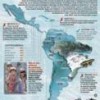
Porto Alegre and Island in Clean Water
Except for this southern Brazilian city, most Latin American cities fail to meet the needs of their millions of residents for clean water and sanitation services, despite possessing water resources. The problem lies in distribution and quality.Ecobreves – COLOMBIA: Productive Reforestation Begins
The state-run Rio Magdalena Corporation (Cormagdalena) this month began efforts in northern Colombia for productive reforestation over 20,000 hectares, to be carried out over five years at a cost of five million dollars.Hunger in a Wealthy Nation
"This is not just a war on Iraq. This is a war on the poor people in America," says a food security and sustainable development specialist, pointing to the 30 million people who go hungry in the world's richest country.Ecobreves – BRAZIL: Limited Biodiversity Knowledge
Brazil is aware of just 10 percent of its biodiversity, very little if one considers that this giant country is home to an estimated two million species of plants and animal, representing 14 percent of the world total.Ecobreves – CUBA: Havana River Clean-Up
Cuba plans to build three water treatment plants and 255 km of sewage network this year to protect the Almendares River, the principal waterway in the island's capital.Ecobreves – VENEZUELA: To the Rescue of the Orinoco Caiman
Venezuela has adopted the endangered Orinoco caiman (Crocodylus intermedius) as the symbol of the National Games to be held in December in the central city of San Carlos, the environment ministry's regional director, Nerio Escobar, told Tierramérica.Water is not Merchandise
The profit drive of transnational soft drink companies keen on dictating the global agenda for water resources must be curbed, says Maude Barlow, a Canadian activist and author of the best-seller ‘Blue Gold’.Ecobreves – THE AMERICAS: Ag Experts Meet in Costa Rica
Agriculture specialists from Latin America and the United States are gathering in the Costa Rican capital Mar 19-21 to discuss financial mechanisms and strategies to help small farmers prosper, but without harming the environment.« Previous Page — Next Page »


Tierramérica is the main communications platform on sustainable development and the environment in Latin America and the Caribbean. It is produced by IPS Noticias, the agency’s Spanish-language service, which created it jointly with the United Nations Development Programme (UNDP) and the United Nations Environment Programme (UNEP), with later support from the World Bank. The weekly editions of Tierramérica are published in Spanish, Portuguese and English and are picked up and printed by dozens of media outlets in the region. Follow us on Facebook and Twitter.

From the Frontline of Environment
Supported by

Tierramérica en Español

Terramérica em Portuguese

