Languages
Saturday, September 26, 2026



News and Views from the Global South

Ecobreves – BRAZIL: Banana Peels Can Filter Heavy Metals
Water contaminated with potentially toxic metals can be purified using banana peels as a filter, according to a study from the São Paulo State University (UNESP) in Botucatú, 230 kilometres from the city of São Paulo.Ecobreves – HONDURAS: Flood Risk Targeted in 10 Vulnerable Municipalities
The Honduran government has begun infrastructure work to reduce the risk of overflowing rivers and flooding in 10 highly vulnerable municipalities.Ecobreves – MEXICO: Birdwatching Tourism Potential Untapped
Mexico is failing to take advantage of the significant potential of ecotourism geared to birdwatching, says a report released by two environmental organisations on Mar. 15.
Water Management Transcends “Public or Private” Debate
A fund financed with public and private resources seeks to create a participatory and transparent water management model in Quito.
Cochabamba Still Thirsting for Water
In the Bolivian city of Cochabamba, scene of the 2000 “Water War”, both privatisation and public administration have failed to adequately provide citizens with this vital resource.
LATIN AMERICA: Brick-Making Industry Confronts Its Climate Impacts
Wearing rolled up trousers and a spattered shirt, Carlos Frías mixes mud, water and manure to prepare a row of red bricks.
LIBYA: Satellite Technology to Help the Displaced
Analysis based on satellite images and maps is helping to identify the flows of people fleeing the political violence in Libya to neighbouring countries.
Satellite Technology to Help the Displaced in Libya
Satellite images are being utilized to determine the scope of the displaced persons crisis in Libya.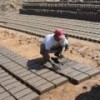
The Brick-Making Industry Confronts Its Climate Impacts
Artisanal brick-makers from seven Latin American countries are beginning to test ways to reduce the industry's health and climate impacts.Ecobreves – HONDURAS: A Boost for Community Gardens
The Honduran capital's city government is setting up organic community gardens to improve food security in low-income neighborhoods, given the forecasts for local food shortages resulting from climate change and deforestation.Ecobreves – BRAZIL: Rain Shortages in the North to Worsen in 21st Century
By 2100, droughts will be as much as 40 percent more severe in the Brazilian Amazon and Northeast regions, and rainfall 30 percent more intense in the southeast of South America, including the Paraná-La Plata Basin, predicts a report from the National Institute for Climate Change Science and Technology (INCT).Ecobreves – CUBA: Drought Threatens the West
The drought hitting the westernmost region of Cuba will last through the month of March, predicts the Cuban Meteorology Institute's climate center.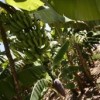
Brazilian Agriculture Can Help Combat Hunger and Inflation
The current rise in agricultural prices, which now overshadows the increase seen in 2008, highlights the contribution that Brazil could make towards curbing the growing hunger and inflation that are threatening the world once again.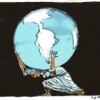
OP-ED: Women in Agriculture – Gender Gaps Are Holding Back Development
On the occasion of the 100th celebration of International Women’s Day, the Food and Agriculture Organisation (FAO) presented a surprising and alarming assessment of the situation of rural women, based on a comprehensive analysis of men and women farmers around the world.
Q&A: “The Trial Against Chevron Is Totally Corrupt”
Chevron, the second largest U.S. oil company, believes that to overturn the verdict ordering it to pay 9.5 billion dollars in reparations for environmental and public health damages in Ecuador's Amazon jungle, the best defence is a good offence.
“The Trial Against Chevron Is Totally Corrupt”
The court ruling ordering Chevron to pay Ecuadorian communities damages arising from its operations is the "product of fraud," James Craig, a representative of the oil company, says.
Women in Agriculture: Gender Gaps Are Holding Back Development
A more equitable distribution of agricultural assets, inputs, and services between men and women could increase overall food production in the developing world by 2.5 to 4 percent.Ecobreves – MEXICO: Solidarity Economy Legislation Under Study
Draft legislation to foster the development of a solidarity economy is under study in two Mexican states and could promote more environmentally friendly food production, its supporters say.Ecobreves – BRAZIL: Cheaper and Cleaner Desalination
An engineer from Cape Verde working at the University of São Paulo Polytechnic School in Brazil has developed a system to transform saltwater into drinking water that is both cheaper than current methods and less harmful for the environment.Ecobreves – ARGENTINA: Regulations for Glacier Protection Law Criticised
The regulations adopted to enforce Argentina’s new glacier protection law do not guarantee the urgently needed protection of sensitive areas where mining activities are already taking place, warn environmental activists.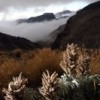
Biodiversity Panel Learns from IPCC Experience
After five years of preparation the international community is expected to launch the Intergovernmental Platform on Biodiversity and Ecosystem Services this year. For some of its proponents, even the decisions of the World Trade Organisation should be subject to its analysis.« Previous Page — Next Page »


Tierramérica is the main communications platform on sustainable development and the environment in Latin America and the Caribbean. It is produced by IPS Noticias, the agency’s Spanish-language service, which created it jointly with the United Nations Development Programme (UNDP) and the United Nations Environment Programme (UNEP), with later support from the World Bank. The weekly editions of Tierramérica are published in Spanish, Portuguese and English and are picked up and printed by dozens of media outlets in the region. Follow us on Facebook and Twitter.

From the Frontline of Environment
Supported by

Tierramérica en Español

Terramérica em Portuguese

