Languages
Saturday, September 26, 2026



News and Views from the Global South

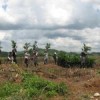
Agro-Fuel Debate Takes Root in Central America
The debate is growing in Central America over the scope of industrial crops in forested areas or subsistence farming zones, and their impact on the source of food for the rural population.
Q&A: “The Verdict Against Chevron Is Enforceable, Because It Is Just”
On Feb. 14, a provincial Ecuadorean court issued the harshest environmental verdict in history against a major oil company, the U.S.-based Chevron. But is there any chance it will be carried out?
“The Verdict Against Chevron Is Enforceable, Because It Is Just”
"Many people said that an Ecuadorean court would never rule against a big transnational corporation," Juan Pablo Sáenz told Tierramérica. He is the youngest on the Ecuadorean prosecuting team against Chevron in the environmental case of the century.Ecobreves – BRAZIL: From Coffee Dregs to Biofuel
Coffee dregs can be used to produce biodiesel. That is the result of an experiment of the Polytechnic School's chemical engineering department at the University of São Paulo.Ecobreves – MEXICO: The Monarch Returns
The population of the monarch butterfly (Danaus plexippus) and the forest area it occupies in Mexico grew last year in comparison to 2009, according to reports from various organizations.Ecobreves – HONDURAS: Greater Local Autonomy for Environmental Management
Honduras will promote the autonomy of local governments in environmental management, putting administrative tasks in their hands, like authorizing minor construction permits and charging specific taxes.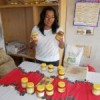
MEXICO: Peanuts in Times of Food Crisis
Yandi Condado and a small group of farmers in the southern Mexican state of Puebla decided a few years ago to process their peanuts as an economic boost -- and to defend this traditional crop against the advances of more profitable options.
CLIMATE CHANGE: In Europe, Pollution Is a Masculine Noun
Many aspects of gender inequality are well known and well documented. But there seems to be little awareness that male behaviour leads to greater emissions of climate-changing gases.
Pollution Is a Masculine Noun
Poor eating habits and inefficient use of transportation mean men are responsible for more emissions of climate-changing carbon dioxide than women are.
Peanuts in Times of Food Crisis
A rural cooperative in southern Mexico aims to revive the peanut, a crop whose nutritional value provides a weapon against hunger.Ecobreves – BRAZIL: Falling Short in Preserving Atlantic Biome
Just two of the 51 conservation objectives for Brazil's Mata Atlântica forest have been met, says a study by the Brazilian chapter of Word Wildlife Fund (WWF).Ecobreves – HONDURAS: UNESCO Urges More Protection for the Río Plátano Biosphere
A technical team from UNESCO (United Nations Educational, Scientific and Cultural Organization) sent a recommendation to the Honduran government to improve protection of the Río Plátano Biosphere, which extends through three of the country's 18 departments.Ecobreves – VENEZUELA: Freshwater Dolphins Victims of Polluted Water
Two of the five freshwater dolphins, known here as "toninas" (Inia geoffrensis), in the aquarium of Valencia, west of Caracas, died this month as a result of illnesses caused by poor water quality, said Adelio Valente, of the Friends of the Toninas Movement.
Water Evaporates in Peru’s For-Export Crops
As freshwater disappears from the super-populated Peruvian coast, the most water-intensive crops are expanding unabated as highly profitable exports. Observers warn about the harm this is causing and demand greater responsibility from the government and all involved.
Tourism Is Poisoning the Mexican Caribbean
The booming tourist industry along Mexico's Caribbean coast, particularly in the area of Cancún and the "Riviera Maya," is polluting the world's largest underwater cave system and harming the world's second largest coral reef, a new study has found.Ecobreves – MEXICO: A Call for Transparency in Forest Projects
Environmental groups are demanding transparency in the drafting and execution of Mexico's strategy for the United Nations-sponsored REDD+ (Reducing Emissions from Deforestation and Forest Degradation).Ecobreves – HONDURAS: Clean Energy from Garbage
The municipal government of Puerto Cortés, on the northern Honduran coast, aims to become a "green municipality" through a nine-million-dollar project that would recycle garbage to generate 2.5 megawatts of electricity in the area.Ecobreves – ARGENTINA: Camera-Monitored Fishing Will Have to Wait
Environmentalists are criticizing the extension that the Argentine government has granted before the launch of an on-board video monitoring system for fishing in the South Atlantic.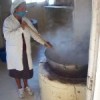
MEXICO: Agave Sweetens Economic Prospects of Indigenous Women
With a wooden spoon in hand, Hortencia Rómulo briskly stirs the amber-coloured liquid cooking in an enormous steel pot.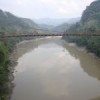
China and Brazil Inundate Latin America with Dams
The growing presence of Chinese and Brazilian capital in Latin America's energy sector is facilitating the construction of hydroelectric complexes, but is also the fuelling nationalist stances that are adding to the environmental criticisms of those major projects.
Agave Sweetens Economic Prospects of Indigenous Women
The production of goods from the traditional agave crops through cooperatives has become the leading source of income for indigenous Otomí communities in central Mexico.« Previous Page — Next Page »


Tierramérica is the main communications platform on sustainable development and the environment in Latin America and the Caribbean. It is produced by IPS Noticias, the agency’s Spanish-language service, which created it jointly with the United Nations Development Programme (UNDP) and the United Nations Environment Programme (UNEP), with later support from the World Bank. The weekly editions of Tierramérica are published in Spanish, Portuguese and English and are picked up and printed by dozens of media outlets in the region. Follow us on Facebook and Twitter.

From the Frontline of Environment
Supported by

Tierramérica en Español

Terramérica em Portuguese

