Languages
Monday, November 9, 2026



News and Views from the Global South
Asia-Pacific

Time Out of Joint
The obsession with women is evident in Friday sermons across the country, in the Council of Islamic Ideology’s fixation on regulating women’s bodies, in society’s vigilance of women and in the preoccupation with women’s dressing, holding it responsible for earthquakes and expediting the Day of Judgement.
Women “Water Friends” Script a Success Story
Prema Bai, 58, bends her head and pushes hard her wheelchair on the village road. In the early afternoon, the village of Mamna appears almost deserted although it is home to 742 families and is located in Uttar Pradesh - India’s largest and most populated state. Thanks to a severe drought, every man and woman under 50 has fled Mamna in recent weeks, leaving behind the elderly and women with very young children. “They thought we were like cattle, a burden in this hard time because we only eat but yield no returns,” says Bai whose two sons and their wives also migrated to Agra -- a city 255 km away -- to work in a brick kiln.
Linking Rural Development with SDGs
The 2030 agenda for sustainable development undoubtedly proposes an exciting vision, and promises a future of peace and prosperity; but these goals will not be easy to achieve unless we develop effective global partnerships and learn from the outcomes of Millennium Development Goals (MDG). We need to investigate both the successes and failures of MDGs, set our focus on result-oriented development, and encourage government and their development partners to think about the linkages between plan, policy, delivery and monitoring in resource mobilisation and management.Toys of Violence
In this age of advanced technology, where violent forms of entertainment thrive on the screen and in cyberspace, parenting becomes a challenging task, as children want to emulate what they see. The adoption of a resolution last year by the Sindh Assembly demanding a ban on the manufacturing, import and sale of toy guns often used in actual hold-ups was a step in the right direction.Exorcising Stalin
In one of his books, Mohamed Heikal, the Egyptian journalist who died last month at the age of 92, records an extraordinary encounter in 1964 between Gamal Abdel Nasser and Nikita Khrushchev.
Schools are in for Summer
“We are extremely jubilant over the rebuilding of our school that the Taliban destroyed it in 2013, due to which we used to sit without a roof,” Mujahida Bibi, a student of 8th grade in Government Girls Middle School North Waziristan Agency, told IPS.A Different Honour
Sharmeen Obaid Chinoy`s record second win at the Oscars for her short document ary A Girl in the River: The Price of Forgiveness is proof that lightning can actually strike twice. Hardly four years ago, Chinoy was standing at the same stage in Los Angeles, accepting an Oscar for her documentary Saving Face, about Pakistani victims of acid attacks. Chinoy`s current Oscar winner examines a no less painful subject, honour killings in Pakistan.
Asian Scientists Grapple with How to Foster Crop Pollination
Pollinators, whose role is essential in a third of what the world eats, are at center stage after a landmark new United Nations report warned that many of the 20,000 species are threatened by human behaviour.Political Violence, “Rational Ignorance”, and “Political Illiteracy” in Bangladesh
There was yet another shocking headline in this daily (February 22): “Priest killed, devotee shot”. Some “unknown” assailants raided a Hindu temple, slit the throat of a priest, and shot a devotee at Panchagarh in northern Bangladesh. This wasn't a random violent crime. Of late, there is nothing exceptional about premeditated attacks on minority communities or on people holding divergent views on religion and politics across the country.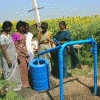
Groundwater Governance in Andhra Pradesh
India is the largest user of ground water in the world. But reliance of this overexploited resource has reached its limits in many parts of the country. Nowhere is this more evident than in the drought-prone districts of Rayalseema, uplands of Prakasam, Krishna, East-West Godavari, parts of Nellore, Vizianagaram and Srikakulam in the state of Andhra Pradesh (AP). Forty per cent of the state’s irrigation needs are met through groundwater. In the drought-prone Rayalseema region – which comprises Chittoor, Anantapur, Kurnool, Prakasam and Kadapa districts -- dependence on groundwater for irrigation is particularly high. The water crisis is also most severe in this region.Of the Same Ilk
IT has been almost two weeks since the beginning of a protest movement of students, teachers and the wider democratic community in and around Delhi`s famed Jawaharlal Nehru University (JNU) that represents arguably the biggest challenge that Narendra Modi`s BJP government has faced since coming to power. Perhaps unsurprisingly, we in this country have scarcely paid attention to the whole af fair, even though it tells us much about India, its politics, and, indeed, just how similar our two countries are.
Free Speech and Free Media: Help or Hindrance to Development? / Part 2
The second part: the relevance of free speech and free media to development. Freedom is the central object of development, says Amartya Sen. He argues that development cannot simply be seen as GNP or industrialization or social modernization.
Migrant Crisis: Migrant Offshore Aid Station to Begin Mission in Andaman Sea
Global search and rescue charity, Migrant Offshore Aid Station (MOAS), will begin a new mission in the Andaman Sea and adjacent areas on March 3 to track, monitor and, if needed, provide search and rescue of refugees or migrants.
Faith Leaders Join the Fight against Child Marriage
Anger is an inner demon that one must have a strong grip on, believes Virayya Shastri - head priest of Maddi Madugu Anjaneya Swamy temple in southern India’s Mahbubnagar district. But mention ‘child marriage’ and the priest finds himself struggling to stay calm. ““Early marriage ruins a girl’s body and scars her mind. There is no way you can call yourself a believer when you support such a thing,” says the priest turned anti-child marriage advocate.Dealing with Security Threats
The Lahore Literary Festival has ended in a blaze of success. The uncertainty about its being held at all and the doubts about the people`s capacity to defy fear and much else made the event all the more enjoyable. But the issues regarding the ways of dealing with security threats that it gave rise to still need to be seriously addressed.
Free Speech and Free Media: Help or Hindrance to Development? / Part 1
The greatness of a newspaper is not measured by the size of its readership but by its influence and credibility. That is why the New York Times or the Guardian are better known and more respected than the tabloids in their respective countries with ten times their circulation. Like those broadsheets, The Daily Star too strives for quality over circulation, influence over income and credibility over sensationalism.370 Died Last Year, Says UN
Some 370 people, believed to be Rohingyas of Myanmar and Bangladeshis, are estimated to have died in the Bay of Bengal and the Andaman Sea in 2015, says the UN Refugee Agency. “The deaths were caused not from drowning but from mistreatment and disease brought about by smugglers who abused and in many cases killed passengers with impunity,” it said in a statement on UN News Centre on Tuesday.The Law of Forgiveness
More than 1,000 women are killed in the name of honourin this country every year, according to official figures. But the actual numbers are believed to be much higher. Saba Qaiser, 19, would have been one of them had she not miraculously survived drowning in a river after having been shot in the head. Unsurprisingly, those who tried to finish her off were none other than her own relatives her father and uncle as happens in most such cases of `honour`crime.
Hopes and `Honour` Killings
Prime Minister Nawaz Sharif recently watched A Girl in the River: The Price of Forgiveness, Sharmeen Obald Chinoy`s Oscar-nominated documentary about `honour` killings. In a statement following the screening, he told Ms Chinoy and his audience that there is no `honour` in murder.
Fall in Commodity Prices Rings Alarm Bells in Papua New Guinea
Resource-rich Papua New Guinea (PNG) is seen as an economic powerhouse in the Pacific Islands with a state-led focus on resource extraction initially expected to drive one of the world’s highest growth rates of 15 per cent last year. But in the wake of falling commodity prices, GDP growth has plummeted from 8.5 per cent in 2014 to a forecasted 3 per cent this year. As the government faces a growing deficit between revenue and expenditure, exacerbated by high public debt, experts in the country believe greater efforts to diversify the economy are essential.Will We One Day Reunite as ‘Akhand Bharat’?
INDIA'S ruling BJP's General Secretary, Mr. Ram Madhav, recently said in an interview to Al Jazeera that the RSS, his core organisation, still believes that one day Bangladesh, India and Pakistan, “which have for historical reasons separated only 60 years ago, will again, through popular goodwill, come together and 'Akhand Bharat' will be created". The idea of Akhand Bharat is a dream of the RSS, and of the BJP, which is a right-wing party with close ideological and organisational links to the former, and of other Hindutvadi organisations and their adherents. I am not going to speak for Pakistan. But, whether future generations of Bangladeshis will reunite their country with India will depend fully on those generations that are probably yet to be born.« Previous Page — Next Page »





The Week with IPS

NEXT STOP - SDGs
Tracking global progress towards a sustainable world
Tracking global progress towards a sustainable world
