Languages
Monday, November 9, 2026



News and Views from the Global South
Asia-Pacific

Uneducated Women Entrepreneurs Defeat Poverty
Maryam Yousuf, 50, gently washes her hands under a common tap outside her house in Saida Kadal, a grassy middle-class locale encircled by the famous Dal Lake in Srinagar, Kashmir’s capital. She puts on a Pheran, the traditional long loose gown, and holding a large steel bucket walks towards a dimly-lit cowshed, made up of wooden shingles, in a corner of her home backyard. Nearby, children are playing cricket, flaunting wooden sticks as bats, and a flock of chicken cluck and nibble at left-over vegetables.
Evolving Nature of China’s South-South Cooperation
China’s strength in South-South Cooperation (SSC) lies in its carrying out big-ticket infrastructure projects in diverse developing countries. It is remarkable in terms of project scale, speed and cost-effectiveness and has been playing a positive role in promoting partner’s nation-building, economic development and social progress. However, the swift completion of China’s infrastructure projects also has its sets of problems like little or no paper-work leading to lack of transparency, oversight and post-project monitoring. The backlash against Chinese labourers employed by Chinese companies in developing countries has been routinely highlighted by the international media with allegations of skirmishes with the local population, corruption coupled with resource theft.
Radio rage in India
It is 8 am in Anugondanahalli village about 70 kms from India's IT hub of Bengaluru, capital of the southern Indian state of Karnataka. A group of farmers are huddled around a radio set sipping hot tea and tuned in to Sarathi Jhalak, a local community radio station (CRS) broadcasting on FM 90.4. On air is a programme about climate change that has everybody hooked. Experts are sharing simple tips on how farmers can pro-actively minimise the impact of erratic weather on their crops.
Women’s Empowerment in Bangladesh
On a gloomy weather in a hilly suburb in Tarabonia, three women keep themselves busy stitching clothes. The informal shop-cum tailoring outlet is the only one of its kind in the neighbourhood and so the shop has a good record of sales of apparels. Minu Bai Marma, a 27 year-old housewife who runs the rented shop, gives a smile and attends to her regular customers. Customers keep ordering for new dresses, especially before festivals and Minu and her husband earn a fairly good amount of profits to run the family.
The New Normal in Fata
A military operation by Pakistan’s army has been proving fatal for Taliban militants who held sway over vast swathes of the Federally Administered Tribal Areas (Fata) for over a decade. They crossed over the border from Afghanistan and took refuge in Fata after their government was toppled by US-led forces towards the end of 2001. After a few years, when they got a toe-hold in the region, they extended their wings to all seven districts of Fata. Not any more.
Kidneys Going Cheap in Poor Estate Community
One and half years ago, Johnson, a 20- something youth, hailing from Sri Lanka’s tea plantations, received an unusual request. The caller, someone Johnson knew casually, made an offer for his kidney. “It was for a half a million rupees (around US $3,500),” he said.
Family Planning in India is Still Deeply Sexist
The tragic death of 12 women after a state-run mass sterilisation campaign in the central Indian state of Chhattisgarh went horribly wrong in 2014 made global headlines. The episode saw about 80 women "herded like cattle" into makeshift camps without being properly examined before the laparoscopic tubectomies that snuffed out their lives. In another incident in 2013, police in the eastern Indian state of Bihar arrested three men after they performed a botched sterilisation surgery without anaesthesia on 53 women over two hours in a field.
Extremism Threatens Press Freedom
Pakistan continues to remain one of the most dangerous countries for journalists, where frequent attempts to restrict press freedom are commonplace and challenges to expanding media diversity and access to information abound.
TPP: Lessons from New Zealand
A new paper* on the implications of the Trans-Pacific Partnership (TPP) Agreement for New Zealand examines key economic issues likely to be impacted by this trade agreement. It is remarkable how little TPP brings to the table. NZ’s gross domestic product will grow by 47 per cent by 2030 without the TPP, or by 47.9 per cent with the TPP. Even that small benefit is an exaggeration, as the modelling makes dubious assumptions, and the real benefits will be even smaller. If the full costs are included, net economic benefits to the NZ economy are doubtful. The gains from tariff reductions are less than a quarter of the projected benefits according to official NZ government modelling. Although most of the projected benefits result from reducing non-tariff barriers (NTBs), the projections rely on inadequate and dubious information that does not even identify the NTBs that would be reduced by the TPP!
A Peaceful Decade but Pacific Islanders Warn Against Complacency
The Pacific Islands conjures pictures of swaying palm trees and unspoiled beaches. But, after civil wars and unrest since the 1980’s, experts in the region are clear that Pacific Islanders cannot afford to be complacent about the future, even after almost a decade of relative peace and stability. And preventing conflict goes beyond ensuring law and order.
Activists Accuse India of Violating UN Convention on Child Rights
Civil rights groups and child welfare activists have strongly protested against the enactment of a new Juvenile Justice Act by the Indian parliament, lowering the age of a legally defined juvenile for trial from 18 to 16- years old in heinous crimes cases.
TAIWAN: Polls Harken End of Nuclear Power
Taiwan may soon be the first nation in Asia to resolve to become a nuclear free nation after four decades of reliance on nuclear power.
India Needs to “Save its Daughters” Through Education and Gender Equality
Women constitute nearly half of the country's 1.25 billion people and gender equality -- whether in politics, economics, education or health -- is still a distant dream for most. This fact was driven home again sharply by the recently released United National Development Programme’s Human Development Report (HDR) 2015 which ranks India at a lowly 130 out of 155 countries in the Gender Inequality Index (GII). India trails behind most Asian countries, including lesser developed Bangladesh and Pakistan which rank 111 and 121 respectively, and fares not much ahead of war-ravaged Afghanistan at 152.
Credit Innovation has a Key Role in Bangladesh’s Climate Change Adaptation
Expected climate change makes improving agricultural practices even more important than many already suggest, according to a new study of Bangladesh, considered one of the most at-risk nations from rising temperatures.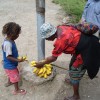
Malnutrition a Silent Emergency in Papua New Guinea
High up in the mountainous interior of Papua New Guinea (PNG), the most populous Pacific Island state of 7.3 million people, rural lives are marked by strenuous work toiling land in rugged terrain with low access to basic services.
UN Discovery of Secret Detention Centre Revives Nightmares
Details of a secret detention center, where serious human rights abuses took place, deep inside the sprawling Tricomalee Naval base in the east of Sri Lanka are slowly emerging.
Cancer, Not Clashes, the Number One Killer in Kashmir
In an isolated ward of one of Kashmir’s largest government-run hospitals, 54-year-old Ashraf Ali Khan is finding it hard to sleep properly. His 15-year-old son, Asif, is sitting on a bench near the bed staring at his ailing father.
Another Himalayan Blunder
South Asian integration remains a distant dream as some member countries like Nepal resent India’s big brotherly dominance in the region. They perceive that they have no stakes in India’s rise as an economic power. Ensuring unrestricted market access perhaps would have made a big difference in this regard. Their resentment has only deepened as this hasn’t happened. Instead they have registered growing trade deficits with India! The on-going travails of the Himalayan kingdom vis-a-vis India exemplify the problematic nature of integration in a region that accounts for 44 per cent of the world’s poor and one-fourth of its’ population.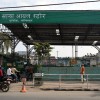
Earthquake Survivors Struggle Amid Fuel Shortages Due to Protests
At 40, Durga Rajak, co-owner of “Mailadai Hans ko Choila,” a popular eatery in Kathmandu, is learning to light a stove all over again. However, this time she is using diesel fuel instead of kerosene. She admits this is a risky job. “There is always the danger of a blast, so I must never pump the handle too fast or raise the flames too high,” she said.
Afghan Refugees’ Right To Stay in Pakistan May Expire
“We aren’t happy here but cannot go back to our country because the situation there was extremely bad,” Ghareeb Gul, Afghan refugees told IPS.
Beekeeping Helps Pakistan Farmers Cope with Crop Losses
Farmers in the rain-dependent district of Chakwal in Punjab province of Pakistan are finding relief in beekeeping as the groundnut crop suffers a blow from shifting rainfall patterns.« Previous Page — Next Page »





The Week with IPS

NEXT STOP - SDGs
Tracking global progress towards a sustainable world
Tracking global progress towards a sustainable world
