Languages
Saturday, September 26, 2026



News and Views from the Global South
Europe

‘Our Weak and Corrupt Institutions Acted Too Late to Address Manipulation That Destabilised Democracy’
CIVICUS discusses Romania’s presidential election with Anda Serban, Executive Director of Resource Center for Public Participation (CERE), a civil society organisation (CSO) that focuses on public participation and transparency in decision-making processes.

Hungary’s LGBTQI Amendment an Affront to Human Rights, Say Activists
A controversial amendment to Hungary’s constitution has left the country’s LGBTQI community both defiant and fearful, rights groups have said.
Lives at Risk After Some States Withdraw From Landmine Treaty
As a string of European states announce withdrawals from a global treaty banning antipersonnel landmines, campaigners are warning countless lives could be put at risk as decades of progress fighting the weapons come under threat.
‘The International Response Should Follow the Principle of ‘Nothing about Us, Without Us’’
CIVICUS speaks with Ukrainian gender rights activist Maryna Rudenko about the gendered impacts of the war in Ukraine and the importance of including women in peacebuilding efforts. Russia’s full-scale invasion of Ukraine has profoundly impacted on women and girls. Many have been displaced and are struggling with poverty and unemployment. Those who’ve stayed endure daily missile attacks, damaged infrastructure, lack of basic services and sexual violence from Russian forces if they live in occupied territories. Women activists, caregivers and journalists are particularly vulnerable. The international community must increase support to ensure justice for victims and women’s inclusion in peace efforts.
Europe Is Now the Fastest Warming Continent—Report
It is now official that the European continent is experiencing the fastest rate of global warming, according to a new scientific report released by Europe’s Copernicus Climate Change Service and the World Meteorological Organization (WMO). Last year record temperatures, heatwaves, and floods unleashed a massive toll on infrastructure, cities, economies, and people’s lives and livelihoods in the region.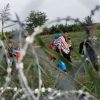
Migrant Smuggling: Europe Must Make a U-Turn
Europe must understand that the only reasonable and humane way to tackle migrant smuggling is to open regular routes for people to reach Europe in safety and dignity.
How to Agree an Armistice in Ukraine: Lessons from Korea
The armistice agreement that ended the Korean War in 1953 has been mentioned as a possible model for how to end the fighting in Ukraine. This makes sense. The Trump administration, however, seems to opt for a quick deal like the 1973 Paris agreement on Vietnam or the Minsk agreements of 2014–15, combining “ceasefires in place” with vain prospects of subsequently reaching a genuine peace agreement.

‘Student Protests Have Sparked Solidarity, Empathy and a Renewed Belief in Collective Action’
CIVICUS discusses recent protests in Serbia with Alma Mustajbašić, researcher at Civic Initiatives, a Serbian civil society organisation that advocates for democracy, human rights and citizen engagement.

Marley, Music, Morris, Life: A Photo Voyage in Paris
Reggae fans may be initially drawn just by the iconic image of Bob Marley on the Music + Life poster, but once inside this exhibition, they will find themselves immersed in a world of extraordinary photographs.
Ukrainians Stress That a Peace Agreement Must Include Justice
After three years of bloodshed, extraordinary courage and immense sacrifices in resisting Russia’s invasion, the people of Ukraine are in limbo as peace negotiations to end the war, instigated by United States President Donald Trump, remain unpredictable.
Brussels Show Offers Diverse View of Art History
It’s like walking through several psychedelic halls of history, where bold colours, electrifying compositions and contagious rhythms hit the senses all at once.
Anti-LGBTQI Legislation in Europe Curbs Speech Freedom, Democracy—Report
LGBTQI communities across Europe and Central Asia are being ‘weaponized’ by governments as part of a wider attack on fundamental human rights and freedoms, rights activists have warned.
“Ukraine Peace Plan” that Involves Meeting Kremlin Demands Is a Trap, Not a Way Out
U.S. President Donald Trump and his special envoy for Ukraine and Russia, Keith Kellogg, have recently expressed confidence and optimism about the prospect of “ending” the war in Ukraine. No details have been made public; however, according to the new administration's vision, both sides must make concessions to achieve peace. Yet it remains unclear not only what the proposed concessions are but also how exactly the US intends to persuade the parties to compromise.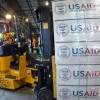
Human Rights, Healthcare Disrupted in Eastern Europe With USAID Funding Freeze
As the full effects of the US decision to freeze foreign aid funding begin to be felt across the world, organizations in Eastern Europe and Central Asia (EECA) are warning years of work in everything from delivering life-saving healthcare to defending human rights and strengthening democracy could be undone.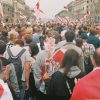
Belarus: Brutal Repression Continues Post Presidential Election, Say Human Rights Groups
In the months leading up to presidential elections at the end of January, Belarus’s authoritarian leader Alexander Lukashenko ordered the release of hundreds of political prisoners. Some observers saw this as a sign that the man who had led the former Soviet state for the last three decades could be planning a relaxation of his regime’s brutal repressions in return for a lessening of Western sanctions.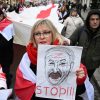
Belarus: A Sham Election That Fools No One
Alexander Lukashenko will soon begin his seventh term as president of Belarus. The official result of the 26 January election gave him 86.8 per cent of the vote, following an election held in a climate of fear. Only token opposition candidates were allowed, most of who came out in support of Lukashenko. Anyone who might have offered a credible challenge is in jail or in exile.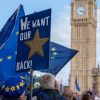
Longing for EU
Good news! For two years now every single UK poll has shown a majority now want to return to the EU. Of course they do, since every reliable source shows the continuing damage done by Brexit in almost every sphere. Those promised ‘Brexit benefits’ are nowhere to be seen.
Davos Leaders Pledge Support for Bangladesh Reform Agendas
As Bangladesh Chief Adviser Professor Muhammad Yunus emerged from a meeting during the World Economic Forum (WEF), Timor-Leste President Jose Ramos-Horta came forward to greet him, a demonstration of how warmly the global leaders and dignitaries received the person tasked with leading the interim government.
Rising Opposition Movement Looks to Political Renewal, Stemming Erosion of Democracy in Hungary
The Central European nation of Hungary is officially a democracy. But civil society, the media and democratic norms have increasingly come under threat as the Fidesz-KDNP coalition government, led by Prime Minister Viktor Orbán, has entrenched autocratic rule over the past 14 years. Now a new wave of energy and popularity is driving the younger opposition movement into the spotlight ahead of next year’s parliamentary election.
Why Russia’s Ban on Child-Free ‘Propaganda’ Impacts Human Rights
“A lot of people are very scared,” says Zalina Marshenkulova. “This is obviously another tool of repression. The state is waging war on the remnants of free-thinking people in Russia and trying to suppress all dissent and freedom,” the Russian feminist activist tells IPS. The warning from Marshenkulova, who left Russia soon after the country’s full-scale invasion of Ukraine in 2022 and now lives in Germany, comes just days after new legislation came into force in her home country banning "child-free propaganda.”
‘It’s Very Tough’: Turning Youth Employment Dreams Into Reality
It’s a bright winter day in Skopje, the capital of North Macedonia in the southern Balkans. By lunchtime, the cafes are full. The atmosphere is busy and social, and it is not difficult to see why the city, home to one-third of the country’s population of 2 million, is the focus of hope for young jobseekers. But, for many, it is not an easy road.« Previous Page — Next Page »


The Week with IPS

NEXT STOP - SDGs
Tracking global progress towards a sustainable world
Tracking global progress towards a sustainable world
