Languages
Tuesday, July 14, 2026



News and Views from the Global South
Europe
CZECH REPUBLIC: Communism Alive, Despite Isolation
The government's frequent use of the 'communist card' against opponents is casting a shadow on its lustration attempts in a country where an isolated but strong communist party persists.SPAIN: Elderly Rights on Track, But Still Long Way to Go
On the International Day of Older Persons, celebrated Wednesday, elderly people in Spain can look back and say that their situation has improved significantly over the last few years, but that measures still need to be taken to attain full respect for their rights.EUROPE: Preparing to Get at Resources of the Poor
European Union officials are drawing up a new strategy for giving multinational companies greater access to minerals and wood located in poor countries.RIGHTS-CZECH REPUBLIC: Life on Perpetual Hold for ‘Lifers’
Eighteen years after the death penalty was abolished in the Czech lands, little has been done to prepare anyone convicted of the gravest crimes for their eventual return to society.GREECE: Refugees Kept At Sea
When the people of Patmos blocked a group of refugees landing on their island last Sunday, they raised questions about both refugees and about Greece that have not gone away.
Q&A: 'Little Hope of Fair Election'
Opposition leader Alexander Milinkevich fears signs that the elections due in Belarus this Sunday will not be free and fair. President Alexander Lukashenko's government continues to stifle the media, he says.PORTUGAL: Waves of Energy Come Ashore
The mighty waves rolling in from the Atlantic ocean towards the northern coast of Portugal have been harnessed to produce electricity that will supply the homes of some 6,000 people.BALKANS: Serbia’s Radical Party Cracks
"The curtain is coming down on one party...what used to be the SRS (Serbian Radical Party) does not exist any more...the life of the party I have helped build in the past 18 years has ended."RIGHTS-ROMA: The Finger Now Points to Italy
White T-shirts with a designer smudge of a dark fingerprint were the most popular item of fashion among the 500 people attending the European Union's first-ever 'Roma summit' in Brussels this week. Carrying the slogan 'No Ethnic Profiling', the garments drew attention to highly controversial moves by the Italian authorities to carry out a census of the dilapidated camps in which members of Europe's largest minority are frequently condemned to live.EUROPE: Transgenic Crops’ Days May Be Numbered
Pressure from the president of the European Commission has not succeeded in advancing the cause of transgenic crops. In spite of the power wielded by the executive organ of the European Union, the bloc’s member countries are gradually discontinuing the use of genetically modified seeds.BELGIUM: Homeless in the Heart of EU
On a wet afternoon in Brussels, a dishevelled man shelters from the elements in a side entrance to the city's main railway station. Beside his feet a green canvas bag carries all his worldly possessions. He has been homeless for a decade now; he has asked several times to be given accommodation by the Belgian authorities, but his request has never been granted. Often he sleeps rough.GEORGIA: EU Takes the Diplomatic Lead
The Russia-Georgia peace deal indicates that the EU is acting as an independent power and plans to maintain dialogue with Moscow in spite of pressure by some of its own members and the U.S. to switch to sanctions.EUROPE: Divisions Rise Over Ex-Soviet Countries
Few, if any, regions present a greater challenge for the European Union's foreign policy than the former Soviet Union.RIGHTS-SPAIN: Debate Over Investigation of Civil War Victims
Internationally renowned Spanish Judge Baltasar Garzón unleashed a heated debate in Spain by ordering the authorities to provide information on human rights crimes committed in the 1936-1939 civil war and the subsequent 36-year dictatorship of General Francisco Franco.EU: For European People Too
Several events over the past year have raised fundamental questions about whether the European Union's primary mission is to ensure the smooth operation of an economic bloc or to ensure a decent quality of life for its 490 million citizens.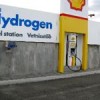
ICELAND: Filling Up on Hydrogen
Earlier this year, the Icelandic whale-watching boat Elding was fitted with a hydrogen-powered generator that fuels its lighting system, electric equipment and navigation machinery. It is the first of its kind in the world.EUROPE: Russia Triggers A New Cold War Threat
A spectre is haunting Europe, the spectre of a new Cold War in the wake of Russian President Dmitry Medvedev signing a decree Tuesday formally recognising the breakaway Georgian provinces of South Ossetia and Abkhazia as independent states.SERBIA: Uneasy Over the Kosovo Parallel With Georgia
Serbia was remarkably quiet in the days following the conflict in South Ossetia that began Aug. 8. Speculation by international politicians and in media of a parallel with Kosovo simply could not fit into a simple picture.EUROPE: Georgia War Steps Up Support for U.S. Missile Bases
Following tough negotiations, the U.S. and Poland have signed a deal on extension of the U.S. missile defence system to Eastern Europe, weeks after the outbreak of the Georgian-Russian conflict.RIGHTS-SIBERIA: Young Ready to Change Mind On Death Penalty
Young people in Siberia, the vast Russian region once notorious for its Soviet penal colonies, have shown readiness to give up their support for the death penalty as soon as they are exposed to views of opponents to capital punishment.CZECH REPUBLIC: Georgia Sets Off an Old Debate
The coinciding of military confrontation between Russia and Georgia and the 40th anniversary of the brutal crushing of the 'Prague Spring' in 1968 in what was Czechoslovakia has triggered a debate on whether a comparison between the two events is justified.« Previous Page — Next Page »


The Week with IPS

NEXT STOP - SDGs
Tracking global progress towards a sustainable world
Tracking global progress towards a sustainable world
