Languages
Thursday, July 16, 2026



News and Views from the Global South
Europe
SLOVAKIA: Schizophrenia or Russophilia?
Whereas most of Eastern Europe embraces the United States, Slovak Prime Minister Robert Fico is finding common ground with Russian President Vladimir Putin in both energy cooperation and geopolitics.FRANCE: Immigrants Uneasy over Proposed Policies
In his successful bid to lead the country this past spring, French President Nicolas Sarkozy made reform of the country's immigration system a centrepiece of his campaign, at one point telling a news conference that France was "exasperated by the dispute about national identity and by uncontrolled immigration."BALKANS: Smokescreen on Crime Lifts
State involvement in organised crime through the 1990s stands exposed following the arrest of 11 persons in a giant cigarette smuggling operation.SLOVAKIA: Right-Wing Extremists Gain Ground
Right-wing extremism is on the rise in Slovakia. Activists complain not enough is being done, while from Europe fingers are pointed at the left-wing government's controversial alliance with extreme-right nationalists.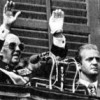
SPAIN: First Free Elections Still an Example, 30 Years On
On the eve of the 30th anniversary of Spain's first free elections after the end of the dictatorship of Francisco Franco (1939-1975), they remain an outstanding example that transitions from de facto regimes to democracy can be peaceful and orderly.RUSSIA: Talking Its Own Language
Russia is looking to promote its language and culture as a way to improve its image abroad.CULTURE-FINLAND: ‘Living Books’ Help Fight Prejudice
Books cannot talk back to a reader and answer all of their questions. So if one is seeking concrete information on, say, a gay person, the library is perhaps the wrong place to visit.HEALTH-RUSSIA: More Funding, But HIV/AIDS on the Rise
Russia's HIV infection rate continues to rise - most notably in the heterosexual and non-drug-using populations - despite steady increases in funds to fight the disease. Experts and medical researchers say dramatic changes in sexual attitudes and behaviour are essential if the trend is to be reversed.BULGARIA: Eye on Justice as New Political Star Emerges
Justice Minister Georgi Petkanov announced he will resign after the weekend because of health reasons, saying "work at the ministry is extremely hard." Meanwhile, a rising politician who has staked a claim as an anti-crime crusader is making his way towards the prime minister's chair.Q&A: Russia’s Children Remain “Highly Vulnerable”
"While UNICEF is happy that children's rights are commemorated on Jun. 1, we would like to see every day of the year be 'International Children's Day', particularly in Russia, where children remain highly vulnerable," says Carel de Rooy, the United Nations agency's representative in Russia and Belarus.DEATH PENALTY: A Life Defending Lives
In 2000, when French journalist and publisher Michel Taube founded 'Ensemble contre la peine de mort' (Together against the death penalty), his vision was that the group would become a world voice in the fight for the universal abolition of capital punishment.SERBIA: Quiet Welcome of Foreigners Belies Insular Image
Serbia may be viewed by some as intolerant and somewhat nationalistic due to its role in the wars of disintegration of former Yugoslavia, but many of the people arriving from distant foreign lands are finding a hospitable home here.PORTUGAL: Strike Takes Aim at Socialist Government’s “Neoliberal” Policies
The economic decline of Portugal's middle class, the growing marginalisation of the poorest of the poor, the uncertainty facing young people and drastic measures - described by critics as "neoliberal" - adopted by the socialist government form the backdrop to Wednesday's general strike in this southern European country.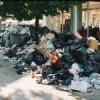
BULGARIA: A Capital That Can’t Handle Its Mess
On several occasions over the past two years, the streets of the Bulgarian capital Sofia have been literally covered with trash. The city of one million is one of the few European capitals without a waste processing system.CIVIL SOCIETY: The Geopolitics of Post-Soviet Activism
Representatives of civic groups from the post-Soviet region admit that their organisations are sometimes more closely following the democratisation line set by donors than the aspirations of their societies.DEVELOPMENT: A Little Aid, A Big Favour
When, came the question from a Ugandan delegate at a Civicus world assembly meeting in Glasgow, will the West ever stop giving aid on unequal terms? "We are unequal by the fact that, speaking as a donor, we are providing the funds," said Jan-Petter Holtedahl from the civil society department at the Norwegian Agency for Development Cooperation.ICELAND: Change – But How Much? – in the Wake of Elections
There has been a change in the make-up of Iceland's ruling coalition after the recent parliamentary elections, which bodes for a new approach to health, education and farm policy. But how much change is in store regarding the environment, energy production and the Iraq war remains unclear.SERBIA: PM’s Assassins Get 40 Years in Prison
The most-watched criminal trial in modern Serbian history ended Wednesday, as the mastermind behind the assassination of reform-oriented Prime Minister Zoran Djindjic and the shooter himself both received 40-year prison terms.RIGHTS-RUSSIA: NGOs Under Putin Scanner on Estonia Events
Leading non profitable organisations and civil society have vehemently rejected Russian President Vladimir Putin's accusation last week that they did not take collective action when Estonian authorities removed Soviet war monuments from the city centre to an obscure location.EUROPE: For Big Business, Accountability Still a Foreign Word
On Mar. 15, 2006, Noel Forgeard, at the time chief executive officer of the European aerospace corporation EADS, sold, apparently without any reason, some 170,000 shares he owned of the company, making an instantaneous profit of almost three million U.S. dollars.ROMANIA: Referendum Asserts Popular Will Over Parliament
A decision by parliament to oust Romanian President Traian Basescu was overturned in a historic referendum that has endorsed his wide popular appeal despite recent political turmoil.« Previous Page — Next Page »


The Week with IPS

NEXT STOP - SDGs
Tracking global progress towards a sustainable world
Tracking global progress towards a sustainable world
