Languages
Sunday, October 25, 2026



News and Views from the Global South
Global
UN80: From “Less-with-Less” to “More-with-Less”
With the ink hardly dry on the Pact for the Future outcome for modernizing global governance from last September’s Summit of the Future, the United Nations’ long-standing financial crisis has morphed into an extreme liquidity crisis.
Landlocked Developing Countries to Start ‘New Decade of Delivery’
As the Third United Nations Conference on Landlocked Developing Countries (LLDC3) concludes today (Friday, August 8) in Awaza, Turkmenistan, with the adoption of the Awaza Political Declaration and the formal endorsement of the Awaza Programme of Action (2024–2034), there is optimism that LLDCs are finally at the dawn of a new era.
Women From Landlocked Developing Countries Set Sights on Open Horizons
“Progress towards gender equality and equity remains uneven and far too slow. One in four women in landlocked developing countries (LLDCs) live in extreme poverty, and this is nearly 75 million women,” said Rabab Fatima, Secretary-General of the Third United Nations Conference on Landlocked Developing Countries or LLDC3 ongoing in Awaza, Turkmenistan.
Why Should We Ask for Angela When You Don’t Have to Ask for Alex?
It’s a quiet code with a loud message: “Ask for Angela.”
From Semei to Hiroshima: Astana Times Editor on Bringing Global Solidarity Through Journalism
Eighty years ago, the atomic bombings of Hiroshima and Nagasaki left a lasting reminder to humanity of the inhuman nature of nuclear weapons. Kazakhstan, too, is a nation deeply scarred by nuclear tests conducted during the Soviet era. Having covered the activities of Soka Gakkai International (SGI) in Kazakhstan—including its support for exhibitions and documentary productions on nuclear abolition in Astana—, INPS Japan recently interviewed Zhanna Shayakhmetova, editor-in-chief of The Astana Times, a leading English-language newspaper in the country that continues to convey messages of disarmament and peace to the world. In the interview, Shayakhmetova spoke about the role of religious leaders who will gather in Astana from around the world this September, the importance of passing on memories to younger generations, and the responsibility journalism holds in this endeavor.
Global Supply Chain Failures are Causing Pharmaceutical Contamination
The contamination of pharmaceutical medicines through toxic excipients is killing many and harming others. The UN agencies for health and drugs and crime warn that systemic vulnerabilities in the global supply chain have been exploited to introduce industrial-grade toxic chemicals into medicines, harming thousands of people, including children.
Moratorium on Nuclear Test Detonations is Hanging by a Slender Thread in these Troubled Times
On 16th July this year I was at the University of Chicago, attending a Nobel Laureate Assembly, and visited the site where at 15:25 PM local time on 2 December 1942, the nuclear physicist Enrico Fermi achieved the first self-sustaining atomic fission chain reaction.
Why Crop Diversity Matters for the Future of Food
Across continents and cultures, seeds and plants hold more than the promise of a harvest—they carry the wisdom of generations, the hopes of communities, and the keys to a more resilient future. Yet the diversity of the seeds and plants we grow, eat, and depend upon, is under growing strain.
Landlocked Nations Form New Bloc to Confront Climate Crisis and Inequity
“The term ‘negotiation' must be understood in ethical context… When an arsonist comes and burns down my house and then asks me to negotiate so I can rebuild my house, that becomes the paradox.”
Landlocked Developing Countries’ Group to Negotiate Way Out of Agricultural Catastrophe
Agriculture is a critical sector in landlocked developing countries, as more than half (55 percent) of the population is employed in the agriculture sector – significantly higher than the global average of 25 per cent. As such, the deterioration of food security in landlocked developing countries (LLDCs) is an unfolding catastrophe.
Embracing the Innovation Imperative: Tech-Governance at a Crossroads
Technological progress and the course of human history have moved forward together; more recent technological innovations have emerged with unprecedented speed and reach, deeply influencing many areas of human activity.
UN Chief Hails Turkmenistan’s Quiet Diplomacy as Launchpad for Landlocked Solidarity
In the glass-panelled hallway straddling Buildings 2 and 3 at the Awaza Congress Centre, two smartly dressed young Turkmens stood behind an ornate national pavilion—anxious, alert, and surprisingly eloquent.
Equal Footing: Building Pathways for Landlocked Developing Countries to Participate in Global Economy
Heads of State, ministers, investors and grassroots leaders are gathered in Awaza on Turkmenistan’s Caspian coast for a once-in-a-decade UN conference aimed at rewiring the global system in support of 32 landlocked developing countries whose economies are often ‘locked out’ of opportunity due to their lack of access to the sea.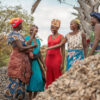
For LLDCs, the Next Decade Must be About Unlocking the Untapped Potential
As the world’s youngest and fastest-growing nations, LLDCs are home to immense untapped potential, yet remain cut off from the currents of international commerce and opportunity. Imagine being surrounded by opportunity, yet separated from it by mountains, borders, and vast distances from the nearest port—this is the daily reality for the world’s landlocked developing countries (LLDCs).
UN Trade and Environment Agencies Target Plastic Pollution through Global Negotiations and Trade Measures
They are lightweight, cheap, and able to be used in every sector of every supply chain. Few materials have revolutionized manufacturing and the global economy as much as plastics have. They are essential in almost everything, however this comes at a cost. A cost of 1.5 trillion annually in environmental damage, and a 75 percent waste ratio of all plastic ever produced.
Belem City Limits: How to Host a Successful Climate COP
There is no question that most climate activists and governments were delighted when Brazil offered to host the 2025 UN Climate Conference taking place this November.
Do Nuclear Tests Still Remain a Future Threat — as World Commemorates the 80th Anniversary of Hiroshima & Nagasaki?
The 80th anniversary of the atomic bombings of Hiroshima and Nagasaki during World War II triggers the question: Is nuclear testing dead or is it still alive--and threatening? The August 6-9 anniversary marks the devastating bombings, which claimed the lives of between 150,000 and 246,000 civilians-- and still remains the only use of nuclear weapons in an armed conflict.
Spotlight on Landlocked Developing Countries Ahead of Third UN Conference
Landlocked developing countries face a unique set of challenges. Without coastal ports, they rely on transit nations, causing higher trade costs and delays.
Climate Reparations are Necessary but Not Sufficient: World Needs Less Growth & More Justice
While recent heat waves were causing thousands of deaths, the Trump administration was busy dismantling policies that regulate greenhouse gases on the theory they don’t harm human health.
Survey by Staff Federation Expresses Disappointment over UN’s Reform Process
The Coordinating Committee for International Staff Unions and Associations of the United Nations System (CCISUA)* staff federation has conducted a quick survey of staff in its member unions of their thoughts on the UN80 initiative.
An Ageing World on a Heating Planet: Why Older People Must Be Central to Climate Policy
I've just returned from the east coast of India, where I saw for myself the harsh challenges that older people in artisanal fishing communities confront daily. I saw how the community elders — the keepers of marine traditions and the coastal environment — are being forsaken by climate policy and their governments.« Previous Page — Next Page »





The Week with IPS

NEXT STOP - SDGs
Tracking global progress towards a sustainable world
Tracking global progress towards a sustainable world
