Languages
Friday, October 2, 2026



News and Views from the Global South
Global

Financing Biggest Hurdle to Providing Children with Quality Education in Crisis Situations – ECW
If you want lasting peace, the best investment you can make is in education, said Education Cannot Wait’s Executive Director Yasmine Sherif in an exclusive interview with IPS.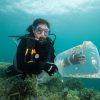
New Research Seeks Breakthrough in Understanding Global Warming and the Ocean
The Canada-based Ocean Frontier Institute is very clear about the significance of a new collaborative ground-breaking ocean research program. Global warming cannot be effectively tackled, and human life cannot survive on Earth without the ocean.
Climate Justice – Is Litigation a Good Way Forward?
For years, the concept of climate justice has been built on the understanding that countries and communities contributing the least to global warming are disproportionately bearing the impacts of climate change.
Improving Healthcare for All
In 2015, almost all heads of government in the world committed to the United Nations’ Sustainable Development Goals (SDGs), including universal health coverage (UHC). This was consistent with the World Health Organization’s commitment to Health for All.
Mandela Day Reminder to Stand Witness to Human Rights Defenders
As human rights increasingly deteriorate, rights defenders are being violently suppressed. Abducted, detained, tortured, and humiliated, many now live one day at a time. They have been told, in no uncertain times, that anything could happen. They are now asking the global community to stand as a witness.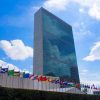
Most UN Agencies Lack Access to Information Policies, Survey Finds
Less than half of United Nations agencies have access to information policies, according to a survey by Eye on Global Transparency. Of 27 UN bodies surveyed, 13 have access policies. So, 14 UN agencies lack access policies. Setting a poor example, the UN Secretariat still lacks an access to information policy.
Guns for Hire? A Season for Mercenaries
Just after a band of mercenaries tried to oust the government in the Maldives back in 1988, I asked a Maldivian diplomat, using a familiar military catch phrase, about the strength of his country's “standing army.” "Standing army?", the diplomat asked with mock surprise, and remarked perhaps half-jokingly, "We don't even have a sitting army."
‘Spending Money on Education is Investing in Humanity’
As the 2030 deadline for achieving the Sustainable Development Goals (SDGs) looms, Education Cannot Wait's director Yasmine Sherif warned, "We are failing the promises we made on everything in the sustainable development goals, but especially on education because, without education, we cannot achieve any of the other sustainable development goals.”
Marginalising Key Populations Impacting Efforts to End HIV/AIDS Epidemic
A report released this week has highlighted how continuing criminalisation and marginalisation of key populations are stymying efforts to end the global HIV/AIDS epidemic.
Impatience as a Virtue
We all know and agree that patience is a virtue. It is indeed. With one exception. In the face of a child’s suffering, impatience is the highest virtue. Or as we say in the spirit of Education Cannot Wait: “We must be unapologetically impatient” in our collective goal to reach 224 million crisis-affected children and adolescents with quality education.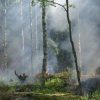
What a World 1.5 degrees Hotter Would Look Like
The dangerous state of global climate has reached a new low as a World Metrological Organisation (WMO) analysis reveals. It confirms a known obvious: human activities continue to worsen conditions that have changed our planet’s climate.
Twenty-five Years After the Creation of the International Criminal Court
On the night of 17 July 1998, the outcome of the Diplomatic Conference convened to create the International Criminal Court was still uncertain. Hundreds of state representatives and civil society organizations assembled in the FAO headquarters in Rome, holding their breath in anticipation.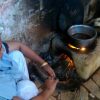
Invisible Women in Energy: Millions of Household Biomass Producers
An estimated 2.4 billion people currently lack access to clean cooking fuels, with the majority relying on biomass (firewood, charcoal, dung) to meet household cooking needs. This is only a slight decrease from 2017, when 2.5 billion people lacked access to clean cooking fuels.
Private and Public Spheres: Sweden and Mugabe
The war in Ukraine continues unabated; young men are sacrificed on battlefields, towns laid waste by aerial attacks, the threat of nuclear disasters is looming. People within an often formerly friendly inclined Europe are now wondering if Vladimir Putin has gone insane. The war in Ukraine is generally called “Putin’s war” and in April 2021 Putin signed a legislation providing him the right to run for two more consecutive terms, thus he could stay in power till 2036.
Can Carbon Trading Stop Global Heating?
As our planet continues to heat up at an alarming rate, carbon credits, markets and trading have been promoted as effective measures to combat global warming. While there is an urgent need to curb planetary heating, growing reliance on this innovation is problematic, to say the least.
Water – a Weapon of War or a Tool for Peace?
The role of water in conflicts is changing, with more attacks against environmental and civilian infrastructure. Dr Martina Klimes of the Stockholm International Water Institute (SIWI) recently held a lecture describing the shifting security landscape and how water can be both a weapon and a victim of war – and sometimes a tool for peace.
Re-thinking Disability Inclusion for the SDGs
This year marks halfway towards the Sustainable Development Goals (SDGs), an ambitious agenda which set out to transform our world. We have always known that the goals cannot be realized without the inclusion of persons with disabilities. From poverty to inequality, climate to health the promise to leave no-one behind is the bedrock of the SDG call to action.
Shielding the Vulnerable: The Potential Role of Insurance in Protecting the Most Vulnerable
Small Island Developing States (or SIDS) have been talking about loss and damage in an insurance context since the creation of the UNFCCC. The original 1990s outline of the UNFCCC included the proposal for an international insurance fund that would compensate low-lying countries for losses from rising sea levels in the future, however, this fund was never adopted in the final text.
The Grand Narrative of Private Finance: Over-Reliance on Attracting Investment is Undermining Change at World Bank
One message that was repeated throughout last month’s summit on a so-called “New Global Financing Pact” was that developing countries urgently need mass financing to tackle the climate and biodiversity emergency. And there is not enough of it in public coffers.
Recognising Human Rights Defenders as Remarkable Agents of Positive Change
In recent years, the global landscape for human rights defenders (HRDs) has become more difficult and complex, with both new and heightened challenges. With hundreds of defenders killed every year, the scale and magnitude of threats faced by HRDs is unprecedented.
Transformative Change of our Relationship with Nature: Key to Saving Global Biodiversity
To most people, ‘transformative change’ is an abstract academic catchphrase. But transformative change is far more than that. It is the foundational response necessary to address the global crisis of biodiversity loss that threatens the wellbeing of every person in every community – and every species in every region.« Previous Page — Next Page »


The Week with IPS

NEXT STOP - SDGs
Tracking global progress towards a sustainable world
Tracking global progress towards a sustainable world
