Languages
Monday, November 9, 2026



News and Views from the Global South
Middle East & North Africa
MIDEAST: Gaza Energy Crisis Averted – For Now
Pressure exerted on the Palestinian Authority (PA) by international and regional officials has given Gazans a last minute reprieve, albeit temporary, from plunging into darkness and plummeting temperatures.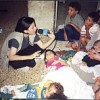
MIDEAST: Gazans Denied Justice as Rights Take a Beating
Gazans hoping for a modicum of justice following Israel’s indiscriminate military assault on the coastal territory during December 2008 and January 2009 - which left 1,400 Palestinians, mostly civilians, dead - could be waiting in vain.MIDEAST: Raze Illegal Buildings – Unless They Are Jewish
Backed by armed security men, the municipal inspectors race their jeeps through the narrow alleyways and up a hillside crowded with buildings.MIDEAST: Helpless in Gaza
Scores of Palestinian women and their children carefully sift through the desert sands. They are looking for hard nuggets.
Q&A: ”Hamas Accepts Existence of Israel Within 1967 Borders”
Palestinian politics are at an impasse. The four-year term of the Palestinian Legislative Council (PLC) ended on Jan. 25 with no new elections planned. Presidential elections, meant to be held last year, were also postponed indefinitely.MIDEAST: Clean Energy Faces Tough Financial Climate
Renewable energy projects in the Middle East could be scaled back or scuttled unless fresh sources of financing are found.MIDEAST: Pray the PA Way or Face Arrest
The Palestinian Authority (PA) is using West Bank mosques as a new battleground in its political offensive against its opponents within Hamas as well as critics from its own Fatah party.MIDEAST: Civil Society Takes On Israeli Settlements
Salam Fayyad turned civil society activist this week. In Salfit, on the West Bank, the Palestinian prime minister threw onto a giant bonfire goods made in Israeli settlements.MIDEAST: Israel Crushes Local Dissent, Attacks Global Criticism
Israel is lashing out at international criticism and attempting to crush local dissent in what appears to be growing sensitivity to reproach of its policies.
Q&A: ‘Religious State, Recipe for Disaster’
When Omar Abdel-Razeq was appointed finance minister following the election of Hamas in January 2006, the BBC characterised the post as the "least enviable job in the new Palestinian government."LEBANON: Spy On Thy Neighbour
Recent inter-factional clashes in Lebanon's Ain al-Hilweh refugee camp once more illustrated the fragile security situation in some of its Palestinian camps. Lebanese plans to take over security within the camps are rejected by the Palestinians.MIDEAST: Israel Cannot be Sultan
A bizarre diplomatic incident - even by the Byzantine-like standards of the old near East - has threatened already strained relations between Israel and Turkey.
MIDEAST: Will You Marry Poor Me
"If we had money we'd get married right away," says Samir*, 23. He has found his bride, but not the money to hold the wedding.MIDEAST: Israel Cool to New U.S. Pressure
In the past, whenever there was even a semblance of pressure from Washington on Israel, nerves in Jerusalem went all a-jangle.MIDEAST: Route May Open, But Not to Peace
Just beyond the main Israeli checkpoint, ten kilometres short of Jerusalem, a white Nissan station wagon is abruptly edging to the side of the road. It comes to a halt on the shoulder.ECONOMY-JORDAN: Dubai Crisis Casts Shadow On 2010
Surrounded by oil-rich nations Jordan has been able to make do with its modest resources over the years. In 2010, however, the country will have to face challenges associated with global economic slowdown and the crisis in Dubai.MIDEAST: New Year Reopens Wounds of the Old
For many survivors of the last Israeli war on Gaza, time has not healed their wounds, physical or emotional.
LEBANON: Hip-hop Kindles Hopes in Destroyed Refugee Camp
The hip-hop beats ringing through the muddy, unlit streets of this burnt-out Palestinian refugee camp seem incongruous. But the rhymes are camp-grown - and courageous.MIDEAST: ‘’What About the Mailboxes?’’
The sun is about to set over Jabel Mukaber. The call of the muezzin envelops the valley beneath Naim Aweisat’s balcony and, rolling from the mosques of Abu Dis across the wall in the West Bank, rebounds from the stark concrete Israeli security wall to answer the minarets that peer over the walled Old City.JORDAN: Palestinian Refugees Live Out Lives in Limbo
Music enlivens the yellow taxi as it traverses the Jordanian capital. A small Palestinian flag hangs from the rearview mirror. Jihad, the cab driver, says his father fled here from the Palestinian West Bank in 1948.MIDEAST: Occupation Eats Away Israel’s Heart and Soul
After Israeli settlers in the occupied West Bank torched a mosque and desecrated copies of the Quran in the Palestinian village of Yasuf, last Friday morning, they ran into a wall of condemnation.« Previous Page — Next Page »





The Week with IPS

NEXT STOP - SDGs
Tracking global progress towards a sustainable world
Tracking global progress towards a sustainable world
