Languages
Tuesday, November 10, 2026



News and Views from the Global South
Middle East & North Africa
IRAQ: Where Happiness Has Gone
After losing sight of what they knew to be normal life, residents across Baquba seem to have fallen into a depression.EGYPT: Anger Over Israel ‘Approaching Boiling Point’
Fury erupted on the streets and in parliament this week following violent Israeli military operations in the Gaza Strip. But as protests were held nationwide in support of besieged Palestinians next door, Cairo continued to keep the volatile Rafah border crossing - the only means out of the strip not under direct Israeli control - tightly sealed.WOMEN’S DAY-IRAQ: Surviving Somehow Behind a Concrete Purdah
Iraq, where women once had more rights and freedom than most others in the Arab world, has turned deadly for women who dream of education and a professional career.IRAQ: Sahwa Forces Challenge Govt, and Win
The conflict between Sahwa forces and the Iraqi government in Diyala has resulted in more power for the Sahwa.
MIDEAST: Nowhere To Run To
An ambulance races through Jabalyia refugee camp to pick up the critically injured – and the body parts strewn across the street. A normal day's job these days.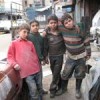
LEBANON: Children Get to Work Early
Walid is a wide-eyed boy of 10. His frail figure, of the kind common in such poverty-stricken areas, seems smaller than for a child his age. His hands are covered in dirt and paint. Here, in Ard Jalloul (the land of Jalloul), located in the populous Tarik Jdideh neighbourhood of Beirut, he works as a painter from 8am to 6pm for 7 dollars a day.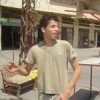
LEBANON: Peace Brings No Joy to Children
Over the years, Lebanese children have faced war and bombings enough to make violence a staple in their lives. With the situation becoming increasingly volatile as Lebanese factions are gripped by a lasting and deadly discord, this vulnerable population is left at greater risk.
LABOUR-MIDEAST: Missile Goes Down a Union's Throat
Two F-16 missiles were all it took to bring down the five-storey headquarters of the Palestinian General Federation of Trade Unions (PGFTU).IRAQ: ‘Not Our Country To Return To’
More Iraqis continue to flee their country than the numbers returning, despite official claims to the contrary.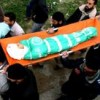
MIDEAST: Israel Kills Some More Children
Tamer was nine, and no child soldier. He did not live in the area from where home-made rockets are launched into Israeli territory. The day he was killed, he was at least two kilometres from the place Israeli troops had entered Gaza, and met with return fire by Palestinian resistance.IRAQ: Tensions Rise Between Sahwa and Govt Forces
U.S. backed Sahwa forces threaten to destabilise U.S.-backed Iraqi government forces in Iraq's volatile Diyala province.IRAQ: Occupation Strangles Farmers
New plant diseases, attacks by occupation forces and escalating fuel prices are strangling farmers in Diyala province.LEBANON: This Amputation Won’t Be the Last
Rasha Zayoun sits quietly in the bustling doctor's office, a small figure hunched in her chair, while her mother recounts the terrible accident.EGYPT: Opposition Slams Gas Sale to Israel
On Monday, Egypt began pumping natural gas to Israel in accordance with an energy accord between Cairo and Tel Aviv. While the government defends the move as being in the country's best interest, opposition figures decry the notion of economic cooperation with Israel, especially in light of the latter's ongoing siege of the Gaza Strip.
LEBANON: No One Helps the Fisherman
On the afternoon of his grandfather's funeral, Ismael waded out to the sea rocks near the old Tyre lighthouse and looked out over the choppy water. He greeted his friends passing by in a fluka -- a small, handcrafted wooden fishing vessel - and lit the dynamite fuse in his hand.
LEBANON: Children Look At The Brighter Picture
On the outskirts of Beirut, narrow alleyways cut through the Chatila Palestinian refugee camp. A maze of electricity cables connect one concrete block and another. Sewage pours continuously through a small grey construction, filling the street with nauseating stench.IRAQ: Baquba Losing Life – And Hope
Life has been bad enough in Diyala province north of Baghdad after prolonged violence, unemployment and loss of all forms of normal living. What could be worse now is the loss of hope that anything will ever be better.MIDEAST: Gaza Border In Political Limbo
One month after throngs of Palestinians flooded into Egypt's Sinai Peninsula from the Gaza Strip, the flashpoint Rafah border crossing remains tightly shut. But according to some opposition figures, the breach - viewed by many as a victory for Palestinian resistance faction Hamas - signalled the need for new border protocols consistent with shifting political realities.IRAQ: In Tatters Beneath a Surge of Claims
What the U.S. has been calling the success of a "surge", many Iraqis see as evidence of catastrophe. Where U.S. forces point to peace and calm, local Iraqis find an eerie silence.LEBANON: This Assassination Could Change the Region
For many in the Middle East, politics is essentially a matter of converging interests - and the life and death of Imad Fares Moughnieh is no exception. His assassination in Syria has resonated across the borders of Lebanon, Syria and Iran.IRAQ: Unemployment Too Becomes an Epidemic
For a few, salaries have soared. For the rest, unemployment has.« Previous Page — Next Page »





The Week with IPS

NEXT STOP - SDGs
Tracking global progress towards a sustainable world
Tracking global progress towards a sustainable world
