Languages
Tuesday, November 10, 2026



News and Views from the Global South
Middle East & North Africa
MOROCCO: Anger Rises With Prices
The move to embrace a free trade economy has brought a sharp increase in the price of basic goods across Morocco. This is causing hardship, and threatening social stability.EGYPT: Border Breach Raises Fundamental Questions
Authorities sealed the border with the Gaza Strip earlier this month after more than a half million Palestinians flooded into Egypt's Sinai Peninsula in late January. But while most have since returned home, the episode served to highlight Egypt's tenuous control over its border with the troubled territory next door.MIDEAST: Many Die With Targeted Leader
Human remains mix with debris following the latest Israeli assault Friday on Bureij Camp in Gaza Strip. Early reports listed nine dead and more than 50 injured.IRAQ: The Lights Have Gone Out, Who Cares
Lack of electricity in Baquba has shattered businesses, and the lives of families. Months of power failures has darkened morale everywhere.IRAQ: A New Force Called Sahwa Shows Its Muscle
The Awakening Councils in Diyala province are stepping up their protests against the government in Baghdad.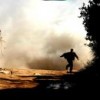
MIDEAST: For the World, Gaza Is Reality TV
"We are being starved, killed, tortured, and besieged - and all this while the world just watches," says Abu Wael at the funeral of the latest group of Gazans killed by Israeli forces.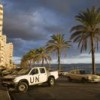
LEBANON: A New Struggle for Life After War
The solemn black-clad crowd rallied in Tyre's downtown for the Muslim commemoration of Ashoura, which marks the battlefield death of Hussein, grandson of the prophet Muhammad, and an enduring symbol of resistance for the Shia in Lebanon. The population here is mostly Shia Muslims.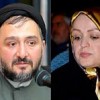
IRAN: Candidate Purge Smacks of a “Vendetta”, Critics Say
The mass disqualification of reformist parliamentary candidates by Iran's Guardian Council, which oversees the electoral rolls, has diminished the possibility of fair elections on Mar. 14, observers say.IRAQ: US-Backed Groups Challenge Government
U.S. backed Sunni militants have challenged the U.S.-backed Iraqi government in Baghdad, and demanded political power after two women were killed by government forces.LEBANON: Internal Conflict in Chilling Rise
The year 2000 heralded the end of Israel's occupation of Lebanon, with the exception of the much disputed enclave of the Shebaa Farms, located at the country's southern western tip between Israel and Syria. Since then, concern over Hezbollah's new role has been in the political spotlight, leading to a continuous rise in tensions, especially following the 2005 assassination of former prime minister Rafik Hariri.IRAQ: The Road to Learning Can Be Dangerous
University professors now enjoy increased pay, but in the face of threats and isolation, there is little they are able to do in the world of academics.IRAQ: More Bombing Creates New Enemies
Now that the smoke has cleared and the rubble settled, residents of a group of bombed Iraqi villages see the raid as really a U.S. loss.LEBANON: Survived, Now Let the Show Go On
A bomb tears through the bustling Chevrolet area on the outskirts of Beirut. Bad news travels fast: Captain Wissam Eid from the Internal Security Forces has been killed in the blast. This is a typical day for Lebanese citizens.
MIDEAST: Garlic For My Mother
Fourteen-year-old Ahmed Salah is not sure when he can give his mother a surprise like that again."Where have you been?" his mother said to him after he disappeared from home the first time when the Gazan border with Egypt was breached late last month. What he brought back said just where. "See what I got you. Garlic, washing powder...and there is smoked fish!"
RIGHTS: States Fuel 'Honour Killings'
State-directed violence, the refusal to give up the death penalty and the holding of public executions are some of the principal factors that are supporting the continuing resort to the age-old practice of 'honour killings', murder to cleanse a family name of shame.IRAQ: Violence Draws Veil Over Women
Conditions are particularly difficult for women in Baquba, despite the relative lull in violence. The city, about 40 km northeast of Baghdad, is capital of Diyala province, amongst the most troubled regions of Iraq in recent months.EGYPT: Opposition Turns Up Heat in Parliament
Ever since the hotly contested 2005 legislative elections, the opposition in Egypt's parliament has become increasingly assertive. This year, opposition and independent MPs have hurled a record number of interpellations - inquiries that must be answered by the government - at the ruling National Democratic Party (NDP) of President Hosni Mubarak.MIDEAST: Israel Warns of Further Supply Cuts to Gaza
Already testy relations between Jerusalem and Cairo have frayed further in the last week as hundreds of thousands of Gazans have poured through a hole blasted in the Egypt-Gaza border fence, in a bid to escape a suffocating blockade imposed by Israel on the coastal strip.LEBANON: Palestinians Rush for Confirmation They Exist
The Palestinian Liberation Organisation headquarters in the posh neighbourhood of the now closed Summerland Hotel in Beirut is buzzing with activity. A few men in black, Kalashnikovs firmly in their hands, guard the entrance to the elegant building. A handful of veiled women and older men carrying papers scurry past them up the stairs to the PLO offices.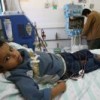
MIDEAST: Faeces Change the Face of Gaza
A stream of dark and putrid sludge snakes through Gaza’s streets. It is a noxious mix of human and animal waste. The stench is overwhelming. The occasional passer-by vomits.MIDEAST: Alarm Bells Sound Over “Jewish State”
Within recent months, several Israeli and U.S. officials have stressed Israel's unique character as a "Jewish state". But according to many Arab observers, the designation negates the right of Palestinian refugees to return to Israel, and leaves the door open to expulsion of Israel's Arab citizens.« Previous Page — Next Page »





The Week with IPS

NEXT STOP - SDGs
Tracking global progress towards a sustainable world
Tracking global progress towards a sustainable world
