Languages
Tuesday, November 10, 2026



News and Views from the Global South
Middle East & North Africa
CHALLENGES 2007-2008: Lebanon Confronts Its Seven Deadly Plagues
This year, Lebanon has witnessed a series of unfortunate events. With demonstrations, street confrontations, rising religious tensions, assassinations, an internal war, economic recession and a looming political crisis that has resulted in a power vacuum at the head of state, Lebanon has faced its own seven deadly plagues.CHALLENGES 2007-2008: Iraq Progresses To Some Of Its Worst
Despite all the claims of improvements, 2007 has been the worst year yet in Iraq.CHALLENGES 2007-2008: A Prime Minister Hangs On, Just About
At the start of 2007, it seemed that war would cost Israeli Prime Minister Ehud Olmert his job. As he completed the year, still in office, the greatest threat to him staying there now seems to be the prospect of peace.IRAQ: Saddam Provided More Food Than the U.S.
The Iraqi government announcement that monthly food rations will be cut by half has left many Iraqis asking how they can survive.IRAQ: ‘Awakening’ Forces Arouse New Conflicts
The controversial move of the U.S. military to back Sunni "Awakening" forces has created another wedge between Sunni and Shia political groups.MIDEAST: They Do Not Exist, And That Is Official
In the maze of dirty streets that spreads from Beirut's revamped Sport City to the shabby Halabi quarters, 20,000 refugees are clustered in what is known as the Bourj al-Barajneh Palestinian camp. In a town plagued by poverty, many families live in complete destitution.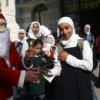
MIDEAST: In Gaza, Santa Is Insolvent
"Santa Claus is empty handed this year...insolvent," says Father Manuel Musallam, head of the Holy Family School in Gaza City.IRAQ: Looking to Security from Paper Police
In a country with no security and no jobs, just about anyone can work as a policeman.EGYPT: Israel Recognised by Govt, Not By People
Thirty years after late Egyptian president Anwar Sadat's historic trip to Israel, Egyptian diplomatic relations with the Hebrew state remain cordial. On a popular level, however, the relationship - buttressed by the 1979 Camp David peace agreement - still represents a major source of contention.IRAQ: “Bad” Women Raped and Killed
Women are being killed by militia groups in southern Iraq for not conforming to strict Islamic ways, the police say. And, increased threats from militia groups is driving many women away from their homes.LEBANON: Palestinians Brave a Hazardous Profession
Kamel Mohammed was pruning lemon trees last winter when his red electric saw detonated an unexploded cluster bomb, blasting shrapnel all over his body. After an operation to remove the metal shards from his chest, Mohammed, a 44-year-old father from the nearby Palestinian refugee camp of Rashidieh in south Lebanon, went straight back to work cultivating fields and chopping wood for coal.IRAQ: Not Even the Hajj is Free of Corruption
Many Iraqis are angry that the government seems to be picking favourites for the Hajj, the annual pilgrimage to Mecca.IRAQ: Iran Eases Support to Radical Group – For Now
Iraq's deputy prime minister has credited Tehran with helping curb the activities of a radical Shia Muslim militia, and he is also hoping Iran will do more to help stabilise its western neighbour.IRAQ: Education Becomes the New Casualty in Baquba
The alarming security situation in Diyala province north of Baghdad has killed off much of the education system.EGYPT: Islamist Draft Manifesto Stirs Controversy
For the last several months, politicians of all stripes have awaited release of the Muslim Brotherhood movement's political party manifesto. According to spokesmen for the group, the document is intended to clarify the positions of the Muslim Brotherhood - Egypt's largest opposition force - on a range of issues.IRAQ: Refugees Caught Between Deportation and Death Threats
Hundreds of thousands of Iraqis driven out of their country by violence are now faced with detention abroad, or a homecoming to death threats.LEBANON: Democracy Begins to Agree on a General
As the constitutional clock ticks away the last few hours of Emile Lahoud's presidential term, Lebanon faces its worst political deadlock since the end of the civil war.IRAQ: Government Fragments Further
As sectarian tensions escalate politically, a new fissure is appearing within the already fragmented Iraqi government.
MIDEAST: Christians And Muslims Coexist In Gaza
As Sunday dawns in Gaza City the traditional Islamic call to prayer mingles melodically with church bells.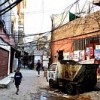
LEBANON: Violent Politics Play Out in Packed Refugee Camps
On the edge of Beirut's suburbs lies Bourj al-Barajneh, a Palestinian enclave located at the heart of a Shiite neighbourhood, traditionally the domain of Iran-backed Hezbollah. Here, 17,000 Palestinian refugees are amassed on a minuscule swath of land, co-existing in a fragile truce among run-down buildings and muddy streets.IRAQ: Executions Not Leading to Reconciliation
The executions of former regime officials are creating greater division, rather than reconciliation, among Iraqis.« Previous Page — Next Page »





The Week with IPS

NEXT STOP - SDGs
Tracking global progress towards a sustainable world
Tracking global progress towards a sustainable world
