Languages
Wednesday, October 21, 2026



News and Views from the Global South
Middle East & North Africa
Opinion: Battling Iran-Backed Extremists in Yemen
In a region racked by strife, Yemen stands out. It is the poorest country in the Middle East and since March, the plight of my people has been worsened by an inhumane war.
Opinion: The Nuclear Deal’s Impact on Iranian Domestic and Foreign Policy
As in most countries, in Iran too there are hardliners and moderates. All polls show that a large majority of Iranians support the nuclear deal (or Joint Comprehensive Plan of Action, JCPOA) between Iran and the P5+1 (the United States, Russia, China, Great Britain, France and Germany), while a small but powerful group of hardliners opposes it. The Iranian parliament has finally approved the deal, but after a great deal of controversy and with some reservations.
United Arab Emirates and Cuba Forge Closer Ties
Cuba and the United Arab Emirates agreed to strengthen diplomatic ties and bilateral cooperation during an official visit to this Caribbean island nation by the UAE minister of foreign affairs, Sheikh Abdullah bin Zayed Al Nahyan.
U.N. Continues Condemnation of Civilian Casualties in Yemen
The Saudi coalition, which continues its air strikes against rebels in strife-torn Yemen, is fast gaining notoriety as “the gang that couldn’t shoot straight” – largely because of its misses than its hits.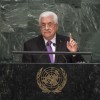
Palestine President Abbas Warns of ‘Grave Dangers’ in Jerusalem
“I come before you today…compelled to sound the alarm about the grave dangers of what is happening in Jerusalem,” said Palestine President Mahmoud Abbas in his remarks to the United Nations General Assembly on Sep. 30.Human Rights Activists Condemn Houthi Militia’s Atrocities Against Women in Yemen
(WAM) -- Arab and Yemeni human rights activist monitoring the civil war in Yemen say that women have been subjected to grave human right violations at the hands of the rebel Houthi militia and an allied insurgent group under the command of former president Ali Abdullah Saleh.Report Condemns Atrocities of Houthi Rebels in Yemen
(WAM) - A new report from a human rights group operating in Yemen says that human rights violations have reached unprecedented levels, with more than 3,000 people murdered by the insurgent Houthi militia and its allies in Yemen.
Israel’s Opposition to the Nuclear Treaty with Iran
Relations between Iran and Israel go back almost to the foundation of the State of Israel in 1948. Iran was the second Muslim-majority country to recognize Israel as a sovereign state, following Turkey, and the two countries had very close diplomatic and even military cooperation for many decades.
The Rubicons That Have Been Crossed
In their attempts to sabotage Iran’s nuclear program, the United States and Israel have resorted over time to a number of unorthodox, illegal and in some cases criminal methods to achieve their aims. They have included the following:UAE Government Stresses its Abiding Support for Syrian Refugees
In response to suggestions that the Gulf states are doing littleor nothing to help Syrians fleeing their civil war, the Government of the United Arab Emirates has announced that it has take a broad range of supportive actions to alleviate the suffering of the Syrian population and to care for Syrian refugees in Syria and abroad, reports WAM.
In and Behind the Trenches Against ISIS
Reminders of the last occupants of camp K1 in the northern Iraqi city of Kirkuk are only visible on the murals at the main gate leading into the compound: Iraqi soldiers saluting the flag, pointing their weapons or being cheered on by grateful families.
Opinion: The Early History of Iran’s Nuclear Programme
Iran has had a nuclear programme since 1959 when the United States gave a small reactor to Tehran University as part of the “Atoms for Peace” programme during Mohammad Reza Shah Pahlavi’s reign. When the Non-Proliferation Treaty (NPT) was introduced in 1968 and entered into force in 1970, Iran was one of the first signatories of that Treaty.
Rich Gulf Nations Tight-Lipped on Growing Refugee Crisis
As Western and Central European nations seem overwhelmed by the growing refugee crisis – triggered mostly by the inflow of hundreds and thousands of displaced people largely from Syria, Libya, Afghanistan and Iraq – one lingering question remains unanswered: why aren’t some of the rich Arab Gulf nations reaching out to help these hapless refugees?
Opinion: Nuclear States Do Not Comply with the Non-Proliferation Treaty
Article Six of the Non-Proliferation Treaty (NPT) makes it obligatory for nuclear states to get rid of their nuclear weapons as part of a bargain that requires the non-nuclear states not to acquire nuclear weapons. Apart from the NPT provisions, there have been a number of other rulings that have reinforced those requirements.
Opinion: Iran and the Non-Proliferation Treaty
Iran’s nuclear programme has been the target of a great deal of misinformation, downright lies and above all myths. As a result, it is often difficult to unpick truth from falsehood.Killing of Aid Workers Threatens Humanitarian Response in Yemen
With 21 million Yemeni civilians caught in the grips of a conflict that has been escalating since March, the killing of two local aid workers Wednesday could worsen their misery, as a major humanitarian organisation considers the future of its operations in parts of the war-torn country.U.N. Officials Warn of Dengue Outbreak in War-Torn Yemen
An outbreak of dengue fever in Yemen’s most populated governorate has prompted urgent calls from the World Health Organisation (WHO) for a “humanitarian corridor” to facilitate the flow of medicines to over three million civilians trapped in the war-torn area.
U.S.-Made Cluster Munitions Causing Civilian Deaths in Yemen
New research released today by a leading human rights watchdog has found evidence of seven attacks involving cluster munitions in Yemen’s northwestern Hajja governorate.
Deliberate Targeting of Water Sources Worsens Misery for Millions of Syrians
Imagine having to venture out into a conflict zone in search of water because rebel groups and government forces have targeted the pipelines. Imagine walking miles in the blazing summer heat, then waiting hours at a public tap to fill up your containers. Now imagine realizing the jugs are too heavy to carry back home.
Majority of Child Casualties in Yemen Caused by Saudi-Led Airstrikes
Of the 402 children killed in Yemen since the escalation of hostilities in March 2015, 73 percent were victims of Saudi coalition-led airstrikes, a United Nations official said Monday.
U.N. Military Sanctions on Syria May Face Veto by Arms Supplier
The staggering statistics emerging from the ongoing five-year-old military conflict in Syria – including over 220,000 killed, more than one million injured and about 7.6 million displaced – are prompting calls for a United Nations arms embargo on the beleaguered regime of President Bashar al-Assad.« Previous Page — Next Page »





The Week with IPS

NEXT STOP - SDGs
Tracking global progress towards a sustainable world
Tracking global progress towards a sustainable world
