Languages
Sunday, November 8, 2026



News and Views from the Global South
Middle East & North Africa

MIDEAST: Boats Run Short of Sea to Sail On
"My father was a boat-builder and I learned from him, worked on boats all my life. Now there's no work at all." Abu Fayez Bakr, 64, is one of two boat-builders in the Gaza Strip, the last of a dying trade, despite Palestinians' penchant for the sea and its bounty.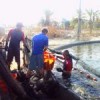
Fish Swim in Israel’s Desert
"It wasn't easy to convince people that growing fish in the desert makes sense," reminisces marine biologist Samuel Appelbaum, peering through the opaque water where thousands of barramundi are being harvested.MIDEAST: Palestinians Prepare for Massive Uprising
Leading members of the Palestinian Popular Committees in the West Bank plan massive civil unrest and disobedience against the Israeli occupation authorities come September when the Palestinians take their case for statehood to the UN.EGYPT: Defections Threaten to Crack Muslim Brotherhood
For the last 40 years, the Muslim Brotherhood's united front has been the envy of Egypt's political opposition. But in the six months since the fall of the Mubarak regime, the Islamist group has been racked by unprecedented internal divisions.
MIDEAST: Families Cry Out for Palestinian Prisoners
"We could enter the Guinness book of records for the longest running weekly sit- ins in the world," Nasser Farrah, from the Palestinian Prisoners' Association, jokes dryly. Since 1995, Palestinian women from Beit Hanoun to Rafah have met every Monday outside the International Committee of the Red Cross (ICRC) office in Gaza City, holding photos and posters of their imprisoned loved ones, calling on the ICRC to ensure the human rights of Palestinians imprisoned in Israel's 24 prisons and detention centres.
War Makes for Strange Bedfellows
A soldier and an Islamist - both fleeing the crackdown on Syrian pro-democracy protesters and seeking refuge in neighbouring Lebanon - have discovered that they share similar views on the ongoing uprising.
EGYPT: ‘One Mubarak Goes, 18 Come In’
Almost six months after the popular uprising that led to the ouster of former president Hosni Mubarak, the honeymoon between protesters and Egypt's ruling Supreme Council of the Armed Forces (SCAF) - initially portrayed as a "defender of the revolution" - appears to be over.EGYPT: Parliamentary Polls to Precede New Constitution
In a blow to those calling for a new constitution to be drawn up before elections are held, Egypt's ruling military council last week reiterated its intention to hold parliamentary polls later this year.Egypt Embraces Oil Monarchs, Dubiously
With the nation's economy in tatters from the uprising that ousted its dictator of 30 years, Egypt's transitional government has turned its back on the Western lending institutions that once propped the Mubarak regime. But its decision to accept the massive aid packages dangled by the oil-rich Arab Gulf states has raised suspicions about their intentions, as well as its own.
MIDEAST: Alternative Remedies Fall Short in Gaza
"When I came back to Gaza in 2006, before the siege started, people came to me for acupuncture," says Dr. Hisham Mwtoweh, a medical doctor and acupuncture practitioner trained in China and Korea.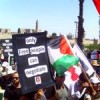
MIDEAST: Marching in Step for Peace
For the first time in over 20 years, thousands of Israeli and Palestinian peace activists marched peacefully together on Friday to support the Palestinian drive for statehood expected to be endorsed at the UN General Assembly in September.
MIDEAST: Borders in Way of Orders
Waddah Bsaiso is ready to export, if the Israeli-imposed siege would allow him. He has the experience, the contacts, and the products, but is prevented by Israel's strict ban on virtually all Gazan exports, save a token amount of flowers periodically allowed out of the Strip.
HEALTH: Israeli Takes a Step Forward
"One step at a time," this fairy tale says. "Wonders and miracles, these shoes brought me back my life!" For Miriam Gilebsky, walking is no simple thing, it’s an achievement greater than life, like walking on the moon, perhaps. One small step for health is one giant leap when you suffered a stroke.MIDEAST: Palestinians Won’t Learn Israeli Lessons
Widespread strikes across Palestinian civil society could be in store for East Jerusalem at the start of the next school year, as the municipality moves ahead with its current plan to implement an Israeli curriculum in Palestinian schools.
EGYPT: Fishing Dangerously for Quick Net Worth
Ali Mohsen knows how to tell a good fish story. The wiry, white-haired Egyptian mariner weaves a yarn about his childhood days when the sea was so full of fish that one could simply dangle a hand net over the side of the boat and pull up a seafood dinner. This morning, his crew spent hours out at sea with only four kilos of small fish to show for it.MIDEAST: Never a Good Day for This Population
In dire need of money to assist her family back home, 27-year-old Makeda from Ethiopia was forced to return to the Middle East as a domestic worker.MIDEAST: ‘Flytilla’ Debacle Another PR Nightmare For Israel
Confused foreign tourists arriving at Israel’s Ben Gurion International Airport on Friday would be forgiven for thinking that a terrorist attack was about to take place.
MIDEAST: A Weekly Walk to the Border
It is another sweltering morning in Gaza. Despite the heat, a tenacious group of women, men and children gathers near the bombed Agricultural College in Beit Hanoun for the weekly march to the "buffer zone", the 300 metres flanking the Gaza-Israel Green Line border which Israeli authorities have declared off-limits to Palestinians.MIDEAST: Egypt-Israel Gas Pipeline Targeted
The pipeline that carries Egyptian natural gas to Israel was attacked by unknown perpetrators on Monday (Jul. 4), the third such incident since the Jan. 25 Revolution that ended the rule of longstanding former president Hosni Mubarak.
MIDEAST: Mosques Carry the Scars of War
"The mosque was just 100 metres from our house. We prayed there every day, five times a day. But it was more than a house of prayer," says Mohammed, a Beit Hanoun resident, of one of the 34 mosques completely destroyed during the 23-day Israeli war on Gaza in 2008-2009.MIDEAST: Women on a Political Backslide
Following five months of bitter political wrangling, Lebanon’s Prime Minister Najib Mikati finally announced a new government in mid-June. But while many Lebanese feel relieved over the long overdue appointments, gender equality campaigners despair that there is not a single female among 30 ministers appointed to the new Cabinet. It has further ruffled activist feathers that this glaring omission has failed to elicit the condemnation they are demanding.« Previous Page — Next Page »





The Week with IPS

NEXT STOP - SDGs
Tracking global progress towards a sustainable world
Tracking global progress towards a sustainable world
