Languages
Tuesday, October 13, 2026



News and Views from the Global South
Asian Tsunami
DEVELOPMENT: Small Islands Face Greater Dangers Than Rogue Waves
Even as island states take a hard look at their disaster response plans in the wake of the catastrophic Indian Ocean tsunamis, officials in the Caribbean say that their economic development and environmental needs are even more pressing.CHILE: Asian Tsunami Highlights Past Tragedies, Future Risk
The devastating tsunami that struck Asia and Africa on Dec. 26 was a sobering reminder to Chile of the constant threat it faces as a country "bathed" by the Pacific Ocean, as its national anthem says. And worst of all, it is a threat for which the country is largely unprepared.TSUNAMI IMPACT: Early Warning Takes On Urgency
Setting up an early warning system for tsunamis is expected to top the agenda at an international meeting on small island developing states taking place in Mauritius from Sunday.TSUNAMI IMPACT: Transparency as Crucial as Aid – Activists
Indonesian activists are busy lobbying that mechanisms for transparency and accountability be put in place to ensure that billions of dollars in aid after the tsunami disaster will go to the right people, in the right way.TSUNAMI IMPACT: For Sri Lankans, Return to Coastal Homes Is Hard
Some two weeks after the devastating tsunami that hit countries around the Indian Ocean, the Kalmunai beach in eastern Sri Lanka looks like it has been at the centre of a nuclear explosion. Almost all the structures on the beach are destroyed, in some places as far as 400 metres inland from the coast.TSUNAMI IMPACT: Rising Seas, Wild Weather Menace Small Islands
The world's 37 small island developing states (SIDS), which are both economically fragile and perpetually threatened by cyclones and major floods, will make an urgent appeal for better disaster preparedness at an international gathering of world leaders in Mauritius next week.LATIN AMERICA: Region Unprepared for Eventual Tsunami Threat
Almost none of the Latin American countries with coastlines are prepared to confront a tsunami, although experts warn that the region could possibly face a disaster similar to the one that struck Asia in late December.TSUNAMI IMPACT: Reconstruction to Top EU Summit
Preventive and reconstruction aid to the Asian countries hit by the tsunami will top the agenda at an emergency meeting of EU foreign, health and development ministers Friday.TSUNAMI IMPACT: Delaying Debt May Not be Enough
World leaders need to cancel debts of poor tsunami- hit countries rather than just freeze them for now, leading campaigners say.TSUNAMI IMPACT: U.N. Needs One Billion Dollars Fast For Relief Aid
United Nations Secretary General Kofi Annan Thursday launched a "flash appeal" for nearly a billion U.S. dollars in immediate emergency aid for tsunami survivors in almost a dozen countries, after killer waves wreaked havoc along the Indian Ocean the day after Christmas.TSUNAMI IMPACT: Japanese Loosen Their Purse Strings
While world leaders were meeting in Jakarta to discuss massive tsunami reconstruction and relief programs, ordinary Japanese Thursday joined their international counterparts as they donated generously to relief funds for survivors of the killer waves.TSUNAMI IMPACT: Shocks Reach Far Beyond Indian Ocean
As donations for the Indian Ocean tsunami disaster continue to rise, development experts are hoping that the generosity shown by governments and citizens will mark a "new beginning" in the fight against poverty.TSUNAMI IMPACT: Andaman Tribes Have Lessons to Teach Survivors
Stone age tribes living on India's remote Andaman and Nicobar islands not only survived the devastating Dec. 26 tsunami - triggered by an undersea quake whose epicenter was closest to their homelands - but may actually have a few lessons in reading natural early warning systems for their less perceptive Asian neighbours, say scientists.TSUNAMI IMPACT: Plan to Help World’s Poor Could Be Washed Out
The tsunami disaster that claimed the lives of over 150,000 people in south and southeast Asia is also threatening to derail the U.N.'s Millennium Development Goals (MDGs) - including a lofty plan to reduce by half the number of people living in poverty worldwide.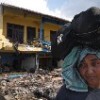
TSUNAMI IMPACT: South Africa Reaches Out to Disaster Victims
A South African delegation will be amongst those attending an international donor conference in the Indonesian capital of Jakarta, Thursday, to discuss the needs of people affected by last week’s tsunami disaster.TSUNAMI IMPACT: Canada Opens Door to Disaster Victims, Orphans
The Canadian government is offering to allow relatives here to adopt tsunami orphans and bring them to Canada under a programme to fast-track immigration from the disaster areas.TSUNAMI IMPACT: Loss of Innocence in the Politics of Aid
As the international summit meeting to coordinate aid for the victims of the Indian Ocean tsunami opens in Jakarta on Thursday, various states are jockeying for political advantage in the region. Prominent among them are the United States, India, Japan and Australia, which have formed a self-nominated ''core group'' while bypassing the United Nations.TSUNAMI IMPACT: Burma ‘Spared’ or Junta Covering the Truth?
It remains one of the greatest mysteries so far on how Burma, with over 2,000 kilometers of its coastline along the Andaman Sea directly exposed to the devastating tsunami waves that killed over 140,000 people in the region the day after Christmas, managed to escape with minimal damage.TSUNAMI IMPACT: Aceh Children Becoming Vulnerable to Traffickers
Some call it a ''philanthropic act'', others a ''big blunder'' when Indonesia's First Lady Kristiani Herawati Yudhoyono publicly expressed her intention to adopt a 13-year-old Acehnese boy whose parents were swept away by the tsunami that devastated Asia, a day after Christmas.TSUNAMI IMPACT: British Donating 2m Dollars an Hour
There is nothing quite like a calamity to bring the best out of the British. Over the last two days British people have been donating something like two million dollars an hour for people hit by the tsunami.TSUNAMI IMPACT: Sri Lankans Ask ‘Where Do We Begin?’
Mohamad Nawaz's eyes brim with tears as he stares at the wreck that was once his four-roomed home a short walk from the beach of this fishing village on the southern tip of Sri Lanka. What was once his furniture is scattered nearby. A damp stench hangs in the air.« Previous Page — Next Page »





The Week with IPS

NEXT STOP - SDGs
Tracking global progress towards a sustainable world
Tracking global progress towards a sustainable world
