Languages
Monday, September 21, 2026



News and Views from the Global South
Beyond Doha: Better Financing for Development
DEVELOPMENT: Donors And The Poor Agree Aid Agenda
Delegates from both developing and developed countries have adopted the Accra Agenda For Action (AAA) as a guide to improve the way aid is given and spent.DEVELOPMENT: U.N. Warns of Faltering Goals on Aid, Trade
When the United Nations approved a set of development goals on poverty, health, gender empowerment, and sustainable environment back in September 2000, it laid down a deadline of 2015 to reach these targets.
DEVELOPMENT-CAMEROON: Microfinance Succeeding Despite Obstacles
Mrs Adjoumi Hamidou is the President. One of three surviving widows of Ali Hamidou, she heads Akoldiningnal, a collective that runs a multi-cereal mill at Gashiga village, 15 kilometres from the capital of Cameroon's North Province, Garoua.DEVELOPMENT: Nice, Fuzzy, Positive Language on Aid
Ministers and senior government officials from around the world have reportedly agreed an action plan to make the system of aid more effective after days of hard negotiations that pitted some of the world’s poorest nations against donor giants.DEVELOPMENT-SWAZILAND: Don't Blame Donor Dependency
What happens to a nation whose people depend on the largesse of international donor agencies for their existence, once support is withdrawn?
DEVELOPMENT: Coming Together To Aid the Poor
In what is turning out to be hard-fought negotiations between rich and poor nations, more than 1,000 government and civil society delegates are gathered in the Ghanaian capital to agree the best ways to deliver and administer aid.
SIERRA LEONE: Building Peace
Sierra Leone has been a major recipient of foreign aid since the end of a devastating 11-year civil war in 2002. But government, donors and citizens are all questioning how effectively this aid is being used.
DEVELOPMENT: Accra Agenda for Action – A Step Backwards?
Ahead of the Third High Level Forum on Aid Effectiveness (HLF3), opening in Accra on September 2nd, representatives of civil society at a parallel forum have raised concerns that the HLF could represent a step backwards in efforts to improve aid effectiveness.
WORLD-DEVELOPMENT: ‘‘It’s the Same Talking and Talking’’
About a 1,000 delegates are expected to take up their seats tomorrow at a high level forum on the effectiveness of aid that opens in Ghana’s capital, Accra. But their arrival has been met with mixed reactions.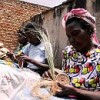
DEVELOPMENT: Peace Baskets Bring Hope to Rwandan Women
In the courtyard of a red brick home in the district of Gitarama outside Kigali, three women sit together on a bench, laughing and gossiping as they wrap lengths of crimson twine around a curl of bunched straw. While it may seem like little more then Rwandan tradition, these weavers represent an economic success the tiny landlocked country has earned by the hands of its women.DEVELOPMENT: Towards an 'Aid-Free' World?
Imagine the dawn of a day when development aid ministries in Europe are shut down because there are no countries left in the 'South' that depend on financial assistance from the 'North'.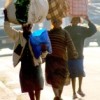
DEVELOPMENT-ZIMBABWE: Ground Realities Stall Basket Fund Take Off
In 2006, there was shared concern among donors and women’s organisations over the fragmented approaches to gender and women’s empowerment programmes in Zimbabwe.
Q&A: "Where Women Can't Thrive, MDGs Are in Jeopardy"
Ines Alberdi has worked for over 25 years on gender issues and in politics.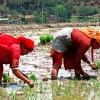
DEVELOPMENT: Nepal Scrutinises Spending to Cap Gender Gaps
The period between 2002 and 2007, was marked with various political and economic changes in Nepal. As the government and the Maoist rebels fought a bloody war in the hinterlands, exports plummeted due to internal and international factors, investments by government and private sectors dropped due to instability caused by the war and agriculture stagnated. During this period Nepal’s average growth dropped from 5 to 2.9 percent.CUBA: Fresh Salad – No Longer “Grass for the Chileans”
When leafy vegetables like watercress or cabbage showed up at the local market in the 1970s and 1980s in Alamar, a suburb east of the Cuban capital, locals would say "here’s grass for the Chileans."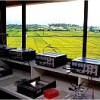
PHILIPPINES: Hungry for Rice, Unwilling to Invest
When the price of rice nearly doubled to about 90 US cents per kilo, two months ago, Liza Valino put cheaper substitutes like bananas and sweet potatoes on the table to feed her family of ten. But no one was satisfied.
Q&A: Women Do Most, With Least Assistance
The international debate on effective aid that is shaped by developing countries' needs rather than donors' priorities will be resumed when ministers from over 100 countries, and members of development agencies, donor organisations and civil society gather for the Third High-Level Forum on Aid Effectiveness in Accra Sep. 2-4.
CAMBODIA: 'Getting Decent Jobs for Women – The Challenge'
‘Women are cloth, men are gold’. This traditional Khmer saying is quoted by many studies on gender in Cambodia as emblematic of the different value accorded to men and women in this country of 14 million.
Q&A: “Condoms Have To Be Used To Be Useful”
Of the over 30 million people living with HIV, half are women and the rate of infections in women is rising, particularly in sub-Saharan Africa. What’s more, women’s rights groups say gender inequalities are fuelling the epidemic - there is an irrefutable feminisation of HIV.
Q&A: “Policy Incoherence” Frustrates Funding for Gender Equity
Inequality between men and women "is not always linked to poverty. We must not postpone action until we are rich and happy, because we may get rich without achieving gender equality," Roberto Bissio, coordinator of the international network Social Watch, told IPS.PERU: Seeking Ways to Remedy Unequal Distribution of Mining Taxes
The Peruvian parliament is studying ways to improve the distribution of the "canon minero", the portion of the taxes paid by mining companies that is transferred to the regions, in order to benefit the country’s poorest provinces.« Previous Page — Next Page »


The Week with IPS

NEXT STOP - SDGs
Tracking global progress towards a sustainable world
Tracking global progress towards a sustainable world
