Languages
Wednesday, October 21, 2026



News and Views from the Global South
Beyond Doha: Better Financing for Development
HAITI: Disorganised Diaspora on Fringe of Post-Quake Decisions
For years, Haitians living overseas have been the lifeline of the troubled country, sending billions of dollars to relatives back home.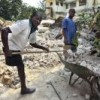
HAITI: Rebuilding Waits on Promised Aid
A week ago, 59 U.N. member states, international institutions and NGO coalitions pledged nearly 10 billion dollars towards rebuilding Haiti over the next decade./CORRECTION*/HAITI: Donors Pledge 10 Billion Dollars in Aid
Eleven weeks after an earthquake killed over two percent of its population and flattened its capital city, Haiti is looking towards a long and complex rebuilding process.DEVELOPMENT: Recovery Could Leave Behind World’s Poorest
The world's 49 least developed countries (LDCs), described as the poorest of the poor, could feel the effects of the global economic crisis for decades, a senior U.N. official warned this week.
HAITI: U.N. Gears Up for Major Aid Meet
Although the humanitarian crisis in Haiti remains dire, with over a million still homeless and hundreds of thousands in need of adequate shelter for the upcoming rainy season, the international community has started looking towards the country's long-term reconstruction.DEVELOPMENT: Sanitation Goals Falter Amid Official Apathy
At the United Nations, "water and sanitation" have remained inseparable twins on the world body's social and economic agenda.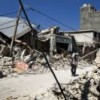
DEVELOPMENT: Haiti Must Destroy Before Rebuilding
When the Jan. 12 earthquake struck this mountainous country, in less than a minute, it transformed it from one of the poorest countries in the Western Hemisphere to the largest construction site this side of the Atlantic.DEVELOPMENT: Political Will the Missing Link for MDGs
Despite numerous factors that threaten the achievement of the Millennium Development Goals by 2015 - a global financial crisis, a food crisis, climate change, natural disasters – U.N. Secretary-General Ban Ki-moon said this week that his main concern is "political will".DEVELOPMENT: Bad Water More Deadly Than War
Bad water kills more people than wars or earthquakes, declares Anders Berntell, executive director of the Stockholm International Water Institute (SIWI).HAITI: Recovery Bill Estimated at 11.5 Billion Dollars
Two weeks before a major donors conference, the Haitian government has estimated that the country will need some 11.5 billion dollars over the next three years to recover from the devastating Jan. 12 earthquake.HAITI: Experts Urge Sea Change in “Culture of Aid”
A delegation of human rights experts is preparing to visit Haiti to assess the human rights and aid situation in the earthquake-crippled nation and to urge the international community to follow a series of guidelines they have prepared to help donors' to "overcome the mistakes of the past."DEVELOPMENT: Grassroots Aid Groups Struggle to Stay Afloat
The Holy Child Integrated Agricultural Centre, an organic farm near Abeokuta in southwestern Nigeria, was looking forward to having running water. An industrial borehole had already been already installed, and a pump and piping to various buildings were in place.CLIMATE CHANGE: U.N. to Mobilise Funds for Developing Nations
After countries failed to reach a binding agreement on greenhouse gas emissions at the crucial Climate Change Conference in Copenhagen last December, the United Nations moving forward to enforce a pledge to help developing countries cope with the worst impacts.U.S.: Obama Calls for More Development, Counterinsurgency Aid
U.S. President Barack Obama Monday called on Congress to approve major increases over the coming months in global health, development, and counterinsurgency assistance as part of a record 3.8-trillion-dollar 2011 federal budget.HEALTH: 10-Billion-Dollar Vaccine Pledge by Gates Hailed
The pledge by the Bill & Melinda Gates Foundation to provide 10 billion dollars over 10 years on vaccines aimed at reducing child mortality in the world's poorest countries was hailed by global health organisations around the world Friday.
HAITI: Military Playing Large Role in Relief Efforts
As international attention turns to the long-term reconstruction of earthquake-stricken Haiti, U.N. officials pledged that the Haitian government would have full involvement and authority over the process.
Q&A: Sweden Vows to Sustain Aid Levels to Poorer Nations
Sweden has pledged to maintain its current level of development aid to the world's poorer nations - roughly at about one percent of gross national product (GNP) - despite the global financial crisis.AGRICULTURE: Three-Quarters of Hungry Are Rural Poor
Climate change, associated with a four-fold increase in natural disasters in the last decade, and the growth of world population, which is expected to reach nine billion by 2050, pose new challenges for aid initiatives like those of the United Nations World Food Programme (WFP).URUGUAY: ‘Dry Toilets’ Provide Ecological Solution in Slums
Marisabel's modest home had no plumbing, like the rest of the dwellings in this poor suburb on the outskirts of Montevideo, the capital of this small South American country.
CORRUPTION-AFRICA: A Crime Against Development
Corruption is preventing the world from reducing extreme poverty, from averting child deaths and even from fighting epidemics like HIV/AIDS. And it will have a devastating effect on the attainment of the Millennium Development Goals if not tackled directly by each national government.
GENDER: Zimbabwe Basket Fund Takes Off
A basket fund aimed at increasing the economic participation of women in Zimbabwe, has been relaunched after a start which faltered due to the delayed appointment of the new government earlier this year.« Previous Page — Next Page »





The Week with IPS

NEXT STOP - SDGs
Tracking global progress towards a sustainable world
Tracking global progress towards a sustainable world
