Languages
Tuesday, September 29, 2026



News and Views from the Global South
Colombia
COLOMBIA: “Proof-of-Life” Videos Feed Hostages’ Families’ Hopes
"You look as good as ever," was the radio message that Olga Valderrama sent over the airwaves to her son, army corporal Antonio Sanmiguel, who is being held captive somewhere in the jungles of Colombia by the FARC guerrillas.COLOMBIA: Spying on Human Rights Defenders
"Coming to Colombia is to enter a world that is always intense, captivating and heart-wrenching at the same time," Susana Villarán, a former member of the Inter-American Commission on Human Rights (IACHR), wrote in April 2008.
Q&A: “Obama’s Agenda Hasn’t Arrived in Colombia Yet”
An agreement between Bogotá and Washington for the U.S. to use seven military bases in Colombia points to the lingering effects of the agenda of former President George W. Bush (2001-2009), because the agenda of his successor, Barack Obama, "hasn't arrived here yet," says Colombian Senator Cecilia López.COLOMBIA: Indigenous People Troubled by U.S. Military Presence
The head of Colombia's biggest association of indigenous people is concerned that allowing U.S. troops to use military bases in his country will signal a regression to former times when the United States exercised control over Latin America, while a native activist warned of an increase in the number of cases of sexual abuse of young indigenous women by foreign soldiers.TRADE-VENEZUELA: Out with Colombia, In with Argentina
Ten thousands cars, 80,000 tons of beef, 100,000 tons of corn, 18,000 tons of milk, 9,000 tons of beans, 18 million eggs, two million pairs of shoes: Argentina has agreed to 1.1 billion dollars worth of sales to Venezuela, which has decided to stop importing goods from Colombia and get its supplies from other sources.COLOMBIA: A Country in Flight
While the street sweepers clean up huge piles of rubbish in the Tercer Milenio park in the centre of the Colombian capital, young police officers have been posted there to prevent any more people displaced from their rural homes by the armed conflict from trying to camp there.COLOMBIA: Half Century of US Military Presence
In the 1960s, it went by the name of Latin American Security Operation, or Plan LASO; today it is known as Plan Colombia. Back then, the aim was to weed out communism; now it is to combat drug trafficking, while at the same time dealing a blow to the guerrillas.COLOMBIA-VENEZUELA: Conflict Heating Up – Again
The latest row between Colombia and Venezuela continues to escalate, prompting Brazil to decide to intervene, in order to head off further incidents or statements that could lead to a rupture of ties between its two neighbours.COLOMBIA: Killings of Indians Continued During UN Rapporteur’s Visit
"Colombia’s indigenous people find themselves in a serious, critical and profoundly worrying human rights situation," says the preliminary report by United Nations special rapporteur James Anaya, who just completed a visit to this country.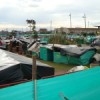
COLOMBIA: Displaced People Evicted From Protest Camp
Thousands of displaced Colombians living in a protest camp in a park in central Bogotá are the target of an eviction plan by the local authorities, who admit they are overwhelmed by the influx of people fleeing violence in the countryside.COLOMBIA: Uribe Agrees US “Access” to Military Bases
With parliament in recess, the Colombian government of Álvaro Uribe confirmed that it would give the United States access to at least three military bases.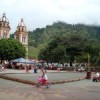
COLOMBIA: Gold vs Preservation in the Central Mountains
In a protected area of the Cordillera Central, Colombia's central mountain range, gold mining plans are clashing with the desire of farmers, activists and environmental officials to preserve forests and water resources.COLOMBIA: “We Will Never Recover Our Standard of Living”
"It never crossed my mind that I would have to leave my country and leave behind our farms, work, people and lifestyle. It was a life or death decision we had to take in a matter of hours," said Amalia*, a 42-year-old married Colombian woman with two children, who for the past seven years has lived on the outskirts of the Venezuelan capital.US-COLOMBIA: Uribe Presses FTA in First Encounter with Obama
Long-stalled efforts to consummate a free trade agreement (FTA) between the United States and Colombia may be gaining some momentum, despite persistent questions about Bogota's human rights record.
COLOMBIA: Jaime Garzon’s Murder; No Digging Allowed (Part 2)
It’s always the same: the TV audience is grief-stricken and indignant that he is no longer with us, but they continue to laugh along with him. Beloved Colombian comic Jaime Garzón was assassinated on Aug. 13, 1999, but he is still alive on the small screen.
COLOMBIA: Spying in the Name of ‘Democratic Security’ (Part 1)
While the world's attention was riveted on the inauguration of U.S. President Barack Obama, an operation was surreptitiously being carried out Jan. 19-21 at the headquarters of Colombia’s domestic intelligence agency, the Departamento Administrativo de Seguridad (DAS), which answers directly to the president’s office.COLOMBIA: UN Confirms ‘Systematic’ Killings of Civilians by Soldiers
Philip Alston, the U.N. rapporteur on extrajudicial executions, said this practice is "systematic" in Colombia. But he added that he did not have evidence that it was a state policy, as many victims and human rights defenders argue.COLOMBIA: All the President’s Spies
Colombian journalist Hollman Morris phoned an international news agency and said in an agitated voice: "I am being followed by the police."LABOUR: Colombia Still Undisputed Leader in Trade Unionist Murders
Colombia has long been the world leader in murders of trade unionists – a dubious distinction that it seems in no danger of losing, according to a new report by the International Trade Union Confederation (ITUC).ENVIRONMENT-COLOMBIA: Coal Mine Hurts Highlands Lake, Farms
Protests by indigenous farmers in the Colombian village of Cuayá, 75 km north of Bogotá, have failed to bring to a halt the unregulated extraction of coal, which has had disastrous environmental effects on Lake Suesca, 3,000 metres above sea level.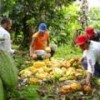
COLOMBIA: The Farmers Who Abandoned Coca for Cocoa
Chocaguán Amazónico, a small peasant-run alternative crop company that emerged in the midst of Colombia's cocaine boom and civil war, will celebrate its 15th birthday in September.« Previous Page — Next Page »


The Week with IPS

NEXT STOP - SDGs
Tracking global progress towards a sustainable world
Tracking global progress towards a sustainable world
