Languages
Wednesday, October 7, 2026



News and Views from the Global South
Colombia
COLOMBIA: Hostages Release Goes Far Beyond Personal Ordeal
The long ordeal of two of the 45 hostages held by the Revolutionary Armed Forces of Colombia (FARC), whose release was promised by the guerrilla leadership on Dec. 18, appears at long last to be coming to an end.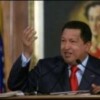
COLOMBIA: Government Okays Chavez’s Hostage Release Plan
The day after Christmas was a time of agonising waiting for the families of hostages held by Colombia’s FARC guerrillas, who promised to release three of the captives within the next few days. A bold international operation presented by Venezuelan President Hugo Chávez to ensure the safe release of Colombian politicians Consuelo González and Clara Rojas, and the latter’s young son Emmanuel, was accepted by the Colombian government.CHALLENGES 2007-2008: Grim Present, Dim Future for Andean Integration
The Andean countries are passing through the gates of the new year with their trade bloc, the Andean Community of Nations (CAN) - the oldest and most structured regional integration agreement in the Americas - fraying at the edges.RIGHTS-US: Congress Takes Action on Cluster Bombs, Child Soldiers
Human-rights and humanitarian groups are hailing provisions of a major appropriations bill approved by Congress this week that bans the export of most U.S.-made cluster bombs and U.S. military aid for foreign governments that use child soldiers.RIGHTS-COLOMBIA: Walking from Bogota to Caracas for Peace
After walking 800 km from Bogota, Colombian teacher Gustavo Moncayo, known as the "peace walker", crossed into Venezuela on his way to Caracas. Escorted by hundreds of supporters, the 55-year-old Moncayo was handed a torch, and a Venezuelan flag was draped around his shoulders.POLITICS-COLOMBIA: Negotiations With FARC Cut Short
Colombian Senator Piedad Córdoba charged at a press conference here Wednesday that the government of Colombian President Álvaro Uribe has little interest in negotiating a settlement with the Revolutionary Armed Forces of Colombia (FARC), a Marxist guerrilla group that is said to be holding around 750 people hostage.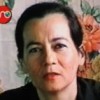
COLOMBIA: FARC to Release Three Hostages to Chavez
The leaders of Colombia’s FARC guerrillas ordered the release of two women hostages and the young son of one of them as a gesture of "compensation" for the frustrated facilitation efforts made by Venezuelan President Hugo Chávez and Colombian Senator Piedad Córdoba, and of goodwill towards the hostages’ families.
COLOMBIA: Jail the Messenger
The treatment given to messengers has sparked wars or has been seen as a sign of political will and mutual trust and confidence.RIGHTS-COLOMBIA: Cooperation for Peace, Not War
"A state becomes a violator of human rights when it fails to guarantee, promote or defend them," said Argentine ambassador to Colombia Martín Balza during the Third International Conference on Colombia.
COLOMBIA: The Chibcha Culture – Forgotten, But Still Alive
Use of the sacred coca leaf, respect for water and nature, and other practices of the pre-Columbian Chibcha or Muisca culture survive in Colombia in spite of five centuries under attack. The culture was as highly-developed as those of the better-known Inca, Maya and Aztec people, according to scholars.
COLOMBIA-VENEZUELA: Diplomatic Crisis Worries Border Dwellers
Rubén Plata works like "fly-by-night" capital: wherever he finds the best returns is where he can be found. He moves from one activity to the next without looking back, although he draws the line at anything "crooked."VENEZUELA-COLOMBIA: ‘Freezing’ of Relations as Seen from the Border
When this correspondent crossed the border from Venezuela to Colombia at the Venezuelan town of Ureña on the way to Cúcuta, the border post was practically deserted.COLOMBIA-VENEZUELA: Possibly the Bitterest Conflict in a Century
The neighbouring countries of Colombia and Venezuela, whose governments have the most diametrically opposed ideologies in South America, have come within a whisker of breaking off relations after a harsh exchange of accusations between Presidents Álvaro Uribe and Hugo Chávez.COLOMBIA: Door ‘Definitively’ Closed on Chavez’s Mediation
"Hey, I want to ask you a question. How many police officers and soldiers are being held hostage by the FARC?" Venezuelan President Hugo Chávez asked Colombian army chief General Mario Montoya.COLOMBIA: Quarries in Slums Seen as Health Risk
Local residents of shantytowns on the outskirts of the Colombian capital complain that sand, gravel and limestone quarries operating in the area pose serious risks to their health as well as the danger of landslides. But they are afraid to speak out.COLOMBIA: Chavez Asks Uribe for Patience in Hostage Talks
"Impatience is not a good thing," Venezuelan President Hugo Chávez responded to the Colombian government’s announcement of a December deadline for his efforts to broker an agreement for an exchange of imprisoned guerrillas for hostages held by the rebels.
EDUCATION: Schools, Academics in the Gun Sights
A "dramatic increase" in targeted violence against schools and educational institutions, mostly in conflict zones, is having a devastating effect on students, teachers, trade unionists, administrators and education officials, according to a new U.N. study released here.
COLOMBIA: Malaria Winning the Battle in Choco
The Atrato River is "full of malaria", according to a dozen men in rubber boots, standing in the water that has inundated the village of Tanguí, in Colombia's north-western jungle.COLOMBIA: Pawns of War – The Hostage Crisis
"Mr. President, we who are going to die send you our greetings." The Sept. 26, 2006 message, addressed to Colombian President Álvaro Uribe, came from a hostage held by the Revolutionary Armed Forces of Colombia (FARC), along with eleven other provincial legislators, since April 2002.
COLOMBIA: A Painful Pilgrimage
"Father Antún! Father Antún is back!" were the happy, surprised shouts heard by the IPS news team accompanying Catholic priest Antún Ramos as he returned to his former parish in the village of Bellavista in northwestern Colombia.
ELECTIONS-COLOMBIA: The Going Rate for Votes
What was the going rate for a vote? "About 100,000 pesos (50 dollars)," says Víctor Raúl Mosquera, the ombudsman for the northwestern Colombian department (province) of Chocó.« Previous Page — Next Page »





The Week with IPS

NEXT STOP - SDGs
Tracking global progress towards a sustainable world
Tracking global progress towards a sustainable world
