Languages
Wednesday, November 11, 2026



News and Views from the Global South
Culture
FILM-LATIN AMERICA: Che Guevara’s Journey Leads to the Oscars
Three Latin Americans could walk away with an Oscar on Sunday, two of them for the film "Motorcycle Diaries", about the youth of legendary Argentine-Cuban revolutionary Ernesto "Ché" Guevara.HEALTH-MAURITANIA: Low HIV Prevalence, Widespread AIDS Stigma
In the wooden shanty town of Elmina on the outskirts of Mauritania's capital, Nouakchott, AIDS educators do not let religious or cultural conservatism get in their way.RIGHTS-CANADA: Anti-Terror Laws Sow Fear in Muslim Communities
Passed in the aftermath of the Sep. 11, 2001 attacks on the United States, Canada's Anti-Terrorism Act is being used to intimidate citizens and immigrants of Muslim origin through racial profiling conducted by federal police, activists charge.POLITICS-US: "Anti-Islamist" Crusader Plants New Seeds
Despite the apparent decision by President George W. Bush against re-nominating him to the board of the United States Institute of Peace (USIP), "anti-Islamist" activist Daniel Pipes is working as diligently as ever to protect the United States and the Western world from the influence of radical Islamists.CHILE: Mapuche Culture an Ingredient in Health and Cuisine
Medicines and foods of the Mapuches, Chile's largest indigenous group, are finding a place in the market and on dinner tables. Pharmacies and restaurants are turning into a new source of income for the Mapuche people - and a window into their culture.FOOTBALL-SPAIN: United Against Racism
The Spanish government, professional associations and civil society organisations resolved on Tuesday to join forces to fight racism in football, in view of the harm it causes and the way it reflects on society.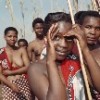
RIGHTS-SWAZILAND: For Women, Constitution Is a Curate’s Egg
There are several reasons why women's rights activists might welcome Swaziland's new constitution, intended to replace the document that was suspended by King Sobhuza in 1973. Then again, there are also reasons why they might not./ARTS WEEKLY/: Berlin Film Festival Produces Surprises
In a major surprise, the South African-made movie 'U-Carmen eKhayelitsha' hoisted the top Golden Bear award at the 55th Berlin International Film Festival last week./ARTS WEEKLY/BOOKS: Fear and Loathing in Colonial Kenya
In the annals of utterly shameless wartime propaganda, Britain's casting of the Kenyan Mau Mau as bloodthirsty savages, and its own colonial administrators as heroic benefactors, is pretty much the gold standard./ARTS WEEKLY/BOOKS-U.S.: The Other Ivy League
When the all-black student body of Pennsylvania's Lincoln University was confronted with the proposal of integrating its all-white faculty in 1928, opinion was starkly divided./ARTS WEEKLY/AFGHANISTAN: Muted Musicians See Hope in Young Performers
Music might have suffered terribly in the Taliban-ruled Afghanistan, but a group of exiled Afghan musicians in neighbouring Pakistan have taken it upon themselves to preserve the musical tradition of their homeland by setting up music academies in this border city.POLITICS-US: Bush’s Faith-Based Budget
President George W. Bush's latest budget proposal slashes funds from more than 150 government programmes, but his Faith-Based Initiative isn't one of them.CULTURE: ‘Rough Row’ Breaks Out on Diversity
A "rough row" has broken out between the United States and a host of other countries on protection of cultural diversity.HEALTH-GABON: Abortions – Mostly Illegal, But in Demand
Some women take the decision because they cannot contemplate supporting another child. Others are too young to take care of even one. Whatever their reasons, a growing number of Gabonese girls and women are choosing to have illegal abortions – often with disastrous consequences.IRAQ-US: ‘Biggest Cultural Disaster Since 1258’, Says Expert
One million books, 10 million documents and 14,000 archaeological artifacts have been lost in the U.S.-led invasion and subsequent occupation of Iraq - the biggest cultural disaster since the descendants of Genghis Khan destroyed Baghdad in 1258, Venezuelan writer Fernando Báez told IPS.HEALTH-KENYA: Do Safer Births Require a Break With Tradition?
"I use a razor, scissors and thread," says traditional midwife Peris Machanja, describing part of her work in delivering a baby. "Sometimes I use gloves, which I disinfect to use for another job – that is, if they are not torn. If they are, I try to get new ones."CHILE: Andean Indigenous Carnival Comes to the City
For the second year in a row, the Chilean capital is hosting an Andean Carnival held to pay tribute to Mother Earth and celebrate the ancestral traditions of the indigenous peoples of Peru, Bolivia, Ecuador and northern Argentina and Chile.CULTURE-URUGUAY: Candombe, Llamadas Give Unique Touch to Carnival
Once a year, hundreds of Uruguayans of mainly southern European descent paint their faces black and play the drums alongside their Afro-Uruguayan neighbours.CULTURE-NIGER: Archaeological Treasures May Soon Become a Thing of the Past
There’s no doubting that authorities in Niger have a host of problems to grapple with. United Nations estimates put the number of people living beneath the poverty line in this country in the region of 60 percent – while life expectancy stands at about 46 years.POLITICS-IRAQ: Christians Flee to Safer Ground
Zaid Suleyman, a 34-year-old taxi driver, sits in the administration office of St Joseph's, an Assyrian Christian church in the Kurdish-controlled north of Iraq. He and his wife fled the capital, Baghdad, for the comparative peace of this region in September, and have been renting a room from an elderly church member ever since./ARTS WEEKLY/ARGENTINA: Flea Markets are Income for Some, Treasures for Others
As the aftermath of the late 2001 economic meltdown in Argentina has forced a growing number of people to part with valuable antiques and family heirlooms as a way of raising much needed cash, flea markets have mushroomed around the capital, providing a source of unbelievable bargains for treasure-hunting visitors.« Previous Page — Next Page »





The Week with IPS

NEXT STOP - SDGs
Tracking global progress towards a sustainable world
Tracking global progress towards a sustainable world
