Languages
Thursday, September 24, 2026



News and Views from the Global South
Election Watch - Africa
POLITICS-ZIMBABWE: From Anti-Blair to Aunty Blair?
Zimbabwe's last parliamentary election, held in 2000, transfixed the attention of the international community. A substantial number of column inches were devoted to the campaign of farm occupations and human rights abuses that preceded the ballot - and the allegations of vote rigging that followed.
POLITICS-ZIMBABWE: Upcoming Vote a Rite of Passage for SADC Guidelines
Daniel Molokela is joining other exiled Zimbabwean activists in planning a mock election in South Africa’s capital, Pretoria, ahead of the parliamentary poll in Zimbabwe on Mar. 31. Hopes are that about 1,000 Zimbabweans will congregate in front of their country’s embassy to support the event.
POLITICS-ZIMBABWE: A Campaign Tailor-Made for the Ruling Party
A routine visit to a relative living in a rural area is, in most parts of Africa, a private family matter. Not so in Zimbabwe, says Tiseke Kasambala, a researcher with Human Rights Watch.
RIGHTS: Children Bear the Brunt of Donor Hostility to Zimbabwe, Says UNICEF
Carol Bellamy's final trip to Africa as head of the United Nations Children's Fund, UNICEF, has been overshadowed by what she terms the "stark contrast" between aid given to Zimbabwe - and that received by other African countries in need, especially those in Southern Africa.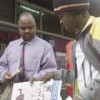
POLITICS: Zimbabwe’s State Media Give With One Hand, Take Away With Another
On the face of it, the new broadcasting regulations issued last month in Zimbabwe were groundbreaking. For the first time in the history of Zimbabwean elections, the opposition would be legally allocated time on state-owned radio and television in the run-up to a parliamentary poll, scheduled for Mar. 31.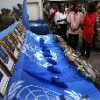
POLITICS-DRC: The Challenge of Piecing Together a “Failed State”
This weekend sees a new military operation underway in the Democratic Republic of Congo. Reports from the central African country say about 800 United Nations troops have been deployed in the north-eastern Ituri region to disarm local militias held responsible for the death of nine peacekeepers last month.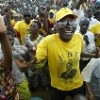
POLITICS-MALAWI: Corruption-Busting President Tries to Forge New Party
Will they or won't they? This question is on the lips of political observers in Malawi at present, as they wait to see whether substantial numbers of ruling coalition or opposition members will support the country's newest political grouping: the Democratic Progressive Party.POLITICS-ZIMBABWE: Will the Opposition’s Campaign Trip Up on Purse Strings?
The topic of campaign finance is rarely far from the minds of politicians or pundits in the run-up to elections – and Zimbabwe is no exception to this rule. With the country in the midst of a political and economic crisis, it may even be a hotter topic of discussion here than elsewhere.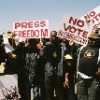
RIGHTS-ZIMBABWE: Journalists Shrug Off Government’s Media Straitjacket
Media rights watchdogs have long criticised the conditions under which journalists in Zimbabwe operate. Since the start of the year, however, the circumstances of the country’s media have become bleaker still.
POLITICS-ZIMBABWE: A Gloomy Election Countdown Begins
And so, another year in Zimbabwe – and in less than three months time, another election. It is a prospect that few seem to welcome.
POLITICS-MOZAMBIQUE: Another Five Years for Frelimo
There were few surprises this week when the final results for Mozambique’s general elections on Dec. 1 and 2 were announced.
POLITICS-MOZAMBIQUE: Electoral Victory at Hand for Frelimo – But Apathy Rules
It would come as no surprise to find that Mozambique’s ruling Frelimo party has put champagne bottles on ice. Preliminary results from general elections held earlier this month (Dec. 1 and 2) show that its presidential candidate, Armando Guebuza, has taken a comfortable lead in the poll.
POLITICS-MOZAMBIQUE: Observers Concerned Ahead of Poll
Mozambicans go to the polls Wednesday and Thursday for general elections that will see President Joaquim Chissano step down after 18 years as head of state.POLITICS-NAMIBIA: Tough Challenges Await the New Government
As preliminary results for Namibia's general elections started trickling in Thursday, Hifikepunye Pohamba of the ruling South West Africa People's Organisation appeared to have taken an early lead in the presidential poll.
POLITICS-NAMIBIA: A Milestone Election Gets Underway
A two-day general election got underway in Namibia Monday. The poll marks the end of an era in the Southern African country, as it will see President Sam Nujoma step down after 14 years as head of state. Nujoma has governed Namibia since its independence in 1990.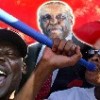
POLITICS-BOTSWANA: The New President Takes Office
Festus Mogae was sworn into office as Botswana’s new head of state Tuesday, after weekend elections that saw the Botswana Democratic Party (BDP) re-capture the lion’s share of seats in the Southern African country’s legislature.
POLITICS-ZIMBABWE: A Tumultuous Week
In recent years, political developments in Zimbabwe have been as hot a topic of conversation in South Africa as they were in Zimbabwe itself. The past week has not proved an exception to this trend.
POLITICS-BOTSWANA: Voters Expected to Choose More of the Same
With the gaze of the international community fixed on next week’s presidential election in the United States, little attention has been paid to the fact that Botswana is also scheduled to go to the polls within the next few days.RIGHTS-THAILAND: Deaths in Custody Could Inflame Muslim South
A clash at the start of this week between hundreds of Muslim protesters and heavily armed Thai troops in the country's south - which left over 80 dead - has delivered a blow to Bangkok's view that it has the local communities on its side.POLITICS-SOUTHERN AFRICA: Electoral Code to Make Its Debut
Voters in Botswana go to the polls this week to elect a new parliament and local government. The diamond-rich nation will become the first to test a new electoral code of conduct adopted by the Southern African Development Community in August.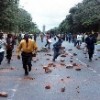
POLITICS-ZAMBIA: Tensions Simmer Over New Constitution
Zambians could be forgiven for pleading "constitution fatigue". The constitution that was drawn up for their country at independence in 1964, has been replaced three times in the past 40 years. Now, yet another constitution is up for debate - something that has pitted government against civil society.« Previous Page — Next Page »


The Week with IPS

NEXT STOP - SDGs
Tracking global progress towards a sustainable world
Tracking global progress towards a sustainable world
