Languages
Sunday, October 11, 2026



News and Views from the Global South
IPS UN Bureau
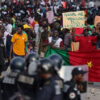
The Ballot Box Illusion: How Authoritarians Repackaged the African Ballot
In many countries across Africa, people have recently lined up to vote. But in country after country, there has been no real choice on offer. As CIVICUS’s 2026 State of Civil Society Report documents, what has frequently been on display is a procedural ceremony of democracy, orderly enough to satisfy observers, but hollow enough to leave those who hold the reins of power untroubled. Laws and structures that were supposed to promote democratic decisions have been manipulated into compliance checks, ticking all procedural requirements while lacking democratic substance. In too many cases, the ballot box has become a public relations exercise.
Trump’s Apocalyptic Rhetoric Echoes Nuclear Annihilation
It is hard to exaggerate the dire implications of Trump’s April 7 post on Truth Social, stating that a civilization will die tonight, never to be brought back again,” if no deal is reached with Iran. Such a damning statement implies that he would use ‘weapons of mass destruction,’ i.e., nuclear, to execute his threat.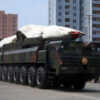
The Middle East War Triggers a Move to Boost North Korea’s Nuclear Arsenal
The ongoing military conflicts in the Middle East—involving the US, Israel, Palestine, Iran and Lebanon—have indirectly bolstered North Korea’s plans to expand its nuclear arsenal.
“War-Shock Inflation” and Inflation Phobia: Lessons of History for Central Bankers
The global economy, is at the precipice of “stagflation” – growth slowdown and higher inflation – due to the energy price shock following the illegal US-Israel war on Iran. The International Monetary Fund (IMF) has recently termed this as a “textbook negative supply shock”. For the first time since the 1970s, the prospect of stagflation seems real.
Russia’s African Cannon Fodder
On 7 April, the government of Cameroon published a list of 16 of its citizens confirmed killed fighting for Russia against Ukraine. That means the number of Cameroon citizens killed in this distant war has likely surpassed a hundred, making the country the biggest victim of a Russian recruitment drive increasingly focused on Africa.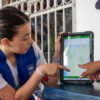
Using Better Data to Break the Cycle of Permanent Crisis
We are stuck in response mode. But what good is an ambulance without a hospital? Climate shocks are intensifying. Conflict is at record levels. Economies are fragile. Humanitarian appeals grow larger each year, while donor countries prioritise domestic and security concerns. One emergency follows another. Recovery slips further out of reach.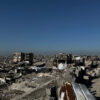
Gaza Crisis Deepens as Aid Restrictions and Ongoing Strikes Strain Humanitarian Operations
Roughly six months after the ceasefire in the Occupied Palestinian Territory went into effect, the humanitarian situation in Gaza remains precariously fragile, despite a relative decline in hostilities. The crisis, marked by ongoing Israeli airstrikes and shelling, continued blockades on humanitarian aid, and widespread displacement, has pushed the majority of Palestinians in Gaza to the brink. Amid the vast scale of needs, basic services are increasingly strained, and humanitarian experts warn that the situation could deteriorate further in the coming months unless sustained aid and funding are secured.
Africa’s Future Depends on Innovation, Data, and Frontier Technologies
Across the continent, GDP has risen on the back of more workers, more capital and a commodity super-cycle, rather than through genuine gains in productivity and innovation. Too little labour has moved out of subsistence agriculture into higher-productivity manufacturing and modern services.
AI: ‘African Governments Are Using “smart City” Systems to Monitor Dissent and Consolidate State Control’
CIVICUS discusses the spread of AI-powered surveillance in Africa with Wairagala Wakabi, executive director of the Collaboration on International ICT Policy for East and Southern Africa (CIPESA) and co-editor of Smart City Surveillance in Africa: Mapping Chinese AI Surveillance Across 11 Countries, the latest report by the African Digital Rights Network (ADRN) and the Institute of Development Studies (IDS).
Explainer: How the GEF Funds Global Environmental Action
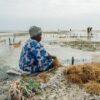
The Global Environment Facility, widely known as the GEF, plays a central role in financing environmental protection across the world. It supports developing countries in tackling climate change, biodiversity loss, land degradation, pollution, and threats to ecosystems.
Wars Impose Lasting Economic Costs, While More Defense Spending Means Hard Choices
War is again defining the global landscape. After decades of relative calm following the Cold War, the number of active conflicts has surged in recent years to levels not seen since the end of the Second World War.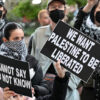
The Five Enablers of the Israeli-Palestinian Conflict
Every powerful actor in the Israeli-Palestinian conflict professes to seek peace. The US and EU repeat the two-state mantra, the Arab states invoke Palestinian rights, AIPAC proclaims its defense of Israel’s security, and Israeli opposition parties promise “responsible” leadership and stability.
Denmark’s Warning
When Danish Prime Minister Mette Frederiksen addressed her supporters on election night on 24 March, she chose her words carefully. Losing four percentage points after almost seven years in power, she suggested, wasn’t so bad given there’s been a pandemic, a war in Europe and a confrontation with Donald Trump over Greenland. The reality was the Social Democrats had recorded their worst general election result since 1903. Meanwhile, the far-right Danish People’s Party (DPP) tripled its seat count, despite years of the Social Democrats leading a systematic crackdown on immigration to try to prevent it gaining support.
The Day the General Assembly Moved to Geneva– to Provide a Platform to a PLO Leader…
The United Nations faces two crucial elections later this year: the election of a new Secretary General, with no confirmed date for polling, and the election of a new President (PGA), scheduled for June 2, for the upcoming 81st session of the General Assembly.
Civil Society Launch a Campaign Against Extractive Industry Exploitation and Land Grabs
Over 800 households in Ikolomani Constituency in Kakamega County, Western Kenya, fear eviction to pave the way for a British firm, Shanta Gold Limited, to begin extracting gold valued at Sh683 billion ($5.29 billion) on an estimated 337 acres of residential and agricultural land.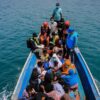
Why the Rohingya Refugees in Bangladesh Need Work, Not Just Rations
While global attention right now is on escalating geopolitical tensions involving the United States, Israel, and Iran, another crisis continues quietly in Bangladesh.
Trump Rips off Velvet Glove from Mailed Fist
Trump 2.0 has been marked by the blatantly aggressive exercise of power to secure US interests as defined by him. While many recent trends even predate his first term, his reduced use of ‘soft power’ has exposed his bullying, extortionary use of US power.
ARGENTINA: ‘Under the New Law, Workers Have No Real Scope to Defend Their Rights’
CIVICUS discusses recent regressive changes to Argentina’s labour laws with Facundo Merlán Rey, an activist with the Coordination Against Police and Institutional Repression (CORREPI), an organisation that defends workers’ rights and resists state repression.
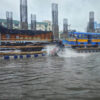
From Flooded to Future Ready: Why Asia Pacific Cities must Become ‘Sponges’
As the Pacific recovers from a severe cyclone season and Asia braces for the monsoon, flood readiness has become a defining test of sustainable urban development.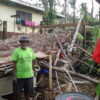
Informal Settlements Grapple With Climate Extremes in Pacific Islands
A rising cycle of poverty and extreme weather threatens many towns and cities, especially those situated on coastlines, in the Pacific Islands. Urban centres in the Pacific have grown at an unprecedented rate this century, rapidly straining national resources for urban planning. But governments are now making progress on improving people’s lives in the informal settlements that dominate the urban sprawl in some of the region’s largest cities.
Israeli Strikes Across Iran and Lebanon Raise Concerns of Broader Regional Instability
The past several weeks have marked a significant escalation in hostilities across the Middle East, with tensions rising among Israel, Lebanon, Iran, and the United States following large-scale exchanges of bombardment. Recent statements from U.S. President Donald Trump, including threats of extensive destruction in Iran, have further inflamed regional tensions and complicated ongoing diplomatic efforts. Humanitarian experts warn that these developments risk further destabilizing cross-border relations and could trigger a broader regional conflict.« Previous Page — Next Page »





The Week with IPS

NEXT STOP - SDGs
Tracking global progress towards a sustainable world
Tracking global progress towards a sustainable world
