Languages
Saturday, November 7, 2026



News and Views from the Global South
IPS UN Bureau
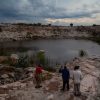
Life-Changing Quarry Mining Shatters Lives in Zimbabwe
On Christmas Day in 2022, 27-year-old Thabani Dlodlo’s eight-year-old son drowned in a flooded pit dug up by quarry miners in the vicinity of Pumula North, a high-density suburb in Bulawayo, Zimbabwe’s second-largest city. As if that was not enough, just a week after New Year’s Day the following year, Dlodlo’s neighbor, 36-year-old Sethule Hlengiwe, also lost her six-year-old daughter after she drowned in another pit flooded with rainwater near her home in Bulawayo.
How AI Can Help Both Tax Collectors and Taxpayers
New technologies have the potential to improve the relationship between governments and citizens. Tax portals, customs IT systems and online services have simplified interactions with public authorities, reduced bureaucratic hurdles, and increased transparency. Now, generative artificial intelligence (GenAI) is emerging as the next transformative force.
DAWN Calls on ICC to Investigate U.S. Officials for War Crimes in Gaza
On February 24, the human rights organization Democracy for the Arab World Now (DAWN) called on the International Criminal Court (ICC) to investigate former U.S. President Joe Biden, Secretary of State Antony Blinken, and Secretary of Defense Lloyd Austin, among other U.S. government officials, for aiding and abetting Israeli war crimes that deliberately infringed on human rights in the Gaza Strip. This poses significant implications for the future of U.S. foreign policy and the role of impunity in world conflicts.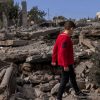
Outlook for 2025: Strengthening the Foundations of Children’s Futures
In 2025, the world is facing a new and intensifying era of crisis for children. Climate change, economic instability, and conflict are hitting harder and more often, intersecting in ways that make the challenges of addressing them even more severe.
Mussel Divers in Kerala Face Livelihood Loss, with Species Habitat Under Threat
Ibrahim Basheer plunges into the sea and disappears. He remains gone for a couple of minutes before resurfacing for a deep breath of air, repeating this for the next half an hour. When he finally climbs aboard his boat, the net sack around his neck is filled with mussels—his catch for that diving trip. He rests for a short while before diving into the sea again—needing one more such trip to fill the basket he has brought along.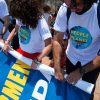
Civil Society at the Finance in Common Summit Calls for Community-led, Equitable, and Human Rights-based Development
As public development banks gather for the Finance in Common Summit (FiCS) in Cape Town, South Africa, civil society and community activists from across the world are demanding a shift to a community-led, equitable, and human rights-based development approach, that prioritise people and planet over profit, and a reform of the global financial architecture.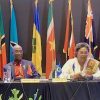
CARICOM Leaders Take Steps to Tackle Crime, Climate, Trade and Food Crises
CARICOM leaders wrapped up a crucial meeting on February 21, reaffirming their commitment to tackling pressing regional challenges with unity and resolve. From crime and security to education, trade and climate change, the leaders highlighted the need for decisive action amid global uncertainties.
Global Heating in The Coldest Place on Earth
It was 7:30 a.m. I got ready the fastest I could, adrenaline kicking in, curiosity and excitement peaking. I rushed out of my cabin, opened the big exit door, and there in front of me was the first visual of the majestic white continent - Antarctica.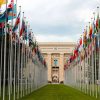
Is the UN’s Human Rights Agenda in Jeopardy?
The UN’s human rights agenda is in danger of faltering since the Geneva-based Office of the High Commissioner for Human Rights (UNHCHR) is planning to “restructure” the office, under the moniker OHCHR 2.0. But this proposal, if implemented, would result in the abolition of the Special Procedures Branch, established by the Human Rights Council (HRC), to report and advise on human rights from thematic and country-specific perspectives.
Humanitarian Groups Face Challenges in Reaching the Sudanese Displaced Population
In the final quarter of 2024 ,there has been an escalation in the Sudanese civil war, with armed clashes between the Rapid Support Forces (RSF) and the Sudanese Armed Forces (SAF) having grown in brutality. Heightened insecurity has pushed millions of people into displacement, hunger, and poverty. Additionally, the continued hostilities have made it difficult for humanitarian organizations to scale their responses up.
How Tanzania’s Farmers, Pastoralists Paid the Price for a World Bank Project
A hush had fallen over Mbarali District, but it was not the quiet of peace—it was the silence of uncertainty. Just months ago, the rolling plains were gripped by fear as government-backed rangers, dressed in olive green fatigues, roamed through villages, seizing cattle, torching homes, and forcing entire communities to the wobbly edge of survival. The REGROW project, a USD 150 million initiative funded by the World Bank to expand Ruaha National Park (RUNAPA), had promised tourism growth and environmental conservation. What it delivered was a brutal campaign of state-sanctioned land grabbing under the guise of protecting nature.
Where do UN Member States Stand on a Feminist Secretary-General?
The selection of the next UN Secretary-General (UNSG) will be a pivotal moment in global efforts to resist authoritarianism and work together to address shared problems. Where do UN Member States stand on appointing a feminist woman to this role?
World Day of Social Justice Statement by Education Cannot Wait Director Yasmine Sherif
The central theme of this year’s World Day of Social Justice is to “strengthen a just transition for a sustainable future.” Education is the very foundation for achieving social justice. Without an education we cannot end extreme poverty and advance economic growth. Without an education we cannot empower young girls to become teachers, doctors, nurses, lawyers, engineers, let alone financially self-reliant. Without an education we cannot achieve good governance, the rule of law and peaceful co-existence.
Blamed for ‘Causing’ Droughts: Zimbabwe’s LGBTQI Community Faces Climate Crisis Head-on
Takudzwa Saruwaka is hoeing weeds in a cowpea field in eastern Zimbabwe one morning in February, trying to beat torrential rains threatening from the gray clouds above.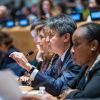
Social Media in the Global South Needs More Protections
In the western world, numerous studies over the past two decades have shown that the rise of social media in popularity has been linked to negative mental health symptoms, especially among young people. Platforms such as Instagram, Facebook, X (formerly known as Twitter), and TikTok have been criticized for fostering competitive and toxic environments, which contribute to higher rates of anxiety, cyber-bullying, depression, disordered eating, and low self-esteem. While the use of social media in the Global South has skyrocketed in the late 2010s, the ramifications on people in those regions has received much less coverage in mainstream media.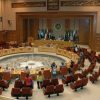
The Arab States Must Stop Trump– and Netanyahu– in Their Tracks
When the Arab states convene an emergency session in Egypt to address Trump’s/Netanyahu’s plans to take over Gaza and exile the Palestinians, they must warn Trump that acting on this plan will usher in a catastrophic conflagration that could engulf the entire Middle East.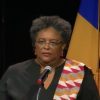
Food, Water, Crime, Climate Change: CARICOM Leaders Begin 48th Conference with Commitment to Joint Action on Critical, Common Concerns
Leaders of the Caribbean Community (CARICOM) are meeting in Bridgetown from Feb. 19-21, as the world grapples with multiple crises, including escalating geopolitical conflicts, climate change and rising food insecurity.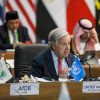
Trump’s War on Global Governance: Lessons from the Past on How to Fight Back
US president Donald Trump’s recent actions seem designed to reassert American power and demonstrate that it is still the dominant global power and is capable of bullying weaker nations into following America’s lead.
Trump’s Proposed Gaza Takeover Denounced as “Mad Ethnic Cleansing Plan”
President Trump—whose rash and ill-conceived proposals continue unabated—has threatened to “seize Gaza,” turn it into a “Riviera of the Middle East,” and move Palestinians to Egypt and Jordan, two longstanding American allies who depend heavily on US support for their survival. The US President has also hinted that both countries would suffer either cutbacks or elimination of billions of dollars in economic and military aid —if they refuse to cooperate with him.
Shaping AI Rules Through Trade Agreements
The inclusion of AI provisions in preferential trade agreements (PTAs) has been steadily rising. Since 2019, when the China-Mauritius Free Trade Agreement first mentioned AI, PTAs have progressively evolved to include elements addressing the broader implications of emerging technologies.
Only Political Will Can End World Hunger: Food Isn’t Scarce, but Many People Can’t Access It
History has shown us again and again that, so long as inequality goes unchecked, no amount of technology can ensure people are well fed.« Previous Page — Next Page »





The Week with IPS

NEXT STOP - SDGs
Tracking global progress towards a sustainable world
Tracking global progress towards a sustainable world
