Languages
Tuesday, October 13, 2026



News and Views from the Global South
Iran
Azerbaijan and Israel: The Enemy of My Enemy Is My Friend
As the showdown over Iranian nuclear ambitions intensifies, political analysts in Azerbaijan are urging the government to deepen the country's ties with Israeli and Western security structures.
Iran Holds Up Access to Parchin for Better IAEA Deal
The failure of a mission by the International Atomic Energy Agency (IAEA) to get Iranian permission to visit a military testing site mentioned in its latest report has been interpreted in media coverage as a stall to avoid the discovery of confirming evidence of past work on nuclear weapons.
Ex-IAEA Chief Urges Talks to Defuse Threat of Attack on Iran
Even as U.N. inspectors expressed disappointment about the results of their visit this week to Iran, a former chief of the International Atomic Energy Agency (IAEA) urged all parties to make greater efforts to defuse rapidly rising tensions over Tehran's nuclear programme to avert war.Iran’s Leadership on Edge as Parliamentary Elections Near
While the general public here is anxious about the increasingly harsh sanctions imposed by Western powers on Iran's financial and oil sectors, the leaders of the Islamic Republic appear more consumed by the upcoming parliamentary elections to be held Mar. 2.The Middle East: A Rainbow or a Tornado?
A year ago the fall of Hosni Mubarak in Egypt was greeted with general satisfaction and considerable relief. Was it already possible to glimpse (for example, in the spectacle of the Egyptian leader being judged bedridden in a cage) the difficulties that lay ahead for North Africa and the Middle East fulfilling the promise of the "Arab Spring"?
Security Council Remains Grounded by Political Manipulation
When Russian Ambassador Vitaly Churkin briefed reporters recently, he offered some biting criticisms of the growing political manipulation of the most powerful body at the United Nations: the 15-member Security Council.Mass Tragedy Feared as Closure of MEK Camp Looms
The Barack Obama administration and the United Nations are struggling to convince the leadership of the Mujaheddin-e Khalq (MEK), an Iranian opposition group with cult-like characteristics, to vacate a camp in Iraq and allow residents to move to another location in the country or risk the lives of as many as 3,200 people.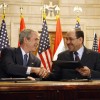
How Maliki and Iran Outsmarted the U.S. on Troop Withdrawal
Defence Secretary Leon Panetta's suggestion that the end of the U.S. troop presence in Iraq is part of a U.S. military success story ignores the fact that the George W. Bush administration and the U.S. military had planned to maintain a semi-permanent military presence in Iraq.
Iran Hedges Its Bets on Syria
Iran is courting the opposition to Syrian President Bashar al- Assad, seeking to maintain a crucial alliance in the event that Assad falls.
U.S.: Former Top Aide Offers Insight on Mideast and Iran
In his first public address since departing from the White House, Dennis Ross, former top Middle East aide to U.S. President Barack Obama, called for increased sanctions on Iran, a careful approach to new Arab regimes and a low-key approach to Israeli-Palestinian negotiations.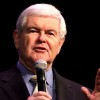
U.S.: New Republican Front-runner Roils Mideast Waters
Newt Gingrich has a well-documented reputation for bomb throwing, but his latest assertions about Palestinians threaten to blow at least two decades of U.S. Middle East diplomacy to pieces.
U.S.: Military Option Recedes Amid Tug-of-War Over Iran Policy
The chairman of the Joint Chiefs of Staff, Gen. Martin Dempsey, said Friday that he believes that sanctions and diplomacy are the right strategy to deal with Iran's nuclear programme and that the United States "is doing everything we can to accomplish the stated objective without resorting to military force".
MIDEAST: Saudi Warning Could Escalate Nuclear Arms Race
The world's nuclear powers - both declared and undeclared - have come primarily from Asia: China, India, Pakistan and possibly North Korea.
Iran’s Growing Isolation a Dubious Win for the West
Scenes from Tehran Tuesday of bearded Iranian youth swarming over the walls of the British embassy evoked memories of the 1979-81 hostage crisis that created the image of Iran as a pariah state.Iranians Resolutely Ignore Sanctions’ Pinch
As the Iranian economy struggles under international sanctions intended to halt its nuclear programme, one unofficial indicator that has yet to be rattled is the Islamic Republic's robust consumer confidence.U.S. Ratchets Up Economic Pressure on Iran
Under intense pressure from the U.S. Congress and U.S. presidential election politics, the Barack Obama administration Monday declared the Islamic Republic of Iran a "primary money laundering concern" - a designation that stops short of blacklisting Iran's Central Bank but is intended to persuade more foreign governments, banks and companies to curtail business with Iranian financial entities.Ex-Inspector Rejects IAEA Iran Bomb Test Chamber Claim
A former inspector for the International Atomic Energy Agency (IAEA) has repudiated its major new claim that Iran built an explosives chamber to test components of a nuclear weapon and carry out a simulated nuclear explosion.US-IRAN: Key Senator Pushes “Nuclear Option” Against Central Bank
Amid simmering tensions surrounding Iran's nuclear programme, a key pro-Israel U.S. senator has tabled legislation that would effectively ban international financial companies that do business with the Central Bank of Iran (CBI) from participating in the U.S. economy.
U.S.: “Israel’s Advocate” to Leave White House for Pro-Israel Think Tank
Dennis Ross, President Barack Obama's top Middle East aide who has attracted criticism for his allegedly strong pro-Israel sympathies, will leave his post at the end of this month, the White House announced here Thursday.IRAN: Calls for New Sanctions, Air Strikes Follow IAEA Report
A significant gap between the administration of U.S. President Barack Obama and staunchly pro-Israel majorities in both houses of Congress appears to have emerged over what to do in reaction to Tuesday's report by the International Atomic Energy Agency (IAEA) on possible military applications of Iran's nuclear programme.IAEA’s “Soviet Nuclear Scientist” Never Worked on Weapons
The report of the International Atomic Energy Agency (IAEA) published by a Washington think tank Tuesday repeated the sensational claim previously reported by news media all over the world that a former Soviet nuclear weapons scientist had helped Iran construct a detonation system that could be used for a nuclear weapon.« Previous Page — Next Page »





The Week with IPS

NEXT STOP - SDGs
Tracking global progress towards a sustainable world
Tracking global progress towards a sustainable world
