Languages
Friday, October 16, 2026



News and Views from the Global South
Iran
U.S.-IRAN: Unrealistic Agenda Undermined Nuke Talks
No observers of U.S. relations with Iran over the past three decades were surprised when late-January talks in Istanbul failed to hint at, let alone deliver, a breakthrough that would ease tensions between the Islamic Republic and the West.Behind the Spin, Egypt Gives Tehran Political Heartburn
Judging from official propaganda in both Iran and much of the Arab world, the uprisings that toppled Tunisia's dictatorship and threaten Egypt's authoritarian regime are the direct descendent of the 1979 Islamic Revolution.IRAN: Istanbul Talks Prove to Be a Non-Starter
Prospects for a negotiated solution of the world's nuclear quarrel with Iran are cloudier in the aftermath of talks in Istanbul that ended without even an agreement to meet again.US-IRAN: Glimmer of Hope on Eve of New Nuclear Talks
While expectations for any major breakthroughs in the latest round of talks between Iran and the major powers are virtually nonexistent, the two-day meeting that begins Friday in Istanbul could help ease growing tensions over Iran's nuclear programme.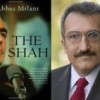
Q&A: A Portrait of Iran’s Shah, in Shades of Grey
In "The Shah", a prominent Iranian author and scholar at Stanford University in the United States offers new insights into Iran's modern history, including the 1953 coup, the revolution a quarter century later, and the current repressive political situation.Sanctions Forced Iran to Slash Bloated Energy Subsidies
Touring Iran's Arab rivals this week, U.S. Secretary of State Hillary Rodham Clinton sounded almost triumphant as she asserted that economic sanctions have helped slow Tehran's nuclear progress.US-LATAM: Disappointment May Yield to Distrust
While U.S. officials took strong exception to outgoing Brazilian President Inacio Lula da Silva's recent complaint that "nothing has changed" in Washington's relations with Latin America two years into the Barack Obama administration, many independent U.S. analysts ruefully nodded their heads.Obama Scores Win with New START Ratification
U.S. President Barack Obama scored key wins Wednesday in both foreign policy and domestic politics as more than the required two-thirds of the Senate - including 13 Republicans who defied their party's leadership - voted to ratify the New Strategic Arms Reduction Treaty (New START) with Russia.U.S. Readies New Sanctions on Iran Ahead of Talks
The Barack Obama administration is preparing a new batch of sanctions against Iran to be announced next week in advance of nuclear talks in Turkey.U.S.: Pakistani Ambassador Unknowingly Hosted Neocon Fundraiser
Amid putting on a two-and-a-half day conference focused on escalating measures against Iran, a neoconservative think-tank held a fundraiser at the residence of Pakistan's ambassador to the U.S., according to an IPS investigation.
IRAN: Minister’s Sacking Shores Up Ahmadinejad’s Power Base
While Iran gears up for a second round of nuclear talks with Western countries next month, President Mahmoud Ahmadinejad's abrupt dismissal of his foreign minister on Monday indicates a new power struggle with moderate conservatives that could alter the tone and face of Iran's foreign policy machinery in the years to come.Senate Hawks Push Obama on ‘Zero Enrichment’ for Tehran
Five senators sent a letter to U.S. President Barack Obama Monday warning the administration not to offer concessions in upcoming talks with Iran over its nuclear programme. If Obama takes the advice, experts say, it could sink his engagement efforts with Tehran.Mideast Peace Key to Countering Iran, Arabs Told U.S. Diplomats
Gleeful Israeli leaders and their neo-conservative supporters here have spent much of the past week insisting that the State Department cables published by Wikileaks prove that Sunni Arab leaders in the Middle East are far more preoccupied with the threat posed by an ascendant and possibly nuclear Iran than with a resolution of the Israeli-Palestinian conflict.Time Runs Short for Progress on Iran Nuke Talks
The first meeting between Iran and the world's major powers in more than a year ended Tuesday with little to show apart from a vague promise to meet again next month in Turkey.Cables Belie Gulf States’ Backing for Strikes on Iran
The dominant theme that emerged in U.S. media coverage of the first round of Wikileaks diplomatic cables last week was that Arab regimes in the Gulf - led by Saudi Arabia - shared Israel's view that Iran's nuclear programme had to be stopped by military force, if necessary.Russians Refuted U.S. Claim of Iranian Missile Threat to Europe
A diplomatic cable from last February released by Wikileaks provides a detailed account of how Russian specialists on the Iranian ballistic missile programme refuted the U.S. suggestion that Iran has missiles that could target European capitals or intends to develop such a capability.U.S.: No Top Secrets, but Damaging Nonetheless
While the massive dump of some 250,000 internal U.S. diplomatic communications by Wikileaks includes none marked "top secret", their dissemination is already causing considerable embarrassment and may well inflict longer-term damage on Washington's foreign relations.U.S.: Wikileaks Reveals Treacherous Terrain for Iran Policy
The leaked reports sent by U.S. officials abroad to Washington reveal a treacherous playing field for the United States in the Middle East.Iran Laptop Papers Showed the Wrong Missile Warhead
The most important intelligence documents used to argue that Iran had a covert nuclear weapons research and development programme in 2003 - a set of technical drawings of efforts to fit what appears to be a nuclear payload into the reentry vehicle of Iran's medium-range ballistic missile, the Shahab-3 – turn out to have a fatal flaw: the drawings depict a reentry vehicle that had already been abandoned by the Iranian missile programme in favour of an improved model.U.S.: START Supporters Play Iran Card in Lame-Duck Congress
Of all the arguments the Barack Obama administration is marshalling in support of a new Strategic Arms Reduction Treaty with Russia, the one that may have the greatest resonance with Republicans is over Iran.US-IRAN: Study Group Urges “Strategic Engagement”
The administration of U.S. President Barack Obama should pursue a policy of "strategic engagement" with Iran that would offer Tehran more attractive incentives to curb its nuclear programme, according to a study group convened by two centrist Washington think tanks.« Previous Page — Next Page »





The Week with IPS

NEXT STOP - SDGs
Tracking global progress towards a sustainable world
Tracking global progress towards a sustainable world
