Languages
Wednesday, September 23, 2026



News and Views from the Global South
Israel - Palestine
MIDEAST: Security Council Urged to Take Up Gaza War
Pressure has been building on the U.N. Security Council to address the impact of the Gaza war on civilians in advance of its meeting Wednesday to discuss the Middle East.MIDEAST: Cold Turkey Could Change Political Balance
It's long been among the most durable, strategic relationships in the Near East - perhaps because it was the most unlikely.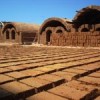
MIDEAST: Gaza Gets Ambitious With Mud
On a searing summer morning, workers are adding layers to the mud-brick police station being constructed in Sheikh Zayed, northern Gaza.MIDEAST: Rift Developing Between PA and Fatah
An increasingly isolated and unpopular Palestinian Authority (PA) has again made a 180-degree turn in the Goldstone report fiasco as it tries to fend off mounting criticism from all and sundry, including its own organisation.MIDEAST: Another Nobel Message for Peace
In the week of Nobel Prize announcements, the most intriguing comment from the Middle East came not, as one might have expected, as a straight reaction to the shock of U.S. President Barack Obama being awarded this year's Peace Prize.MIDEAST: Muslims See Victory at Al-Aqsa
Clashes between Israeli security forces and protesting Palestinians have subsided as several hundred Muslims agreed to evacuate Jerusalem's Al-Aqsa Mosque following a deal brokered by the Jordanian Embassy in Tel Aviv Saturday.MIDEAST: U.S. Strategy in Doubt as Abbas Loses Popular Support
Just two months ago, many western commentators were jubilant that Mahmoud Abbas, the U.S.-supported head of both the Palestine Liberation Organisation (PLO) and the interim Ramallah-based Palestinian Authority (PA), was making a comeback and reducing the influence in Palestinian society of the Islamist movement Hamas.MIDEAST: Unrest Rising Over Goldstone Report
The Palestinian Authority (PA) is trying desperately to contain the political fallout following its decision to withdraw support for a UN report into war crimes committed in Gaza in December and January.POLITICS-US: Democrats Disgruntled as Obama Fails to Deliver
Since before taking office, U.S. President Barack Obama has been no stranger to being in the crosshairs of Republican pundits who have accused him of everything from bring a "secret communist" to a tax-and-spend liberal who would oversee huge expansions in the federal government.MIDEAST: Finally Taking Off Their Gloves
Amazingly, just when all four parties - the U.S., its allies in the Arab world, the Palestinian Authority, and Israel - seemed to have hit rock bottom in terms of the prospects of moving the region away from conflict and towards peace, all of a sudden everything seems to be pointing in the exact opposition direction.MIDEAST: Voices of Gloom Get Louder
Three Israeli soldiers, automatic rifles slung across their shoulders, are questioning a group of Palestinian builders. The top floors being added to the concrete house that lies right alongside Israel's security wall which divides off occupied East Jerusalem from Palestinian territory on the eastern side of the wall have evidently aroused some concern.EGYPT: Virtually, Some Real Freedom
Egyptians critical of their government are using new media and the Internet to expose its improprieties and press for social change.ISRAEL-US: Goldstone Rejects Netanyahu Remarks
The head of the U.N. commission that investigated the December-January Gaza war Thursday rejected assertions by Israeli Prime Minister Binyamin Netanyahu that any action to pursue the recommendations of his commission's report could prove fatal to any renewed peace process with the Palestinians.MIDEAST: A Diplomat Visits, and Listens
The U.S. consulate on Agron Street is something alien in the carefully calibrated diplomatic world of Arab-Israeli politics.MIDEAST: Riots May Point to Third Palestinian Uprising
Palestinian politicians and Israeli political analysts are warning of a third Palestinian Intifadah following serious rioting in East Jerusalem last Sunday.MIDEAST: A Good Time Not to Make Peace
Most analysts agree that the past week of Middle East diplomacy has actually set back the cause of peacemaking. If they are right that the intensive U.S.-led effort has actually diminished prospects for a breakthrough towards Palestinian-Israel peace, who is to blame?US-MIDEAST: A Week of Dimming Peace Prospects
Eight months after Barack Obama launched his presidency by promising a speedy push for Palestinian-Israeli peace, that effort has stalled badly. And there are now growing fears that the top levels of Obama's peace team are torn by internal disagreements that may undermine the whole peace effort.MIDEAST: Jerusalem Palestinians Defining Their Own Future
Almost a year ago a barely noticed event took place in Sawarha, a Palestinian neighbourhood in the Israeli-occupied part of the city.POLITICS: Obama's Deal-Making Skills Tested at U.N., G20
U.S. President Barack Obama will make his way Thursday from the U.N. General Assembly in New York to "Steel City" – Pittsburgh, Pennsylvania - to host the G20 Summit in what has been billed as a week that will put his ability to lead in the international arena to its fullest test.MIDEAST: More Palestinian Children Getting Jailed
Eight children between the ages of 10 and 17 were arrested and detained by Israeli soldiers during military raids Monday night and Tuesday morning in the northern West Bank cities Nablus and Qalqilia.US-MIDEAST: Has Netanyahu Out-Manoeuvred Obama or Vice Versa?
While Israeli officials claimed a major win in U.S. President Barack Obama's decision to shelve his long-held demand for a freeze on Israeli settlements on the West Bank and East Jerusalem, some analysts here believe it may yet prove a Pyrrhic victory for the hard-line government of Prime Minister Binyamin Netanyahu.« Previous Page — Next Page »


The Week with IPS

NEXT STOP - SDGs
Tracking global progress towards a sustainable world
Tracking global progress towards a sustainable world
