Languages
Tuesday, November 10, 2026



News and Views from the Global South
Israel - Palestine
POLITICS: Washington Cool on New Israel-Syria Talks
Amid regional fears of a summer war between Israel and Syria, the two countries may in fact be inching closer to a deal. Not even President George W. Bush's recent disclosures to Congress, intended to prove Syrian-North Korean nuclear cooperation, appear able to dent the resolve for peace, or at the very least, a reduction in tensions.
EGYPT: New Strike to Greet Mubarak
Hundreds remain in detention following a nationwide protest Apr. 6 against rising food prices and political stagnation. But this has not deterred activists from calling for a second general strike on May 4, timed to coincide with President Hosni Mubarak's birthday.CANADA: Jewish Defence League Energised by Israel’s Far Right
Like an aging group of retro rocker musicians, the Jewish Defence League (JDL) resurfaced in Toronto recently after a decade of dormancy, trying to look a little more mainstream.LEBANON: Hate the U.S., And Head For It
The growing rift between the U.S. and Iran has spread also to Lebanese soil, with Shia youngsters frequently seen burning U.S. flags. But ironically, for many of Hezbollah's Shia constituency, the U.S. is home.US/MIDEAST: Palestinian Negotiators Go Home Frustrated
Five months after the U.S. hosted the Annapolis conference to push for a decisive Israeli-Palestinian peace, negotiations between the two sides have shown no visible progress.
EGYPT: The Global Makes the Local Worse
The appearance of long breadlines outside state-run distribution centres in recent weeks has raised fears of possible bread shortages. Although the government has taken measures aimed at easing the crisis, experts point to soaring international wheat prices that have made the commodity more costly for households worldwide.MIDEAST: Olmert Closer to Deal with Syria, Israel Is Not
Israeli Prime Minister Ehud Olmert has said he is "very interested" in peace with Syria. He has sent a message to Syrian President Bashar Assad expressing a willingness to give back the Golan Heights in exchange for a comprehensive peace treaty.
MIDEAST: Israel Could Make Orphans Homeless Again
Nibaal Shriteh may soon be homeless. The 17-year-old Palestinian lives in a Hebron orphanage but, if the Israeli military has its way, she and 240 fellow orphans like her will be out on the streets.LEBANON: Christian Divisions Complicate Politics
The political crisis gripping Lebanon has chipped away at what has been viewed by most since the 2005 parliamentary elections as an unlikely alignment of two political heavyweights.
EGYPT: Islamists Given Jail, and a Message
A year-long military trial of 40 leading members of the Muslim Brotherhood opposition movement ended last week with stiff jail terms for most of the defendants. Although the group is officially banned by the state, many observers were taken aback by the severity of the rulings.LEBANON: Assassinations Shake Christian Town
The lush Bekaa Valley is nestled between snowy Mount Lebanon and the Syrian border. The region, reputed for its wine production, was this week the witness to a violent crime in the Christian city of Zahleh, where two members of the anti-Syrian Kataeb party (Phalangists) were gunned down.
EGYPT: New Ban Tightens Noose Around Freedom
Egypt's parliament ratified legislation earlier this month outlawing public demonstrations in or near religious establishments. While government officials say the move is meant to preserve the inviolability of Egypt's mosques and churches, critics say the new law aims to further stifle freedom of expression.MIDEAST: Israel Sees Iran Threat Recede
In the clearest indication yet that Israel now believes Iran's nuclear aspirations will be curbed, Prime Minister Ehud Olmert has said that efforts being undertaken by the international community will ensure that Tehran does not acquire nuclear capability.
MIDEAST: Israel Strengthens Hamas Leadership
The one political result of Israel's attacks and sanctions on Gaza has been that the Hamas leadership, and particularly Gaza Prime Minister Ismail Haniyeh, have emerged greatly strengthened.MIDEAST/US: Carter’s Trip Raises Tenuous Hopes
Last week, the Washington Post published an opinion editorial written by Mahmoud Zahar, in which the Hamas foreign minister lauded "the welcome tonic" of former U.S. President Jimmy Carter to bring the militant Islamist group to the negotiating table.EGYPT: Election Brings Victory Without Votes
The ruling National Democratic Party (NDP) of long-time president Hosni Mubarak swept Egypt's nationwide municipal council elections last week. But while NDP officials lauded the contest as "fair and transparent", opposition groups say their candidates never stood a chance.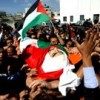
MIDEAST: Just The Place To Be, And Not To Be
Fadel Shana just had to go to the scene of the Israeli bombing. As a Reuters cameraman, that was his job. He wasn't the only one killed, but through his pursuit of attacks as they happen, he was always more at risk than most others.MIDEAST: Israel Doesn’t Want to Know Carter Any More
Three decades after he brokered the first-ever peace treaty between Israel and an Arab country, former U.S. president Jimmy Carter has become persona non grata in the Jewish state.EGYPT: Opposition Finds Renewed Strength
What was planned as a workers' strike at a major textiles company turned into a nationwide protest against skyrocketing food prices Apr 6. Over the days following, the opposition has found renewed strength.
POLITICS-US: New Jewish Lobby Seeks to Redefine "Pro-Israel"
A new group of prominent U.S. Jews who believe that the so-called "Israel Lobby" has been dominated for too long by neo-conservatives and other Likud-oriented hawks has launched a new organisation to help fund political candidates who favour a two-state solution to the Israeli-Palestinian conflict and a stronger U.S. role in achieving it.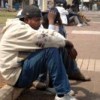
MIDEAST: Africans Lost in 'The Promised Land'
The young man who agreed to be called Hamed has come a long way to do nothing. The Ivoirian would prefer to work but, after sneaking into Israel from Egypt about a month ago, he's got nothing better to do than sit in a park everyday in central Tel Aviv, wait, and hope for a government decision on his refugee application.« Previous Page — Next Page »





The Week with IPS

NEXT STOP - SDGs
Tracking global progress towards a sustainable world
Tracking global progress towards a sustainable world
