Languages
Tuesday, November 10, 2026



News and Views from the Global South
Israel - Palestine
LEBANON: Breakthrough At Last
The highway connecting East and West Beirut, known locally as 'the ring', was bustling with unusual activity Wednesday morning. An incredible sight seemed to attract passers-by, who slowed down their cars suddenly before coming to a full stop and exiting. By the Riad al-Solh statue in the Beirut Central District (BCD), a symbol of Lebanese dissension had fallen.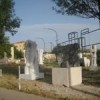
LEBANON: Druze Take On Hezbollah, Because They Must
Ghostly white sculptures are scattered along the greenery on each side of a sinuous road leading up to a Lebanese mountain range, their silhouettes contrasting against the violet sky. This area, known as the Symposium in Aley, Mount Lebanon, is located behind the infamous '888' mountaintop, a strategic point in Lebanese military history.
MIDEAST: The Anniversary Is Over, the Agony Is Not
Holding up an old copper key, Yousef al-Hums settles down to retell the story of his eviction from what was once his home, and now is Israel. Because only the 60th anniversary of the creation of Israel is over, the occupation of home of which al-Hums still keeps a key is not.LEBANON: All Roads Do Not Lead to Beirut
In the wake of the deadly conflict that has left Lebanon with at least 65 dead and 200 injured, the roads in and out of the Land of the Cedars have proved a difficult journey for most. As the rubble was being cleared by large trucks - after an Arab delegation was able to negotiate a breakthrough among feuding politicians – some Lebanese are asking how long the roads will remain clear.MIDEAST: Amid Rocket Attacks, Israel Ponders Peace
A rocket attack on the southern Israeli city of Ashkelon this week has again ignited calls in Israel for an invasion of Gaza, but Prime Minister Ehud Olmert still seems more inclined towards an Egyptian-mediated ceasefire proposal with Hamas in the coastal strip.POLITICS-US: Bush Comments Rally Dems Behind Obama
U.S. President George W. Bush's comments in Israel Thursday ignited a political campaign row back home as Democratic leaders decried his comparison of engaging enemies to Nazi appeasement.POLITICS-US: An Ocean Apart, Bush, McCain Play to Neo-Con Dreams
In separate speeches delivered an ocean apart, the two standard bearers of the Republican Party Thursday offered rosy visions of a future designed to gladden the hearts of Israel-centred neo-conservatives without offering any details about how their dreams will be achieved.
MIDEAST: Siege Hits Palestinians Before They Are Born
The Israeli siege of Gaza that has restricted access to food, water and medicine is now beginning to hit unborn children and newborn babies.EGYPT: Giving With One Hand, Taking Back With the Other
In an effort to offset soaring inflation, President Hosni Mubarak last month announced generous salary increases for all public sector employees. The gesture lost its lustre days later, however, when the government drastically raised prices of subsidised fuel.MIDEAST: Another Corruption Scandal Pursues Olmert
Badly tarnished by his management of the Lebanon war in the summer of 2006, Israeli Prime Minister Ehud Olmert had begun, in recent months, to resurrect his public image. But a new corruption scandal in which he is being questioned by police has again undermined his credibility, and raised questions about his ability to govern effectively.POLITICS: Bush Tour Diminished by Hezbollah Show of Force
While this week's trip by President George W. Bush to Israel, Saudi Arabia and Egypt was never conceived as a triumphant "victory lap" around the region, the swift rout of U.S.-backed forces by Lebanon's Hezbollah Friday has provided yet another vivid illustration of the rapid decline in Washington's influence in the Middle East during his tenure.MIDEAST: Spy Chief Presents New Peace Plan
Palestinian resistance factions signed on to an Egyptian ceasefire proposal last month aimed at bringing a measure of calm to the hapless Gaza Strip. In a bid to secure Tel Aviv's endorsement of the plan, intelligence chief Omar Suleiman is expected to travel to Israel later this month.
LEBANON: Hezbollah, In Opposition, Takes Charge
At least 11 people are dead and 30 injured during ferocious gun battles pitting opposition Shia Amal and Hezbollah fighters against members of the Sunni Future Movement, which is part of the majority March 14 alliance in government. As the opposition's militia men clamped down on government headquarters, the balance of power seems to have been shifted permanently in the Land of the Cedars.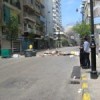
LEBANON: Hezbollah Unleashes a Coup Bid
Men clad in black have roamed the streets of Beirut since Wednesday, their faces covered with ski masks or dark kaffiya, as they wreaked havoc in the large avenues leading to the airport or dividing Sunni and Shia areas. As darkness loomed over Lebanon, the winds of discord seem to set the Lebanese capital ablaze.MIDEAST: Israelis Believe Another War Is Coming
As Israel marks its 60th anniversary, Israelis are deeply pessimistic about the prospects of peace with their neighbours, with an overwhelming majority believing they will be at war again within the next five years.
MIDEAST: Villagers Fight for Promised Land
Some 1,700 Palestinians in the West Bank village of Bi'lin have been promised land, but so far it has not been delivered.LEBANON: Al-Qaeda on a Slippery Base
Al-Qaeda's second-in-command, Ayman Zawahiri, announced in an audiotape broadcast Apr. 21 that Islamic groups would play a pivotal role in the war against Jews, and encouraged militants to expel invading 'Crusaders' masquerading as peacekeepers, referring to UNIFIL troops deployed in South Lebanon.EGYPT: Salary Hike Kills Strike
Calls for a nationwide protest against the rising cost of living ended in anticlimax on Sunday (May 4), with most Egyptians going to work as usual. Although protest leaders had urged the public to register its disaffection en masse by staying home, the streets of the capital were busy.
MIDEAST: Egypt Braces for New Gaza Influx
With next-door Gaza Strip in a humanitarian crisis, the government is desperate to avoid a repeat of January's Palestinian influx into the Sinai Peninsula. In recent weeks, the security presence along Egypt's 14-kilometre border with the hapless territory has been significantly reinforced.
MIDEAST: Too Quiet in the Harbour
It's been strangely quiet for some time at the port in Gaza. No clanging of hooks, no sounds of creaking cranes or of thumping of nets upon decks. Boat engines, normally puttering and spewing exhaust, lie entombed under covers.LEBANON: Wobbling In Uncertainty
As clashes between supporters of Lebanon's feuding factions become increasingly frequent, Lebanon seems to be walking a fine line between stability and violence.« Previous Page — Next Page »





The Week with IPS

NEXT STOP - SDGs
Tracking global progress towards a sustainable world
Tracking global progress towards a sustainable world
