Languages
Thursday, October 8, 2026



News and Views from the Global South
PACIFIC COMMUNITY (SPC)
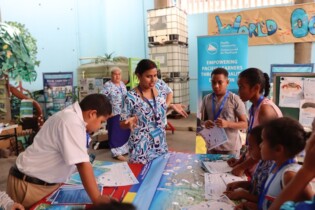
Beyond the Horizon: Raising a Generation to Protect the Blue Pacific
For generations, Pacific children have grown up with the ocean as part of everyday life. It is where families fish, where stories are passed down, where livelihoods begin and where cultures are rooted.
Informal Settlements Grapple With Climate Extremes in Pacific Islands
A rising cycle of poverty and extreme weather threatens many towns and cities, especially those situated on coastlines, in the Pacific Islands. Urban centres in the Pacific have grown at an unprecedented rate this century, rapidly straining national resources for urban planning. But governments are now making progress on improving people’s lives in the informal settlements that dominate the urban sprawl in some of the region’s largest cities.
How Pacific Wisdom Is Shaping Global Climate Action
On the Pacific Islands, where the ocean horizon is both a lifeline and a warning, communities have long interpreted environmental change through traditional knowledge, lived experiences, stories, and practice. Their observations echo those across the Pacific region, where traditional knowledge remains central to understanding shifting environments and responsible stewardship.
Weaving Wisdom and Science: Pacific Voices Call for Ocean Protection
In the packed conference hall of the Heritage Hotel, the sound of Pacific voices filled the air—not just through speeches, but in song, rhythm, and poetry. The Dreamcast Theatre Performing Arts group opened the Second Pacific Island Ocean Conference with an evocative performance, reminding leaders and practitioners why they had gathered: to listen. To listen to science. To listen to communities. To listen to the ocean itself.
Small Island States Put Faith in International Court’s ‘Wayfinding’ Advisory Opinion
The “crazy, weird and at some point (what seemed like) insurmountable” plan to ask the International Court of Justice for an advisory opinion on the obligations of UN member states regarding climate change was a success, Vishal Prasad, a representative for the. Pacific Islands Students Fighting Climate Change (PISFCC) said at a post-hearing press conference today (December 13).
Building Water Security for the Next Generation in the Pacific Territories
The Pacific Islands region is both the frontline of the wrath that climate change is lashing on the environment and human life and the drive for innovation and solutions to stem the destruction and strengthen island environments for the future. The survival of life, even nations, in the Pacific depends on it.
Pioneering Digital Initiative Empowers Pacific Islands to Tackle Climate Disasters
Winning a battle for survival requires understanding the opponent. And, for the peoples of 22 island nations and territories scattered across more than 155 million square kilometres of Pacific Ocean, the volatility and wrath of the climate are their greatest threats.
Biodiversity Rich-Palau Launches Ambitious Marine Spatial Planning Initiative
Growing up in Palau in the western Pacific Ocean, Surangel Whipps Jr. played on the reefs and spearfished on an island teeming with birds, giant clams, fish, and turtles.





The Week with IPS

NEXT STOP - SDGs
Tracking global progress towards a sustainable world
Tracking global progress towards a sustainable world
