Languages
Thursday, October 22, 2026



News and Views from the Global South
Pakistan
INDIA: ‘Good Cop, Bad Cop’ Approach to Pakistan
Exasperated by what it regards as "a continuing pattern of evasiveness and denial in Pakistan's response to the terrorist attack on Mumbai", India seems to be fashioning a two-pronged approach towards Islamabad to get it to act firmly against terrorist networks based on its soil.
CULTURE-PAKISTAN: Artistes Caught in Crossfire
Arson attacks and killings have shut down girls’ schools and brought a thriving entertainment industry to its knees in the North West Frontier Province (NWFP).INDIA/PAKISTAN: Civil Society Pleads for Peace
As tensions between Pakistan and India continue to see-saw, citizens in both countries are stepping up efforts for peace through initiatives ranging from a cross-border signature campaign to seminars and personal efforts.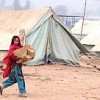
PAKISTAN: Nightmare for Civilians Uprooted by Conflict
"We are in hell! No electricity, no clean drinking water! This is no life, we were better off at home!" fumes Arjumand Khanum, a refugee from Bajaur Agency, on the Pakistan-Afghanistan border.INDIA/PAKISTAN: Lowering Temperatures
Six weeks after the Mumbai terrorist attacks precipitated a grave new crisis in their mutual relations, the danger of a military conflict breaking out between India and Pakistan has receded.RIGHTS-PAKISTAN: Awaiting Gitmo’s Closure
"I’ve thought a lot about what my first meeting with my father will be like after all these years. I don’t know how I’d react. I don’t even know what to expect,'' said Muneeza Paracha, 26, daughter of Saifullah Paracha, incarcerated at Guantanamo Bay since September 2004.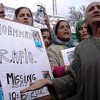
INDIA: New Leader Brings Hope for Peace in Kashmir
As tensions brew between India and Pakistan, a newly elected provincial government, led by the regional, pro-India National Conference (NC) party, has taken over the reins in Jammu and Kashmir - a territory whose ownership has long been disputed by Pakistan.INDIA: Delivers Diplomatic Ultimatum to Pakistan
India's Foreign Minister Pranab Mukherjee said Monday that his government has delivered a dossier to Pakistan containing evidence of the involvement of Pakistanis in the Mumbai massacre - an act that strategic experts say amounts to an ultimatum to bring the perpetrators to Indian justice.
INDIA/PAKISTAN: Prisoner Repatriations Bring Hope
As the New Year dawns, the repatriation by India of 66 Pakistan nationals brings hope for hundreds of Pakistanis and Indians incarcerated in prisons across each other’s countries - and for peace between the South Asian neighbours.INDIA: Seeking China's Support in Dealing With Pakistan
As the Pakistani government digs its heels in against India’s demands for action on the suspected masterminds of the November terrorist strikes in Mumbai, the Indian foreign policy establishment is looking to China and other regional powers, besides the United States, for support.
PAKISTAN: Like Other Assassinations Bhutto's Remains a Mystery
"The chapter is closed, and the Pakistan People’s Party [PPP] is dead. It doesn’t matter who killed her," said Mohammad Sharif, a young driver working for a voluntary agency, referring to former prime minister Benazir Bhutto’s assassination on Dec. 27 last year.PAKISTAN: Suspected Terror Group Will Challenge UN Ban
Jamaat-ud-Dawah (JuD), the Pakistani organisation on which the United Nations Security Council (UNSC) imposed sanctions two weeks ago, on suspicion of being involved in terror activity, insists that it is a charity and that it will challenge the ban at the International Court of Justice.
INDIA: Kashmiri Women Repose Faith in Electoral Politics
With voting for the provincial elections in Indian Kashmir safely over, observers say that what was remarkable about the process - apart from its relative peacefulness - was the active participation of women in a Muslim-majority state.PAKISTAN/AFGHANISTAN: Taliban Raids on NATO Convoys Crippling – Analysts
While NATO and United States forces have downplayed raids in Peshawar by pro-Taliban militants, destroying hundreds of their military vehicles and supply containers destined for Afghanistan, analysts here believe that the damage is significant.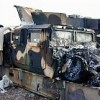
PAKISTAN: NATO Convoys Under Taliban Attack
The past two months have seen an upsurge in violence unleashed by Pakistani Taliban in the North West Frontier Province (NWFP) and the adjacent tribal areas bordering Afghanistan.INDIA/PAKISTAN: Inching Away From Confrontation
Even though their armed forces remain on high alert, India and Pakistan appear to be inching away from confrontation over the Mumbai terrorist attacks, which have precipitated a major crisis in their bilateral relations.
MEDIA-INDIA/PAKISTAN: Post-Mumbai Journos Struggle Against Hostilities
Pakistani and Indian journalists and columnists, who forged personal relationships over the past two decades during countless joint media consultations and seminars, are struggling to overcome hostilities between their countries since the Mumbai carnage.INDIA/PAKISTAN: Hoax Call Hyped by Media – Get Hostilities to Brink
A hoax phone call from India to Pakistan’s President threatening military reprisals in the aftermath of the terrorist attack on Mumbai city, hyped up by media, brought the nuclear-armed neighbours close to conflict.INDIA/PAKISTAN: Kashmiri Leaders Aghast at Mumbai Massacre
Political leaders in Jammu and Kashmir, a bone of contention between India and Pakistan for more than 60 years, are aghast at last week's carnage in the Indian port city of Mumbai, carried out by armed men who apparently sailed in from the Pakistani port of Karachi.U.S.: Mumbai Massacre Seen as Major Blow to Regional Strategy
A week after the massacre of more than 170 people by armed militants in Mumbai, U.S. officials are scrambling to prevent the incident from blowing up into a full-fledged confrontation between nuclear-armed India and Pakistan.INDIA: Mulling Tough Options Against Pakistan
United States Secretary of State Condoleezza Rice arrives in the Indian capital Wednesday to try and soothe nerves frayed by last week's terrorist attacks in Mumbai, but is likely to face an uphill task in defusing mounting suspicion and tension between India and Pakistan.« Previous Page — Next Page »





The Week with IPS

NEXT STOP - SDGs
Tracking global progress towards a sustainable world
Tracking global progress towards a sustainable world
