Languages
Thursday, October 22, 2026



News and Views from the Global South
Preventable Diseases - Africa
HEALTH: Rural Zimbabwe Fertile Ground for HIV/AIDS
They left the country in search of jobs to better their lives, but village elders in rural Tsholotsho, say young men who left home to fend for their families are losing their lives at alarming rates to HIV/AIDS related ailments.CLIMATE-MOZAMBIQUE: Once Again Flooding Brings Risk of Disease
Once again Mozambicans are assessing the damage left in the wake of devastating rains and burst river banks along the floodplains of the Zambezi, Búzi, Púnguè and Save Rivers. Nobody is sure how many people have perished in the most recent floods, but the final death toll could be well over one hundred.GHANA: Rapid ‘Development’ Leaves Poor Without Toilets
There are many things that confirm the rich-poor divide in the Ghanaian capital.EDUCATION-SWAZILAND: Urban Youth Slipping Through The Cracks
As the new school year begins here many destitute or orphaned children are in need of assistance to pay for their educations. An unknown number of urban youngsters, however, are slipping through the social welfare net.SOUTH AFRICA: A Tale of Ongoing Water and Sanitation Woes
When the number of people reported with diarrhoea began to increase alarmingly in the town of Delmas in Mpumalanga Province towards the end of October, residents had flashbacks to an outbreak of diarrhoea and typhoid that took place in August and September, 2005. They feared the worst as the number of cases grew in the community of about 45,000 people - 60 kilometres east of South Africa's financial centre, Johannesburg.
Q&A: "TB and XDR-TB Are Not an African Problem Only"
In a world where countless humanitarian causes clamour for action and funding, raising money to combat tuberculosis (TB) can prove a challenge.HEALTH-AFRICA: TB and AIDS Campaigns Urged to Co-operate
Tuberculosis (TB) in Africa cannot be dealt with while TB and HIV/AIDS organisations refuse to set aside their differences, health experts said Friday during the 38th Union World Conference on Lung Health, underway in Cape Town, South Africa.HEALTH-AFRICA: Prevalence of Extensive Drug-Resistant TB Unclear
What is known so far about the scope and prevalence of extensive drug-resistant tuberculosis (XDR-TB) in sub-Saharan Africa may only be the tip of the iceberg, said TB experts Thursday during the 38th Union World Conference on Lung Health, in the South African coastal city of Cape Town.TRADE: Governments (Still) Pondering How to Make Drugs Accessible
The struggle to make medicines affordable to the world’s poor, especially in Africa, is raging on at the highest levels. Last week the European Commission took a landmark decision on generic drugs and next week a high-level intergovernmental meeting will look at ways to prevent patents from blocking access to drugs.DEVELOPMENT-SOUTH AFRICA: Power Cuts Lead to Sewage Spills
Sewage plants in South Africa’s northern Gauteng Province poured millions of litres of untreated waste into three rivers between the capital, Pretoria, and the commercial centre of Johannesburg earlier this month. National power utility Eskom cut electricity to the treatment plants, which were then unable to process the waste water before it was released into the rivers.HEALTH-SWAZILAND: Septic Tanks Preferred to the Latest in Sewage Treatment
Located on the outskirts of Swaziland's commercial hub, the state of the art Manzini Waste Treatment Centre was built to end the city's sewage disposal problems. A World Bank loan was secured by the Ministry of Housing and Urban Development to construct the 16 million dollar facility: a spotless, landscaped plant which has a lifespan of 25 years.ZIMBABWE: A Water and Sewerage Crisis That Goes "Straight to the Grave"
A young Zimbabwean couple glances furtively around before settling on a bench in a bare patch of ground that used to be a recreational park in Glen View, a sprawling, high-density suburb of the capital, Harare. It’s a Monday morning, and the two of them are struggling to come to terms with a strange sickness that has gripped their family. Every move they make in the direction of the Glen View One Satellite Clinic shows they are in great pain.DEVELOPMENT-GHANA: Picking Up the Pieces After the Floods
"We prayed to God to open the heavens, but this is not what we expected," says Peter Nayoon, a farmer from Gushiegu in the north of Ghana, one of several African countries blighted by floods over recent weeks. "I am finished," he adds, pointing dejectedly towards the area that used to be his yam farm. "Who would give me money to start a new life?"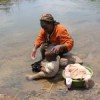
DEVELOPMENT-MALAWI: Lack of Running Water Puts Girls' Education at Risk
Rita Kalikokha of Dowa, a rural district in central Malawi, thinks about abandoning school every time she menstruates.HEALTH-GHANA: Boreholes That Proved a Lifeline Have Come at a Cost
Ask people to list the causes of tooth discolouration and they may mention tobacco chewing, or one too many cups of coffee a day. Pose the question in Ghana's northern Nayorigo village, however, and someone might answer: desertification.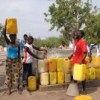
MOZAMBIQUE: Water Supplies Still a Pipe Dream at Certain Health Facilities
A swelling crowd of people has gathered at the rural health centre at Monte Xiluvo in Nhamatanda district, in the central Mozambican province of Sofala. Most are mothers with young children who try to protect themselves from the gusty winds as they wait for their consultation with Caetano Mendosa, the nurse responsible for the centre.DEVELOPMENT-ZIMBABWE: The City of “Passport Size” Ablutions
The City Council of Bulawayo, Zimbabwe’s second largest city, has issued a warning to residents of a possible outbreak of disease following a massive cut in the city’s water supply. This is the first time in Bulawayo's history such a health warning has been issued.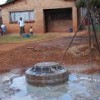
DEVELOPMENT-ZIMBABWE: Water Shortages in Capital Leave Residents Desperate
Taps in the Zimbabwean capital, Harare, are running dry even though the city’s main supply dams are more than 60 percent full, according to figures from the Zimbabwe National Water Authority (ZINWA). With more than half of Harare's three million inhabitants now experiencing water shortages, residents are resorting to desperate measures to find supplies.RIGHTS-MOZAMBIQUE: Law to Stop Human Trafficking
Over 1,000 Mozambicans, including children, are trafficked to South Africa every year where they are forced into prostitution or to provide free or cheap labour. In response, Mozambique’s government last week approved a new law which will make human trafficking a crime punishable with long prison sentences.DEVELOPMENT-NAMIBIA: No Water In Babylon
Cardboard and rickety tin structures jostle for space on a barren outcrop in the sprawling suburb of Katutura in Namibia’s capital Windhoek. A putrid smell hangs in the still, afternoon air as flies wing their way over the debris.
SOUTHERN AFRICA: Unequal Water Resources Present a Challenge
Water resources are unevenly distributed throughout the countries of Southern Africa. The region boasts of some of the world’s largest lakes and rivers, but is also a land of vast deserts.« Previous Page — Next Page »





The Week with IPS

NEXT STOP - SDGs
Tracking global progress towards a sustainable world
Tracking global progress towards a sustainable world
