Languages
Thursday, August 27, 2026



News and Views from the Global South
SADC
HEALTH: Raising the Recommended CD4 Count for ART
Newborn babies in South Africa will now be treated for HIV, regardless of their CD4 count. President Jacob Zuma announced several new measures which focus on expanding the country’s anti-retroviral (ARV) programme, especially in terms of mother-to-child-transmission, and for those with both TB and HIV.HEALTH-ZIMBABWE: Lots of Drugs, No Takers
Martha* knows that her two young sisters and her need medicine. She also knows where to get it – a clinic a few yards away from her home in Glen Norah, a high-density suburb in the Zimbabwean capital.
WORLD AIDS DAY: Herdboys at Risk to Contract HIV
In the scorching heat of the midday summer sun, a teenage boy’s sharp voice can be heard vividly as he continuously summons his cattle. Glad in his shabby-looking rag that used to be a blanket and black gumboots, the only thing that occupies his mind is his herd, his everyday companions, nothing else.
WORLD AIDS DAY: Growing Up with HIV
Sixteen-year-old Andela Milambo* wants a husband. She is not looking for love, but for someone to share the burden of living with HIV. She wants to be able to take her medicine without having to hide, to discuss the recurring herpes with someone who understands.
POLITICS-NAMIBIA: Born Frees Make their Mark
"It was like writing my first exam. I was nervous and didn’t want to make a mistake. I must have checked the ballot 10 times."
NAMIBIA: Waiting at the Polls
The Electoral Commission of Namibia (ECN) has again suspended the observer status of a human rights watchdog it accuses of lying about mistakes on the voter’s roll.
POLITICS-NAMIBIA: SWAPO’s Dominance Challenged
"Man RDP!" sighs Martha Hamukoto, sitting on the steps of a Windhoek office block. She is lamenting the breakaway faction, the Rally for Democracy and Progress (RDP).
POLITICS-NAMIBIA: ‘Parties Totally Don’t Care About Women’s Rights’
Gender activists foresee a drop in female parliamentarians after Namibia’s general and presidential elections on November 27 and 28. It’s a trend that jeopardises the region’s goal of 50 percent female representation in politics by 2015.ZAMBIA: Electoral Commission Accused of Bias
The Electoral Commission of Zambia (ECZ) is once again under fire from opposition political parties and some civil society organisations, which accuse it of bias in favour of the ruling party during elections.POLITICS-BOTSWANA: I Lost the Election, But I Am a Winner
When Kgomotso Mogami threw her name into the hat to contest the Gaborone Central parliamentary seat it was easy for many people to write her off.POLITICS: Malawians Demand Local Councils
In Malawi, local government elections are as rare and endangered as the country’s black rhinoceros.
HEALTH-SWAZILAND: On ART Since Birth
Seven-year-old Ntombi* frowns after swallowing the tablets her grandmother has given her. The HIV-positive child has contracted multi-drug-resistant tuberculosis (MDR-TB).
POLITICS-NAMIBIA: The Struggle Does So Not Continue
They are called the "born frees", the children of Namibia’s Independence, and they will vote for the first time this month. Struggle credentials mean zip to them, and they have a serious beef with politicians.
SWAZILAND: Help Sex Workers – Senator
It is one of the world's oldest professions, dating so far back that it is even mentioned in the Bible. But in the deeply cultural and religious country of Swaziland, Senator Thuli Msane stirred a hornet's nest when she publicly challenged a new strict bill opposing prostitution.
ZAMBIA: Media Face Beatings and Attacks
When journalists were beaten by political supporters for covering the president’s return trip from abroad, and cabinet ministers and police officers looked on without stopping it, it seemed to be the last straw in the victimisation of the media. But it was not.
AFRICA: We Are the Government
As if they were going to the races, Emma Musako and Monica Mhango showed up in their finest outfits to attend a meeting on the health, social and environmental impacts of uranium mining. They came because they, like the other attendees, no longer want to remain uninformed citizens.
LESOTHO: AIDS Orphans get Helping Hand
Fifteen-year-old Ntsebeng Tlokotsi* sighs with relief as she is given 140 dollars. Along with it she receives a bag of maize meal and cooking oil. It is a government handout, and she qualifies for this only because both her parents are dead.RIGHTS-MALAWI: Blame Game While Children Suffer
Every morning 12-year-old Thomson Genti and his seven-year-old brother, Chifundo, emerge dirty and wretched from the squalor of their hideout behind the crowded shops in the commercial town of Limbe. It is the start of a day of begging, beatings from the older street boys and insults from passers-by.
POLITICS-MOZAMBIQUE: Another Term for Incumbent President?
Mozambique’s incumbent president looks set to serve a second term of office as partial results of the country’s presidential, parliamentary and provincial elections are announced.
SWAZILAND: More Boreholes, No Water
In the drought-stricken area of Siteki, Tibuyile Maziya has been trying to fill up her four 20-litre buckets with water at a community for the last four hours. With a baby on her back and two more buckets to fill up, 19-year-old Maziya says she walks to this well at least three times a week to get water for her family of 15.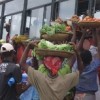
AFRICA: Lost in the Tracking of Budgets
As Susan Muonanji and other vendors scrambled around one of the many transport busses to sell cabbages and tomatoes at a market along one of Malawi’s key roads, a national budget session had just started in parliament some 100 kilometres away in the capital city, Lilongwe.« Previous Page — Next Page »


The Week with IPS

NEXT STOP - SDGs
Tracking global progress towards a sustainable world
Tracking global progress towards a sustainable world
