Languages
Monday, October 19, 2026



News and Views from the Global South
Science and Technology

Q&A: Plants Know No Frontiers, They Grow Everywhere
Ameenah Gurib-Fakim has spent the last two decades travelling among the Mascarene Islands in the Indian Ocean studying plants.
ENERGY: To Fly Around the World – Without Fuel
A solar-powered aircraft will take flight next month from Switzerland with hopes ultimately to circle the Earth in 2012, without fuel, and stopping every five days only to change pilots.
MEDIA-ASIA: Senior Citizens Log On to the Wide, Wired World
They may be in their twilight years but Asia's senior citizens are not ready to be left behind — and forgotten — by the wide, wired world.INDIA: Deeper Probe Sought on Chopper Crashes Killing Politicians
After an aviation accident claimed yet another of India’s top leaders recently, experts are calling for stricter controls on the use of helicopters and small aircraft by politicians in a hurry to reach their destinations.CUBA: Scientists, Farmers Fighting Climate Change – Together
Cuba is facing the challenge of boosting agricultural output under difficult climate conditions and on soils badly deteriorated by erosion, salinity and other problems. And scientists have a strategic role to play, provided they do not sit in their laboratories but get out into the fields where the action is.CLIMATE CHANGE: Survival Means Anticipating and Adapting
Imagine being able to know months in advance when and where floods or droughts may occur. That is what over 150 countries participating in the third World Climate Conference, which concluded last Friday in Geneva, pledged to achieve through the creation of a Global Framework for Climate Services.
MEXICO: Houses Put to Flood and Hurricane Test
Federico Martínez was born in a land of hurricanes. As a young boy in Mexico he saw the wind uproot trees and roll wooden houses "as if they were shoe boxes." As an adult, he developed a house that can withstand winds up to 300 kilometres per hour and floods three metres deep.
CLIMATE CHANGE: Earth’s Fridge Defrosting, With Dire Results
The rapidly warming Arctic region is destabilising Earth's climate in ways science is just beginning to comprehend.CLIMATE CHANGE: Early Warning Systems for the Coming Storm
Climate change is here. The challenge in Geneva this week is to find ways to help the world cope with a climate that will have more and worse extremes in terms of temperatures, floods, and storms.
MEXICO: Biological Remedy for Sickened Soil
Mexico is beginning to take on the environmental debts left by the oil industry, applying biological techniques to break down alcohols, solvents, glycerines, gasoline, benzene and acetone, turning them into carbon dioxide and water.ENVIRONMENT: ‘Water Recklessness Worsening Drought’
India’s current dry spell, brought on by an errant annual monsoon, is rapidly turning into a full-fledged drought as a result of reckless exploitation of groundwater resources for farming, experts say.ENVIRONMENT: Ozone Treaty May Hold Key to Halting Climate Change
Will the world take the easy step to phase out "super" greenhouse gases – hydrofluorocarbons (HFCs) - using the existing Montreal Protocol ozone treaty? Doing so would be equivalent to preventing the release of 118 to 224 billion metric tonnes of carbon dioxide by 2050, according to a report by the Environmental Investigation Agency.
BIODIVERSITY: Amateur Biologists Join Global Bid to Catalog Species
Save the living environment and the physical environment will automatically be saved, according to E.O. Wilson, the world's leading biologist and father of the online Encyclopedia of Life, which plans to create a web page for every known species - all 1.8-plus million.
HEALTH-SAO TOME: The Forest is the Pharmacy
If you live in São Tomé, a good investment in your health is to plant a po-sabom tree (Dracaena aroborea) in your backyard. Leave space: it can grow up to 20 metres high, with sword-shaped leaves.INDIA: Swine Flu Tests Privatised Health Care
While the swine flu pandemic has not hit India too hard, it has sorely tested the country’s ailing health delivery system and its plans to remedy the situation through ‘private-public partnerships.’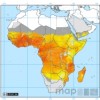
HEALTH-AFRICA: Better Tools to Target Malaria
Roughly a billion dollars a year is spent fighting malaria. Using this money most effectively calls for a detailed understanding of exactly who is at risk - enter the Malaria Atlas Project (MAP).INDIA: Rural Communities Turn to Traditional Climate Mitigation
In Tamilnadu, southern India, and Uttar Pradesh, northern India, villagers have revived ancient systems of storing surface and groundwater that are putting them in a good position to contend with today’s changing climate.Q&A: ‘We Do Not Want to See The Blame Game’
Developing economies are vulnerable to climate change and need funds to implement much needed adaptation and mitigation measures. This is one of the key points that needs to be addressed during the next round of U.N.-led negotiations on climate change in Copenhagen, according to Mohamed Aslam, Maldives Minister of Housing, Transport and Environment.EDUCATION: Liberty, e-Quality, Humanity
This city of 100,000 people in the southernmost Brazilian state of Rio Grande do Sul is named after the leader of the 1835-1845 Revoluçao Farroupilha (Ragged Revolution), which under the slogan "Liberty, Equality, Humanity" resulted in the independence of the state from the Brazilian empire. At an international conference here today, peaceful revolutionaries are furthering similar ideals.AGRICULTURE: Disease Threatens Afghan Wheat Crop
Agronomists and crop experts fear that an aggressive disease that attacks wheat crops could soon reach Afghanistan, potentially threatening food security and initiatives to curb the cultivation of illicit crops.
U.S.: Levee Uncertainty Weighs on Katrina’s Displaced
Today, the population of New Orleans is still about 175,000 people fewer than it was before Hurricane Katrina hit four years ago next month. Along with concerns about jobs and housing costs, the city's vulnerability to flooding has weighed heavily on the minds of many evacuees, many of whom have not returned.« Previous Page — Next Page »





The Week with IPS

NEXT STOP - SDGs
Tracking global progress towards a sustainable world
Tracking global progress towards a sustainable world
