Languages
Monday, October 19, 2026



News and Views from the Global South
Solar Energy
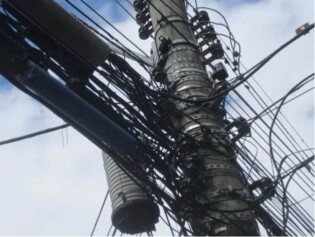
An Overdose of Renewables, New Energy Risk in Brazil
Wind and solar power sources, essential for the energy transition to mitigate the climate crisis, have become a risk of power outages in Brazil.
Mexico Experiments With Residential Solar Panels, But They Are Still Insufficient
Over the past four months, Mexican researcher Nicolás Velázquez has paid around US$23 for electricity, thanks to the photovoltaic system installed in his home in the northern city of Mexicali.
Solar-Powered Fish Farming Feeds Indigenous Communities in the Peruvian Amazon
"Our organization is showing that it is indeed possible to move toward energy transition and not depend on oil," said Elaina Shajian, president of the Regional Coordinator of Indigenous Peoples of San Lorenzo (Corpi-SL), in the Peruvian Amazon.
Solar Energy Brings Water to Iconic Salvadoran Village of El Mozote
The worst massacre of civilians in Latin America occurred in the Salvadoran village of El Mozote, where environmental projects are beginning to emerge, slowly fostering awareness about protecting the natural resources of this deeply symbolic site, embedded in the country's historical memory.
Hortolandia Emerges as an Energy and Environmental City in Brazil
Almost everything seems new or under construction in the southern Brazilian city of Hortolandia, from its wide avenues and cable-stayed bridge to its large buildings and riverside parks.
Power Arrives but the River Dries Up for Brazil’s Amazonian Dwellers
The flow of the igarapé always dropped for three months every year, but now it has been dry for two years in a row, complains Maria Aparecida dos Anjos, looking at the trickle of water that when flooded reaches the stilts of her wooden house, 50 metres away and on a slope of more than 10 metres high.
New Law in Cuba Makes Investing in Renewable Energy Sources Mandatory
With Decree 110, published on 26 November, Cuba made it mandatory for major consumers, whether they are state or private entities, to invest in the use of renewable energy sources, while the energy crisis facing the country worsens.
Solar Energy Saves Dairy Cooperative in Brazil’s Semi-Arid Region
“Ixe! If it wasn't for solar energy, we would have closed down, you can be sure. We had to stop due to the pandemic on 15 March 2020, but the energy costs were fixed,” said Erika Cazuza, administrative and financial manager of the Brazilian Cooperative of Rural Producers of Monteiro (Capribom).
Small Farmers Reap Growing Benefits From Solar Energy in Chile
The production of solar energy by means of panels installed on small farmers' properties or on the roofs of community organisations is starting to directly benefit more and more farmers in Chile.
Solar Panels Aim to Protect Mexican Family Farming
Verónica Molina, an indigenous Comcaac woman, first came into contact with solar energy in 2016, when she travelled to India for training on communal photovoltaic facilities. This later enabled her to take part in the installation of the first solar systems and family vegetable gardens in her community, Desemboque del Seri, in northern Mexico.
Rural Communities in El Salvador Get Their Water Supply from the Sun
Setting up a community water project with a solar-powered pumping system was an unlikely idea for the peasant families of a Salvadoran village who, despite their doubts, turned it into reality and now have drinking water in their homes.
Solar Energy, Vetoed as a Source of Income for the Poor in Brazil
“I feel like a mother who lost her son to drugs, to vice, destroying himself,” says Lucineide da Silva, 56, mother of eight children and grandmother of 11.
Cuban Family Harnesses Biogas and Promotes its Benefits
Just to obtain a good fertilizer it was worth building a biodigester, says Cuban farmer Alexis García, who proudly shows the vegetables in his family's garden, as well as the wide variety of fruit trees that have benefited from biol, the end product of biogas technology.
Better Incentives Needed to Expand Solar Energy in Cuba
With a bolder policy and flexible payment mechanisms, perhaps Alexis Rodríguez would have opted for solar panels for his home, instead of the portable generator that has made it possible for him to weather the frequent blackouts caused by Cuba's recurrent energy crises.
Solar Power and Biogas Empower Women Farmers in Brazil
A bakery, fruit pulp processing and water pumped from springs are empowering women farmers in Goiás, a central-eastern state of Brazil. New renewable energy sources are driving the process.
Grassroots Venezuelan Initiative Aims to Combat Electricity Crisis with Solar Energy
Sweating profusely, unable to sleep because of the heat, fed up with years of blackouts several times a day, many residents of Venezuela's torrid northwest want to cover the roofs and balconies of their homes with solar panels, and are asking the government to import them massively and cheaply from China.
Inequality Also Afflicts Clean Energy in Latin America
The specter of blackouts hovers over the Mexican city of La Paz, the capital of the state of Baja California Sur in Mexico's far northwestern corner, as summer approaches, due to increased electricity demand from air conditioning and insufficient capacity in the local grid.
Solar Energy Gives Important Boost to Small-scale Farmers in Chile
The installation of photovoltaic panels to use solar energy to irrigate small farms is expanding quickly in Chile because it lowers costs and optimizes the use of scarce water resources.
Community Solutions Combat Water Shortages in Peru’s Highlands
The lack of water is so severe in Peru's highlands that farming families are forced to sell their livestock because they cannot feed them. "There is no grass or fodder to feed them," says Fermina Quispe, a Quechua farmer from a rural community located at 4,200 meters above sea level.
The Dark Side of Wind and Solar Farms as Sustainable Energy in Brazil
"Anxiety, insomnia and depression have become widespread. We don't sleep well, I wake up three, four times a night," complained Brazilian farmer Roselma de Melo Oliveira, 35, who has lived 160 meters from a wind turbine for eight years.
Venezuela Makes Timid Headway in Solar Energy
The installation of solar panels in a remote village in the Andes highlands in late February marked a second incursion by the Venezuelan government into the field of solar energy, previously uncharted territory in this country that for a century was a leading global oil producer.Next Page »





The Week with IPS

NEXT STOP - SDGs
Tracking global progress towards a sustainable world
Tracking global progress towards a sustainable world
