Languages
Wednesday, November 11, 2026



News and Views from the Global South
Southern Africa
DEVELOPMENT-ZIMBABWE: Hunger Exacerbating Child Mortality
Judith Moyo is unable to give her child enough food. She has to bring her 18-month-old daughter to a council clinic for check-ups every month because of what nurses call her ‘‘slow development''.RIGHTS-BOTSWANA: ”We Will Die Like the Grass” – San
‘‘Eviction is like removing grass from its roots. We will die like the grass,'' said Jumanda Gakelebone, spokesperson of the First People of the Kalahari, the group that represents the rights of the San community in Botswana.Q&A: “It Was Thuggery. State Thuggery”
There has been widespread anger at the police beating earlier this month of Law Society of Zimbabwe President Beatrice Mtetwa and three other lawyers: Terence Fitzpatrick, Colin Kuhini and Chris Mhike.TRADE-KENYA: Growing Maize Is Not What It Used to Be
Ask Kenyans what their favourite food is and they will most likely answer ugali.ENVIRONMENT-AFRICA: Getting Most of the Heat From Global Warming
Nobody will escape the effects of climate change but the poor in Africa will suffer the most because of decreasing food production and the heightened prevalence of diseases such as malaria, warn environmentalists, church leaders and researchers.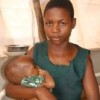
HEALTH-MOZAMBIQUE: Stopping Death With a Net
Each time she has been pregnant, 20-year-old Isaura Paulina has fallen sick with malaria. Malaria was probably the cause of her two miscarriages and the low birth weight and frailty of her baby Belinda. She only weighed two kilograms at birth and now also has malaria.DEVELOPMENT: Keeping Civil Society on the Straight and Narrow
A few years ago, this IPS correspondent posed a question at a workshop in Johannesburg, South Africa, about whether non-governmental organisations (NGOs) should be held more accountable for their actions. Afterwards, the key speaker at the event pulled me aside, and issued a polite rebuke for my "dangerous question".RIGHTS-ANGOLA: Beauty Is in the Eye of the Evictor
The Angolan government forcibly evicted 20,000 poor people, including small-scale farmers, and destroyed 3,000 homes between 2002 and 2006 in the capital, Luanda, "to facilitate development and 'beautification' in the public interest".TRADE: Malawi-South Africa Agreement ”Will Attract Investors”
The Malawian government is optimistic that its new economic and technical cooperation agreement with South Africa will finally draw investors from its mighty neighbour.TRADE-SOUTHERN AFRICA: New Zambezi Waterway Planned
Malawi, Zambia and Mozambique hope to navigate the mighty Zambezi river's waterways by 2009 as an alternative and cheap transport route for imports and exports from and to the three southern African countries.
Q&A: “We’re Living in a World of Global Economic Apartheid”
Less than a fortnight remains before the seventh annual World Assembly of CIVICUS - the World Alliance for Citizen Participation. This Johannesburg-based body brings together non-governmental organisations from across the spectrum to strengthen civil society, notably where its activities are under threat.Q&A: “Farmers Are ‘Doubting Thomases’. What They’ve Not Seen, They Don’t Believe”
More than two decades of work in the agricultural sector have taught Grégoire Comlan Houngnibo that it's not a lack of technology which is preventing Africa from solving problems of poor soil and food insecurity - but rather lack of political will.TRADE-AFRICA: Where Are the EPA Impact Assessments?
Civil society organisations in southern and eastern Africa have urged John Kaputin, the secretary general of the African, Caribbean and Pacific (ACP) group of states, to insist that assessments be done to evaluate the potential effects of the European Union's proposed economic partnership agreements (EPAs).Q&A: “You Have to Work Nine to Ten Times Harder Than a Male Farmer”
As activists focus on the challenges facing workers this May Day (May 1), Martha Moside is calling for attention to be paid to the situation of female subsistence farmers in South Africa.Q&A: “You Can’t Kill Journalism”
Zimbabwean publisher and editor Wilf Mbanga will mark this year's World Press Freedom Day (May 3) in Britain, along with several other reporters from his country who have fled the repressive regime of President Robert Mugabe. As the political and economic difficulties gripping Zimbabwe have intensified, so have government's efforts to clamp down on journalists covering the crisis.HEALTH-SOUTH AFRICA: Pulling Stunts To End AIDS Ignorance
For six weeks, Andre van Zijl has been pumping petrol around the clock at a gas station in the picturesque seaside town Knysna on South Africa's south coast. Why? To raise awareness about HIV/AIDS.DEVELOPMENT-BOTSWANA: ”Will the MDGs Help Me Find a Job?”
Batswana are divided about the viability of the United Nations' Millennium Development Goals (MDGs). In random interviews, IPS found some arguing that the MDGs are elitist ideas unattainable in reality while others contend that the MDGs can be used to address socio-economic problems.TRADE-ZIMBABWE: ”Look East” Policy Yet to Bear Fruit
Zimbabwe's isolation by its traditional international trading partners after 2000 has hit the country hard amid failure to strike up new bilateral trade deals as part of its ''look east'' trade strategy.TRADE-MAURITIUS: EPAs Should Be Subjected to Electoral Test
''Here is a free trade agreement between rich and poor countries in which the former are trying to impose a reciprocal system of trade on the latter, with major consequences for poor people.''TRADE-AFRICA: EPAs Like ”Irrigation for Economic Growth”
African and European negotiators in the economic partnership agreement (EPA) talks for eastern and southern Africa have refuted criticism from local and international civil society organisations about the possible negative effects of the proposed deal.TRADE: EPA may ”Destroy” Malawi’s Manufacturing Potential
Economic circles in eastern and southern Africa are abuzz with discussions about the advantages and disadvantages of the economic partnership agreement (EPA) which governments of these countries are negotiating with the European Union (EU).« Previous Page — Next Page »





The Week with IPS

NEXT STOP - SDGs
Tracking global progress towards a sustainable world
Tracking global progress towards a sustainable world
