Languages
Wednesday, June 24, 2026



News and Views from the Global South
The Information Society
TRINIDAD: Media Slip-Up Draws Wrath of Regulators
Everyone concedes that the media got it wrong that day. But a decision by the Telecommunications Authority of Trinidad and Tobago (TATT) to launch a formal investigation is raising fears that the incident is being used to clamp down on press freedom here.MEDIA-EAST TIMOR: Minister, Editor Wrangle On Over Expose
East Timor's justice minister says she will file a civil liability case against newspaper editor Jose Belo, if criminal defamation charges do not make it in court.MEDIA-THAILAND: Police Target Websites Unflattering to Royalty
As if the country’s draconian lese-majeste laws are not harsh enough, Thailand’s thought police have another weapon, the computer crimes law, to curtail the space for free expression.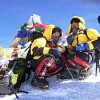
DEVELOPMENT-NEPAL: Women Everesters Talk Gender Equality
Seven young women have started a seemingly commonplace programme of video presentations at schools in this mountainous Himalayan country. The programme’s contents however are unique.POLITICS: Many Muslims Reject Terror Tactics, Back Some Goals
Strong majorities of people in predominantly Muslim countries reject terrorism but support key goals of Al Qaeda, notably expelling U.S. military forces from the Islamic world, according to a major new study of public opinion in seven nations and the Palestinian territories released here Wednesday.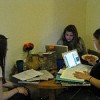
U.S.: Gen Y Reads – But Only for Nine Minutes a Day
Are twentysomethings changing the culture of literature?CHINA: Cracks Appearing in the “Great Firewall”
While the Internet boom in China has given citizens new avenues for self-expression, the government's tight control and censorship of content has made it difficult for the web to act as a platform for any major political dissent.TECHNOLOGY-US: Digital TV for All? Not so Fast
Imagine turning on your television and all you see is black and white fuzz.
VENEZUELA: Chavez – A Referendum of His Very Own
After a decade in office, Venezuelan President Hugo Chávez goes to the country on Sunday in another attempt to change the constitution so that he can stand for reelection "for at least another 10 years".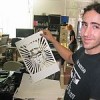
TECHNOLOGY: Fab Labs Channel Your Inner Scientist
Inside the confines of a modest 275-square-metre office space in this southern California city, the human imagination is running wild.MIDEAST: News Coverage Throws Up Arab Rifts
Coverage of Israel's recent war on the Gaza Strip by regional news stations has reflected longstanding political divisions within the Arab world. Qatar-based Al- Jazeera's reporting drew a particularly angry response from Egypt.POLITICS-SOUTH AFRICA: ‘Media Must Adopt Its Own Agenda’
Electioneering in South Africa is in full swing. Party posters emblazon lampposts and the media has been lapping up the weekly rallies and manifesto launches as parties set out to woo voters. As in previous elections, the focus has been on party political events.MEDIA: Climate of Fear Pervades Many Newsrooms
In Latin America, the Middle East and Southeast Asia, journalists are becoming increasingly vulnerable to physical violence as a result of their work, says a U.S.-based media watchdog in a new report released Tuesday.MEDIA: U.N. Press Corps Protest Rented Offices
Every U.N. secretary-general since Norway's Trygve Lie back in 1946 believed in the concept of a free press - including rent-free offices to journalists covering the United Nations.SRI LANKA: ‘Govt Targets Media Under Civil War Cover’
Sri Lanka's ruling establishment has become increasingly intolerant towards the island country's independent media, even as President Mahinda Rajapakse's government steps up its military offensive against separatist Tamil militants in the north.POLITICS: Israel, Iran, Pakistan World’s Least Popular Nations
Israel, Iran, North Korea and Pakistan are widely seen as exerting the most negative influence on world affairs, according to the latest in a series of annual global surveys by the BBC's World Service on popular perceptions of the world's most powerful or newsworthy nations.
Q&A: ‘Internet Should Not Build Firewalls of Hate’
Rabbi Abraham Cooper, one of the world's leading human rights activists, is often heard on the subject of hate. He is an international authority on issues related to digital hate over the Internet.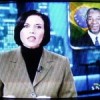
MEDIA-SOUTH AFRICA: Battle Over Future of Public Broadcaster
A powerful coalition of civic organisations is calling for a complete overhaul of the legal framework of the South African Broadcasting Corporation (SABC) to force it to fulfil its public broadcasting mandate.JAPAN: NHK World TV – New Kid on Broadcast Block
Determined to tell its own story to the world Japan on Monday launched its own 24-hour English-language TV news channel - NHK World TV.MEDIA-US: Gaza Coverage Echoed Govt Support of Israel
U.S. television coverage of the recent three-week conflict in the Gaza Strip failed to tell both sides of the story, according to a number of media analysts.THAILAND: Don Challenges Lese-Majeste Law – Risks Jail Term
In a country where the culture encourages people to bow, worship and even grovel before authority, Giles Ungpakorn has always been an exception.« Previous Page — Next Page »


The Week with IPS

NEXT STOP - SDGs
Tracking global progress towards a sustainable world
Tracking global progress towards a sustainable world
