Languages
Wednesday, June 24, 2026



News and Views from the Global South
The Information Society
MEDIA-BRAZIL: Free Speech and an Open Mic
Brazilian President Luiz Inácio Lula da Silva "betrayed" community radio stations, said Magno Cruz, the head of Radio Conquista, speaking at a round table discussion at the International Laboratory for Free Media, held in the capital of the northeastern state of Maranhao.POLITICS: Muslim World Hails End of a Despised Symbol
While the decision of President Barack Obama to close the prison at Guantanamo Bay Cuba, and end the practice of interrogation techniques that violate international law, made front page news throughout the United States, press reaction in the Middle East was far less extensive - but generally favourable.
Q&A: "A Lot of the Gaza Story Is Being Left Out"
The war of words continues in Gaza, in spite of the ceasefire. Nancy Snow, propaganda expert, talks to IPS about information spin strategies and whether we, the public, have learnt any lessons from Iraq.VENEZUELA: Journalists Face Escalation of Violence
With chilling calm, the killer dismounted from the motorbike, pulled out his gun and shot Ores Sambrano through the head as if it were the most natural thing in the world. The journalist was on his way to a video store on a busy avenue in Valencia, an industrial town 100 kilometres west of the Venezuelan capital.RIGHTS: Senegal Media Gets a Taste of Taser
A French weapons firm has acknowledged for the first time that it has sold stun-guns to Senegal, where they have been reportedly used against journalists covering football matches and political protests.POLITICS: Israeli Attacks on Gaza Escape Global Media Scrutiny
Israel's relentless air attacks on a besieged Gaza, which have killed over 1,000 Palestinians and destroyed hundreds of homes, continue to take place away from the gaze of the international news media.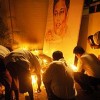
SRI LANKA: Journos Vow to Carry on Slain Editor's Legacy
Every Tuesday the editors of ‘The Sunday Leader’, the investigative Colombo-based newspaper, go through a ritual. Throughout the morning editorial staff amble in and out, tension levels rising as deadlines near.EL SALVADOR: Central America’s Leader in Cell Phone Use
By the end of 2008, El Salvador had the largest number of cell phones per person in Central America, with 6.6 million for a population of 5.8 million.INDIA: Satyam Scam Questions Corporate Governance
India's government, its corporate sector and its people are stunned after the founder-chairman of one of the country's largest information technology (IT) services companies admitted to years of falsified profits and an audacious financial fraud worth 1.5 billion dollars.MEDIA: Power of the Press Can Spark War – and Peace
In 2003, two journalists from Radio-Télévision Libre des Milles Collines were convicted of war crimes in the Rwanda genocide - illustrating the dangerous role media can play by relaying hate speech or rumours during times of violent conflict.SRI LANKA: Outrage, Helplessness at Editor’s Murder
A controversial but powerful newspaper editor was assassinated Thursday even before outrage and dismay had died down over the ransacking of the premises of a popular radio and TV broadcaster by masked, armed men.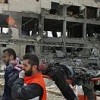
US-MIDEAST: Media Eyeless in Gaza at Key Moment
Consumed by coverage of the Nov. 4 presidential election, U.S. mainstream media ignored a key Israeli military attack on a Hamas target that some Palestinians claim marked the effective end of the ceasefire between the two sides and set the stage for the current round of bloodletting.SRI LANKA: ‘Attacks on Media Will Continue’
It was typical of what Sri Lankan media has been facing over the years: a pre-dawn raid on a media house, employees beaten up and costly equipment destroyed. Maharaja TV, the latest victim, was also promised the routine, impartial inquiry by the government.CUBA: Racism – “Taboo, Complicated and Thorny” Issue
The persistence of racism in Cuba is disturbing to some of the island's thinkers, who are calling for a debate on the problem in this country, where equal rights have not guaranteed equal opportunities for all social groups.U.S.: Networks’ Int’l News Coverage at Record Low in 2008
Despite two wars involving more than 200,000 U.S. troops and a global economic crisis, foreign-related news coverage by the three major U.S. television networks fell to a record low during 2008, according to the latest annual review of network news coverage by the authoritative Tyndall Report.LABOUR-INDIA: Getting 'Bangalored' Back
The term 'getting Bangalored' , or having jobs outsourced from the West to this international IT hub, looks set to acquire another connotation - this time of professionals being fired right here.RIGHTS-NEPAL: Maoists Attack Journos, Threaten Media Freedom
When Kunda Dixit, editor of the ‘Nepali Times’ and 12 other staff members of the Himalmedia publishing house were attacked and injured by supporters of Communist Party of Nepal-Maoist (CPN-M), a week ago, it was a sign that Nepal’s ruling party intends to influence the media through intimidation.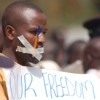
KENYA: Press Freedom: Going, Going, Gone
Dark clouds are forming against freedom of expression in Kenya, following the recent passing of a controversial Bill by parliament. The Kenya Communications (Amendment) Bill, awaiting presidential assent to become law, gives the state powers to invade media houses, seize broadcast equipment, control broadcast content, even taking a station off air.ENVIRONMENT-AUSTRALIA: E-Waste – ‘Motherboard of All Problems’
With electronic items high on Christmas shopping lists, a new report is calling on the government to ensure that manufacturers collect and recycle unwanted computers and mobile phones to protect environmental and human health.
MEDIA: IPS Wins South-South Leadership Award
At a formal ceremony attended by diplomats, senior U.N. officials and journalists, the United Nations Friday presented its 2008 'South-South Leadership Award' to Inter Press Service (IPS) news agency for its role in promoting stronger ties among developing nations and media outlets.MEDIA-VIETNAM: Blogging Boom Faces Gov't Blockages
As Internet usage grows in communist Vietnam, fostering a vibrant community of bloggers, the government is looking at ways to regulate blogs, particularly those that tend to be political rather than personal.« Previous Page — Next Page »


The Week with IPS

NEXT STOP - SDGs
Tracking global progress towards a sustainable world
Tracking global progress towards a sustainable world
