Languages
Thursday, June 25, 2026



News and Views from the Global South
The Information Society
CZECH REPUBLIC: Read the Papers And Fear the Muslims
One result of the Czech media and politicians' frequent warnings of the dangers of Islamic terrorism has been a growing Islamophobia.MEDIA: Tierramerica Awarded Zayed Prize for the Environment
The specialised weekly news service on the environment and development, Tierramérica, was awarded the Zayed International Prize in the category of Environmental Action Leading to Positive Change in Society, which is granted by the United Arab Emirates.MEDIA-BANGLADESH: Making Waves Over Community Radio
For 15 years the Bangladesh NGOs Network for Radio and Communication (BNNRC) campaigned for the introduction of community radio in the country, only to be turned down by successive, democratically-elected governments.POLITICS-US: The War on (Euphemism)
From the people who brought you the "war on terror" and the "axis of evil" comes a new verbal tonic for combating that amorphous emotion.ARGENTINA: Multimedia Youngsters not Isolated
Many parents in Argentina, like their counterparts in developed countries, worry that their teenage children spend too much time on their computers and cell-phones, with little real-life interaction with others, and devoting hardly any time to reading. But a new study shows that such beliefs are partly based on preconceived notions that do not stand up to scrutiny.SLOVAKIA: Govt Wins First Battle Against Media
In the midst of a war against the media, the government has passed a controversial press bill that journalists and opposition alike say endangers freedom of the press.SOUTH ASIA: Differing on Right to Information
The right to information (RTI), as espoused by the United Nations and international human rights organisations, does not have full endorsement from South Asian media practitioners and scholars.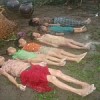
BURMA: Foreigners, Cameras Banned in Cyclone-Hit Areas
Images of the dead keep trickling out of Burma. The most moving are those of children who died when Cyclone Nargis tore through their world in the populous Irrawaddy delta.POLITICS: Gulf Seen Between Democracy in Theory and Practice
The basic democratic principle that "the will of the people should be the basis for the authority of government" is supported by overwhelming majorities throughout the world, according to a major new survey of more than 17,000 adults in 19 countries released here Monday.
RIGHTS-JAPAN: Broadcasters Break Hanging Secrecy Taboos
The final seconds in the life of a Japanese death row inmate - the rasping muffled last words, the trapdoor springing open, the whip of a noose and a Buddhist gong signalling the end - has made radio history here, waking listeners up to what goes on in one of the most secretive execution systems in the world.POLITICS-US: Lawmakers Seek Probe of “Media Generals”
As U.S. television networks continue their silence about their use of retired military officers to "sell" progress in Iraq, members of the U.S. House of Representatives are calling on the Defence Department Inspector General to investigate the Pentagon-sponsored public relations effort.EUROPE: The Newspaper World Suffers Another Blow
The financial crisis in the French newspaper Le Monde, that led to an unprecedented two-day strike in mid-April, is symptom of a growing crisis in the print media in France, and in several other European countries.MEDIA-PAKISTAN: Caught Between State and Non-State Actors
"My captivity only brought honour upon me," is how journalist Suhail Qalandar sees his ordeal at the hands of kidnappers last year. He was talking with IPS over the phone from Peshawar, capital of the North West Frontier Province.FIJI: Aussie Journo Expelled on Press Freedom Day Eve
Fiji’s interim government has come under withering criticism both nationally and internationally for the deportation on Friday of the Australian publisher of the leading ‘Fiji Times’ daily, Evan Hannah.MEDIA-ASIA: More Than Just Freedom
More than gaining the freedom to report on society’s problems Asian media must gauge it’s real contribution to the public‘s needs, especially at a time of increasing commercialisation.RIGHTS: Impunity Reigns in Journalist Murders
Over the last 15 years, at least 500 journalists were killed directly because of their work. But in less than 15 percent of cases have the perpetrators been brought to justice, according to the New York-based Committee to Protect Journalists (CPJ).
EGYPT: New Strike to Greet Mubarak
Hundreds remain in detention following a nationwide protest Apr. 6 against rising food prices and political stagnation. But this has not deterred activists from calling for a second general strike on May 4, timed to coincide with President Hosni Mubarak's birthday.RIGHTS: People Everywhere Support Free Media
Sixty years after the Universal Declaration of Human Rights asserted the individual's right to "receive and impart information and ideas through any media", it appears that most of the world's people agree, at least in principle.
Q&A: Is a Global News Agency of the South Viable?
When the tart-tongued prime minister of a Southeast Asian nation was once asked what the leading newspapers were in his country, he remarked rather cynically: "We don't have any leading newspapers because all our newspapers are misleading."
MIDEAST: Just The Place To Be, And Not To Be
Fadel Shana just had to go to the scene of the Israeli bombing. As a Reuters cameraman, that was his job. He wasn't the only one killed, but through his pursuit of attacks as they happen, he was always more at risk than most others.MEXICO: Murder of Reporters Highlights Indigenous Divisions
The airwaves of "Radio Copala, the Voice That Breaks the Silence" only cover a few hectares in an indigenous region in the southern Mexican state of Oaxaca. But since the murder of two of the station’s four reporters, they have reached across borders.« Previous Page — Next Page »


The Week with IPS

NEXT STOP - SDGs
Tracking global progress towards a sustainable world
Tracking global progress towards a sustainable world
