Languages
Monday, October 19, 2026



News and Views from the Global South
Artificial Intelligence
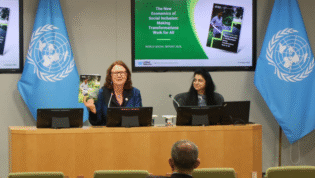
‘Prioritize Social Inclusion as Rapid Transformations Risk Leaving Millions Behind’
The United Nations Department of Economic and Social Affairs (UN DESA) new report, which addresses the rapid global transformations driven by artificial intelligence (AI), demographic shifts, climate change, and conflict, highlights the widening disparities in employment, social inclusion, and access to services.
If the UN COP17 Is Serious About Biodiversity, It Needs to Follow the Money
On Monday, governments from across the world will gather in Armenia for COP17, the UN biodiversity summit, to assess progress on the global agreement to halt and reverse biodiversity loss. For anyone who cares about the livability of our planet for future generations, and the richness of life on earth, the stakes could hardly be higher. Policy makers will debate targets, implementation, and the lack of money to protect nature, in particular the failure of developed countries to fulfil their obligations. But there is a more basic question that should put at the center of those discussions: what happens when the financial system governments are counting on to fund nature protection is also financing its destruction?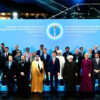
Kazakhstan Has Spent 23 Years Bringing Faiths Together. Now Comes the Harder Part.
In a world increasingly divided by war, political distrust and competing ideologies, Kazakhstan has spent more than two decades pursuing an unusual diplomatic undertaking: keeping representatives of different religions in conversation.
How AI-Powered War Drives the Critical Minerals Race
The demand for critical minerals is accelerating as world powers scramble to stay on top of emerging technologies. Meanwhile, the environment and frontline communities are paying a steep price.
Strategic Blindness at UNGA 81: “Super Intelligence” and “Killer Robots” Take Center Stage as Women’s Rights Take a Back Seat
“Artificial intelligence (AI) must be shaped by humanity, with humanity, and for all humanity... Life-and-death decisions must never be surrendered to machines. Killer robots must have no place in our future.”
AI-Driven Climate Change Pushes Frontline Communities Further Into Environmental Degradation and Poverty
On September 21, Frontline Resource Institute (FRI) hosted its Climate Justice Hub at Fordham University at Lincoln Center in New York City under the theme “Building a Stronger Climate Coalition.”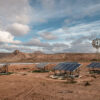
Africa Has the Technology to Achieve Food Security—Now It Needs Coordinated Deployment
Africa is emerging as the world’s fastest-growing technology market, with its innovation ecosystem attracting increasing global investment. The European Investment Bank’s recent €40 million commitment to the sector underscores this growing confidence.
Bridging Digital Transformation in an ASEAN-EAEU Cooperation
Physical borders are shrinking, and digital ones are quietly taking their place. As governments use digital transformation as a powerful driver of economic and sustainable development, the challenge is no longer simply a digital divide between those with technology and those without it. It is a question of digital fragmentation, where infrastructure, standards and regulations make cross-border cooperation more difficult.
World Humanitarian Day — Protect Aid Workers Against Drones
World Humanitarian Day celebrates humanitarian workers and the life-saving services they provide under the most complex and often dangerous conditions.
Who picks up the tab for AI’s unbridled genius?
For the last few years, Artificial intelligence has been making increasingly intrusive demands for our attention. It burst onto the scene like a child prodigy, enthralling us with feats of brilliance. With consummate ease, it removed drudgery from our tasks and began helping us achieve our personal and workplace objectives.
From Castel Gandolfo to Campidoglio: Call for Human Dignity to Be at the Heart of the AI Revolution
After two days of debate at an international conference devoted to the challenges of artificial intelligence (AI), nuclear war and global security, Nobel laureates, former heads of state and government, scientists, human rights defenders, religious leaders and representatives of civil society adopted a joint declaration, calling for it to be based on human dignity.
Africa Can Grow Faster With AI—If It Moves Now
A farmer in Kenya gets weather and planting advice on a basic phone. A teacher in Nigeria uses a chatbot to help students catch up in math. South Africa’s revenue authority uses data analytics to better target tax audits. These are not futuristic examples from Silicon Valley. They are early signs of the broader transformation that artificial intelligence (AI) could bring to sub-Saharan Africa.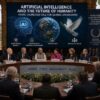
Artificial Intelligence and the Future of Humanity: Nobel Laureates Call for Global Safeguards
"I’m sorry, Dave. I’m afraid I can’t do that.” By bringing the supercomputer HAL 9000 to life in his 1968 film 2001: A Space Odyssey, American director Stanley Kubrick created one of the most powerful symbols of the fear of artificial intelligence (AI) escaping human control.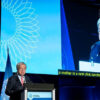
Global AI Governance Cannot Wait As the Digital Divide Widens
Throughout July 2026, various United Nations (UN) bodies and global experts have underscored the need for increased comprehensive artificial intelligence (AI) governance. Although AI yields significant potential gains for global development, persistent structural barriers continue to impede equitable access and deepen the digital divide.
Communities vs. Datacentres
Few things unite Donald Trump’s most ardent supporters with the Democratic Party’s progressive wing, but datacentres are one of them. Across the USA, communities are joining forces across the political divide to oppose developments few want but governments seem determined to impose.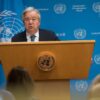
Autonomous Weapons: The Wave of the Future in Military Conflicts Worldwide
As the international community continues to weigh the good, the bad and the deadly in artificial intelligence (AI), which is spreading far and wide with apparently no guardrails, the United Nations is taking a closer look at the impact, both positive and negative, of AI.
From the Nuclear Age to the Age of Artificial Intelligence: Can Humanity Build a New Architecture for Peace?
More than eight decades after the atomic bombings of Hiroshima and Nagasaki ushered humanity into the nuclear age, the world is confronting another technological revolution whose consequences extend far beyond science and industry.
Remember Your Humanity
Eighty years since the dawn of the nuclear age, which began with the first nuclear test in New Mexico, USA, and with the tragic atomic bombings of Hiroshima and Nagasaki, humanity faces a deep existential crisis. This crisis is much more unstable and unpredictable than the gravest Cold War confrontations. In 1955, when there were only three states with nuclear weapons and the first thermonuclear weapon was being developed, the Russell-Einstein Manifesto posed a profound question: “Shall we put an end to the human race; or shall mankind renounce war?” Today, with 9 states possessing nuclear weapons and several thousand thermonuclear devices, this question becomes an ultimate choice.
CARICOM Leaders Gather in Saint Lucia as Caribbean Confronts Mounting Global, Regional Challenges
Caribbean leaders are meeting in Saint Lucia for their annual summit, confronting a convergence of global and regional challenges ranging from rising living costs and climate change to crime, food security and geopolitical tensions.
UN Artificial Intelligence Panel Launches Report Ahead of Global Conference
The acceleration of artificial intelligence (AI) and its capabilities is far outpacing governments’ capacities to effectively regulate it. Without scientific evidence to inform their policies, countries will be left at a greater disadvantage, according to the UN’s independent panel on AI.
Understanding an Interconnected World
When Roberto Savio begins talking about The Global Citizen Handbook, he does not begin with the book itself. He begins with today’s young people.Next Page »





The Week with IPS

NEXT STOP - SDGs
Tracking global progress towards a sustainable world
Tracking global progress towards a sustainable world
