Languages
Tuesday, October 27, 2026



News and Views from the Global South
Gender Identity
Choosing the Next UN Secretary-General: The Threat of Veto or Veto Itself Must Not Silence the World
The selection of the next Secretary-General of the United Nations has reached a critical juncture. It raises fundamental questions about fairness, transparency, regional balance, and the democratic legitimacy of the world’s most universal organization.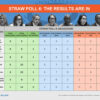
Wanted: A Feminist UN Secretary-General for ‘We the Peoples’, Not the Powerful
Notwithstanding last minute shenanigans and the possibility of backroom deals by powerful states, two women from Latin America are leading contenders in the race for the UN’s next Secretary-General. After 80-plus years of men-only leadership, momentum is building to break the glass ceiling at the global institution dedicated to saving future generations from the scourge of war.
CHINA: ‘My Sister Has Been in a Chinese Prison for Eight Years Because I Exercised My Freedom of Speech’
CIVICUS discusses the persecution of Uyghurs and activism in exile with Rushan Abbas, an Uyghur American activist, founder and executive director of Campaign for Uyghurs and chair of the Executive Committee of the World Uyghur Congress.

Afghanistan’s Stolen Peace: The Women Who Refuse to Be Silenced
 When the Taliban took control of Afghanistan in August 2021, Zahra Nader was pursuing a doctorate in Women and Gender studies at York University in Canada. Nader had planned to return to Afghanistan to continue her research, possibly teach at Kabul University, and continue exploring Afghan women's role in political history.
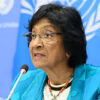
Navi Pillay’s Nobel Peace Prize Is a Vote of Confidence in a Global Legal Order under Fire
The awarding of the 2026 Nobel Peace Prize to distinguished South African jurist and international judge Navanethem “Navi” Pillay is about more than just the recognition of an exceptional individual in the global fight for justice.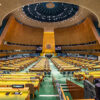
Strategic Blindness at UNGA 81: “Super Intelligence” and “Killer Robots” Take Center Stage as Women’s Rights Take a Back Seat
“Artificial intelligence (AI) must be shaped by humanity, with humanity, and for all humanity... Life-and-death decisions must never be surrendered to machines. Killer robots must have no place in our future.”
IRAQ: ‘Art Is the Only Weapon That Doesn’t Hurt or Kill’
CIVICUS discusses public art, gender-based violence and censorship in Iraqi Kurdistan with Tara Abdullah, a multidisciplinary visual artist from Sulaymaniyah who is currently based in Oslo, Norway as part of the Safemuse – Safe Havens for Artists residency.
Family Law Reforms Are Needed to Advance Gender Equality
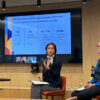
On September 16, at the lead-up to the 81st UN General Assembly, Equality in Family Law (GCEFL), Equality Now, TrustLaw, and the World Bank Group convened in New York City for the event titled The Gender Equality Dividend: Investing in Women’s Economic Prosperity Through Family Law Reform. Hosted by APCO, the event introduced new data on barriers to family law reform and highlighted strategies to help the international community maximize women’s economic participation.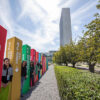
Development Goals Falter as Civil Society Is Shut Out
When the UN High-level Political Forum on Sustainable Development (HLPF) ended in New York in July, it took two recorded votes for states to pass a ministerial declaration that, until recently, would have been adopted without controversy. Uruguay, speaking for the Group of 77 developing countries plus China, pushed through the deletion of a reference to the agreement reached at the COP28 climate summit. Israel forced a vote on a paragraph about self-determination for people under occupation. Russia dissociated itself from the passage on peace and security. The wrangling revealed the extent to which the consensus that in 2015 saw all 193 UN states agree the Sustainable Development Goals (SDGs) – a common blueprint to end poverty, tackle climate change and build accountable institutions by 2030 – has been eroded.
LIECHTENSTEIN: ‘We Have One of the Strictest Abortion Bans in Europe’
CIVICUS discusses struggles for abortion rights in Liechtenstein with Gabriella Alvarez-Hummel, a journalist and reproductive rights activist who works with Fristenlösung für Liechtenstein, an organisation that campaigns for the introduction of a legal time-limit abortion model.

PARAGUAY: ‘Transparency Should Strengthen Democracy, Not Turn Criticism of Those in Power into a Cause for Suspicion’
CIVICUS discusses the challenges posed by Paraguay’s ‘anti-NGO law’ with Hugo González, executive director of the Paraguayan Network of LGBTQ+ Artists (REPAR+), a civil society organisation (CSO) that promotes the rights of LGBTQI+ people, which has joined the constitutional challenge against this law.

INDIA: ‘The Cockroach Janta Party Brings Together Everyone Who Has Been Neglected for Years’
CIVICUS discusses India’s Cockroach Janta Party movement with Harshit Singh, a young activist, poet and storyteller who took part in protests in Delhi.

ARMENIA: ‘Anti-LGBTQI+ Discourse Is Increasingly Tied to Anti-democratic Narratives’
CIVICUS discusses disinformation campaigns targeting the LGBTQI+ community in Armenia with Hripsime Kizogyan, Executive Director of Pink Armenia, a community-based organisation that defends the human rights of LGBTQI+ people and advocates for policy change.

Pride: Once Again a Protest
On the morning of 28 June, riot police sealed off Taksim Square with iron barriers and enforced bans on all weekend gatherings in Istanbul. Marchers pressed ahead anyway, re-emerging from side streets each time police dispersed them. By the end of the day police had detained at least 50 people, including a journalist. It was Istanbul Pride’s 24th edition, and the 12th year running that the authorities banned it outright.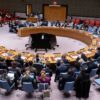
The Next UN Secretary-General Must Break Not Only the Glass Ceiling, but Also the Culture of Patronage
As the United Nations (UN) Security Council prepares for its first round of closed-door straw polls this month to select the tenth Secretary-General, the organization stands at a critical crossroads. Multilateralism is fracturing under geopolitical gridlock, and the UN is battling a severe budgetary deficit driven by funding cuts.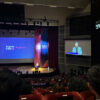
RightsCon’s Cancellation Signals a Growing Threat to Human Rights and Digital Freedoms
RightsCon, the world’s leading summit on human rights in the digital age, has served for over a decade as a vital global gathering, bringing together civil society, academics, technologists, policymakers, and the private sector in cross-border collaboration. The abrupt cancellation of RightsCon 2026, following intervention by Zambia’s government just days before the convening was due to commence in Lusaka, should concern us all.
Europe Must Not Turn Its Back on Rural Women’s Empowerment
In the hard-to-reach rural community of West Pokot, Kenya, 156 young women crossed a threshold that once seemed out of reach. Their graduation from HER Lab, a workforce skills programme for marginalized rural young women, was more than a ceremony. It demonstrated the power of targeted investment, trusted local partnerships and women’s economic empowerment.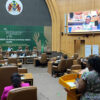
How the Global Anti-Rights Movement Is Targeting Women’s Rights in Africa Through Family Laws
The theme of Africa Day 2026, “63 years of unity, integration and development," offers a stark reminder of the gap that often exists between rhetoric and reality. While commendable regional legal frameworks have advanced legal protections for millions of women and girls, injustice remains written into the fabric of national family laws in many African countries, entrenching gender inequality in the home.
Solidarity for Whom?
The veil has been lifted—but not the one you think. Not the veil the West has spent decades weaponizing. The veil now exposed is the one that concealed Western feminism’s selective solidarity—its silence on the women it was never truly fighting for. The “othering” of women from the South West Asian and North African region. In other words: us.
Unexpected Ally Stepping Up Against Sexual Assault in Kenyan Slums: Landlord
Trigger warning: This article discusses child rape. Their quiet latent power comes from being ever-present eyes and ears on the ground. As they move around their compounds, collecting rent and checking on anywhere from 10 to 20 houses occupied by as many as 200 people, they see and hear things.
CSW70: Women’s Equality under Siege
On 19 March, the Commission on the Status of Women (CSW) did something unprecedented in its eight-decade history: it held a vote. The Trump administration, having spent two weeks attempting to defer, amend and ultimately block the session’s main outcome document, known as the agreed conclusions, cast the only vote against its adoption. That dissenting vote said a lot, as it came from the world’s most powerful government, backed by financial leverage, bilateral reach and a network of anti-rights states and organisations that are making inroads at many levels.Next Page »





The Week with IPS

NEXT STOP - SDGs
Tracking global progress towards a sustainable world
Tracking global progress towards a sustainable world
