Languages
Friday, April 24, 2026



News and Views from the Global South
Projects
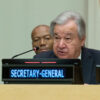
Fragile Progress in Gaza Humanitarian Response Undermined by Rampant Insecurity
Since the ceasefire agreement between Israel and Hamas in October of last year, humanitarian conditions in Gaza have notably improved — but aid agencies warn that progress is extremely fragile. Acute shortages of lifesaving medical care and psychosocial support persist, hunger remains widespread, with conditional cash assistance as the primary barrier preventing full-scale food insecurity, while Israeli attacks continue to undermine stability and humanitarian efforts.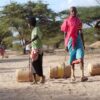
When Drought Steals Childhood: How Climate Shocks in Northern Kenya Are Testing the SDGs
Every morning before sunrise, 10-year-old Amina Adan walks away from school and toward a shrinking water pan on the outskirts of Rhamu, Mandera County. By the time her classmates would be opening exercise books, Amina was already balancing a yellow jerrycan almost half her size.
Protecting Africa’s Ocean Future and Why a Precautionary Pause on Deep-sea Mining Matters
The world is entering a decisive period for the future of the ocean. With the High Seas Treaty coming into force and meaningful progress being made on the World Trade Organization Agreement on Fisheries Subsidies, global momentum for stronger marine governance is building. Yet, new pressures linked to the push for deep-sea mining — the extraction of minerals from seabed thousands of meters below the ocean surface — threaten to undermine these gains. To safeguard progress, global decision-making will have to keep pace with such emerging risks. In this context, Africa will host several global discussions in 2026, including those that will shape the ocean's future, with a series of opportunities for leadership starting with the African Union Summit in February to the Our Ocean Conference in Mombasa, Kenya in June.
Haiti at a Crossroads: Political Uncertainty and Gang Control Push Nation Toward Collapse
As Haiti’s Transitional President Council (TPC) approaches its February 7 expiration date and the country remains without a newly elected president, humanitarian experts warn the nation risks further sliding into insecurity, raising fears of broader collapse.
The World’s Ongoing Conflicts Underline Nuclear and Non-Nuclear States
The two current ongoing conflicts, which have claimed the lives of hundreds and thousands of people, are between nuclear and non-nuclear states: Russia vs Ukraine and Israel vs Palestine, while some of the potential nuclear vs non-nuclear conflicts include China vs Taiwan, North Korea vs South Korea and the United States vs Iran (Venezuela, Mexico, Colombia, Cuba and Denmark).
Living with nature, the climate lesson from Brazil’s caatinga
“The work of collecting seeds saved me from depression,” caused by her daughter's suicide at the age of 29, said Maria do Desterro Soares, 64, who lives in the poor rural community of Jatobá in northeastern Brazil.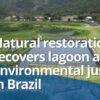
Natural Restoration Recovers Lagoon and Environmental Justice in Brazil: VIDEO
 "We moved from a context of socio-environmental exclusion to one of environmental justice," said Dionê Castro, coordinator of the Sustainable Oceanic Region Program which led Brazil's largest nature-based solutions project.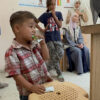
UN Warns Gaza’s Fragile Improvement Could Reverse Without Sustained Aid and Access
Despite notable improvements in the humanitarian conditions in the Gaza Strip following the October 10 ceasefire, progress remains critically fragile. With the enclave having averted famine across multiple regions, the United Nations (UN) and its partners warn that sustained humanitarian access, a steady flow of resources, and the restoration of critical civilian infrastructure are essential in preventing further deterioration, which could have long-lasting consequences for an already deeply traumatized population.
A Global Movement for Nutrition Is Needed Now More than Ever
In my more than 30 years with the United Nations, I’ve seen enormous change, collaboration and progress towards improving human development. But I’ve also seen how history has a way of repeating itself to entrench some of the most intractable global challenges.
Climate Justice Denied by Delays
Opinions have been divided over the annual UN climate conferences. While some see COP30 in Belém, Brazil, as confirming their irrelevance, others see it as a turning point in the struggle for climate justice.
Central Asia–Japan Leaders’ Summit in Tokyo Backs Trans-Caspian Corridor; Tokayev Warns Nuclear Risks Are Rising
Leaders of Japan and the five Central Asian states met in Tokyo on Dec. 20 and adopted the “Tokyo Declaration,” launching a new leaders-level format under the “Central Asia plus Japan Dialogue” (CA+JAD). The declaration places at the core of cooperation two priorities: strengthening supply-chain resilience for critical minerals, and supporting the Trans-Caspian Corridor (the Trans-Caspian International Transport Route), which links Central Asia with Europe without transiting Russia.
Escalating Food Insecurity in Asia-Pacific Undermines Health, Economic Growth, and Stability
2025 marked a notable year of progress in reducing global hunger; yet climate pressures, economic instability, and ongoing conflicts continue to push agri-food systems to their limits, undermining food availability. In a new report, UN agencies raise the alarm on how these factors are particularly pronounced in the Asia-Pacific region, which accounts for 40 percent of the world’s undernourished.
‘We Need a New Global Legal Framework That Rethinks Sovereignty in the Context of Climate Displacement’
CIVICUS discusses climate displacement and Tuvalu’s future with Kiali Molu, a former civil servant at Tuvalu’s Ministry of Foreign Affairs and currently a PhD candidate at the University of the South Pacific in Fiji and the University of Bergen in Norway. His research focuses on state sovereignty and climate change in the Pacific.
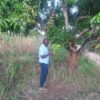
Farmers Can Now Measure and Benefit From Fruit Tree Carbon Trade
Farmers can now know and benefit from their contribution to climate change thanks to a formula that can be used to calculate the amount of carbon stored in fruit trees.
How Pacific Wisdom Is Shaping Global Climate Action
On the Pacific Islands, where the ocean horizon is both a lifeline and a warning, communities have long interpreted environmental change through traditional knowledge, lived experiences, stories, and practice. Their observations echo those across the Pacific region, where traditional knowledge remains central to understanding shifting environments and responsible stewardship.
International Funding for 30×30 Biodiversity Target Falls Billions Short of Global Goals
A new study and interactive dashboard released today in Nairobi at the seventh session of the United Nations Environment Assembly (UNEA) finds that current international financial flows remain billions of dollars short of what is required to achieve the global biodiversity target of protecting and conserving at least 30 percent of the world’s land and ocean by 2030 (30x30).
In Zimbabwe, School Children Are Turning Waste Into Renewable Energy-Powered Lanterns
When going home after school, Monica Ben not only takes with her a pen and exercise books but also a lantern to light the dark room and completes her daily homework in Mashonaland East province.
Any Resumption of US Tests May Trigger Threats from Other Nuclear Powers
President Donald Trump's recent announcement to resume nuclear testing rekindles nightmares of a bygone era where military personnel and civilians were exposed to devastating radioactive fallouts.
Resumption of Nuclear-Explosive Testing: A Dangerous Path
In a Truth Social post that reverberated around the world, on October 29 President Donald Trump wrote: “Because of other countries’ testing programs, I have instructed the Department of War to start testing our Nuclear Weapons on an equal basis.”
Yemen’s Worsening Food Security Crisis: Economic Collapse, Continued Insecurity, and Humanitarian Challenges
For the past decade, Yemen has been at the center of a severe and multifaceted humanitarian crisis, marked by widespread violence between various Middle Eastern actors, widespread civilian displacement, economic decline, and the collapse of essential services that serve as lifelines for displaced communities.
COP30 Fails the Caribbean’s Most Vulnerable, Leaders Say: ‘Our Lived Reality Isn’t Reflected’
Caribbean small island states say this year’s UN climate conference has once again failed to deliver the urgency and ambition needed to tackle escalating climate devastation across the region. From slow-moving climate finance to frustrating political gridlock, leaders say COP30 did not reflect the realities that small islands are living through every day.« Previous Page — Next Page »


The Week with IPS

NEXT STOP - SDGs
Tracking global progress towards a sustainable world
Tracking global progress towards a sustainable world
