
Sunday, September 20, 2026



News and Views from the Global South
DEVELOPMENT-MALAWI: Water Becoming Crucial in Regional Integration
Frank Phiri
- Malawi has scrapped plans to privatise its two water firms, at a time when water is becoming increasingly crucial in poverty alleviation and regional integration in Southern Africa.
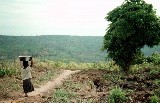
A young girl carries water in Malawi, which may face shortages come 2025. (Photo: Naashon Zalk) Credit: PictureNET Africa
The two state-run firms had initially been lined up for sale in 1996 according to a Divestiture Sequence Plan of the commission, which lists state enterprises for sale.
Sauti Maziko Phiri, executive director of the commission, told IPS that an outright sale of the two water boards had been ruled out. Instead, the government would keep the core assets and invite private sector to run selected services, which the state was failing to maintain, he said.
The private sector would, he said, be engaged under lease contracts with the objective of improving the precarious financial position of the boards, improve their ability to manage water resources and minimise losses of water along the distribution channel.
To ensure that consumers are not subjected to high tariffs by the leaseholders, formation of an independent regulator – the Malawi Water and Energy Regulatory Authority (Mwera) – has been proposed in Parliament. Mwera would act as a referee in the water and energy sector.
Fears of increases in the price of water have been raised by trade unions and consumer rights activists.
‘’If water is privatised, the poorest of the poor will suffer because they will not afford it,’’ says Thomas Banda, chairman of the Malawi chapter of Public Services International (PSI). PSI is a global union, which represents the world’s water workers.
Some 54 percent of Malawi’s population of 11.7 million people lives below the poverty line of one dollar a day, according to the World Bank.
Campaigners’ fears have been justified by various studies, which say the price of water, would rise in the next 10 years against the backdrop of envisaged supply shortages in the 13-member Southern African Development Community (SADC).
The studies singled out Malawi and South Africa – both members of SADC – which would experience water shortages by 2025 and would not meet their population growth.
Malawi and Zambia have piloted an integrated programme aimed at addressing the sustainable conservation and management of water for future generations, according to the Harare-based Global Water Partnership (GWP) Southern Africa.
This body is coordinating activities on integrated water resources management in southern Africa in line with the 2003 Framework of the SADC regional Water Policy.
In Malawi, the roadmap – Integrated Water Management Plan (IWMP) – is expected to lift profile of water in the Malawi Poverty Reduction Strategy Paper as a crucial utility for the country to reduce poverty and achieve higher economic growth.
The Global Water Partnership Southern Africa says the plan will guide water users in Malawi and Zambia on how to develop, manage and effectively use the country’s water resources.
It says the blueprint is in line with a directive passed at the World Summit on Sustainable Development (WSSD) for the region to ‘’develop integrated water resources management and water efficiency plans by 2005’’. The WSSD summit was held in Johannesburg, South Africa, in September 2002.
But, since most developed countries such as Malawi do not have the human, technical and financial resources to fulfill the summit’s directive, delegates agreed that rich countries should bail out the poor through financial and technical aid.
In southern Africa, the funding would be channeled through the Global Water Partnership Southern Africa. So far, Malawi and Zambia have been allocated 200,000 dollars by Canada through the Canadian International Development Agency (Cida).
Alex Simalabwi, regional coordinator for the Partnership for African Water Development based in Harare, hopes that the plan will help Malawi attain industrial development, food security, sustainable energy, increased access to water and makes it safe from disasters.
‘’You cannot expect to develop a country if water is not treated as a priority,’’ he said.
According to the Ministry of Water Development, about 90 percent of Malawi’s Gross Domestic Product is generated by agriculture, while 80 percent of the country’s population earns a living on allied activities.
Malawi’s agriculture sector is predominantly subsistence and driven by rain water.
Apart from agriculture, Malawi’s power sector relies heavily on water for generating hydro electricity supplied by the Electricity Supply Corporation of Malawi (Escom).
Due to degradation of the quality of water and environment along the Shire – Malawi’s largest river used for generating electricity power – blackouts are a perennial fixture during rainy seasons. And, rationing has already started in the commercial and industrial hub, Blantyre, since last month following heavy down pours in most parts of the southern region.
‘’As can be seen, there can not be agriculture and industrial activity without water,’’ said Cassim Chilumpha, Malawi’s vice-president and Minister of Water Development.
‘’It is clear that improvements in the way we manage and use the natural resource will determine how far we can go to reduce poverty,’’ he said.
Malawi, one of the poorest in the world, has formed a national steering committee – the Malawi Water Partnership (MWP) – to coordinate donor-funded water management projects.
Head of MWP Chimwemwe Chikusa said the partnership will carry out a number of activities -including raising awareness and imparting knowledge to personnel charged with designing the plans – in support of the blueprint.
Malawi’s Chief Water Resources Officer in the Ministry of Water Development, Milford Wedson Mikuwa said the government was reviewing laws and policies to strengthen the country’s legal framework in implementing the water plan.
 Print
|
Print
|




