Thursday, October 1, 2026



News and Views from the Global South
HUMAN RIGHTS: New UN Council Gives Rise to Doubts and Fears
- After its first two weeks of sessions, the United Nations’ new Human Rights Council has still not given any indications about how it will respond to the countries with the most flagrant abuses, or what structure it would adopt to prevent and punish rights violations.
The organisation, made up of representatives of 47 countries, has replaced the Commission on Human Rights, which was the UN’s highest authority on human rights for nearly six decades.
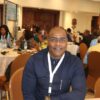
While the Council’s approach to its task will become clearer in future sessions, which this year will take place in September and November, Eric Sottas, director of the World Organisation Against Torture (OMCT, for its name in French) answered questions from IPS on the undercurrents at the forum.
IPS: Does the Human Rights Council offer advantages over the former Commission on Human Rights?
ERIC SOTTAS: This new Council has some advantages. One, for instance, is the fact that it will meet at least four times a year, which means that there is a better chance of following up certain cases. When you have very difficult matters, when there is a very serious problem in a country, it’s much better to have regular meetings over the year instead of one major meeting in which condemnations are passed that nobody really is taking care of, as happened on occasion at the Commission.
But the Council will also present some problems. One is the fact that, contrary to what it was announced before and incorporated into the resolution that created the Council, some member countries have not really committed themselves to the pledges required prior to their election. Looking at the letters (presenting their candidacy), several of these countries, such as China, did not express any firm intention to adopt or ratify any human rights conventions. Neither did they agree to visits by experts, rapporteurs or working groups of the human rights inspection mechanisms. So the fact that these letters were not making the pledges that were expected, but did not affect their election, that was for me the first problem.
The second is that even though a majority in the General Assembly is required for countries to be elected, the African region presented the same number of candidates as the seats on the Council they had to fill. What does that mean? It means there was no other option but to elect those candidates. Of course, they didn’t present from the most problematic countries such as Zimbabwe and Sudan. There was no provocation at that level. But we consider that many of the countries elected in that group do not fulfil the criteria they are supposed to fulfil. So I have a real mixed feeling about what the Council will be able to do.
IPS: But isn’t the creation of a system of periodic and universal review of countries’ adhesion to the conventions a positive innovation of the Council?
SOTTAS: It is a good thing that all the countries will undergo a review on a regular basis. But on the other hand we have absolutely no guarantee that the countries will follow the recommendations adopted by the independent experts. As I see it, there should be a clear distinction between the mandates of the political bodies, whose task is not only to judge other countries, but much more importantly, to complete the standard-setting system first. The Commission was good at adopting new instruments, and passing them on to the General Assembly for approval.
For this, I think we need a large spectrum of countries on the Council to make sure that the conventions proposed and adopted are supported by a majority of states in the world. But at the same time, it is very dangerous to give a Council like this one the duty to control or to monitor whether the countries are really fulfilling their different obligations under a convention or under customary law.
IPS: How do you think this dilemma will be resolved?
SOTTAS: One possibility is for the Council to play its designated role properly. In other words, that it’s not duplicating the work done by experts, but gives teeth to the recommendations coming from this group. In the UN system, we have the treaty monitoring body, committees, and so on, and the special procedures (the special rapporteur on torture, and the working group on disappearances, for example). These experts do their work and present it to the Council, and the Council should analyse if the country is really doing something to implement the recommendations or if, on the contrary, they are just ignoring them.
But there is another possibility, that the Council will take it upon itself to change what the experts have analysed or decided, and I’m afraid that for the time being the resolution creating the Council affords no protection against that.
IPS: What are your fears based on?
SOTTAS: There is a precedent. In the past, the Sub-Commission (now the Sub-Commission on the Promotion and Protection of Human Rights) was competent to analyse country situations, and after the Tiananmen Square massacres, the Sub-Commission did good work analysing the situation, and required China to present a report to the Commission clarifying what had happened during those events. The Chinese delegation had put a lot of pressure on those experts to dissuade them from adopting a resolution, but they resisted that pressure and adopted, I think, a soft but good resolution.
But at the next session of the Commission, instead of monitoring the extent to which China was actually implementing what the Sub-Commission had recommended, decided to accept the explanation given by China, which was really no explanation at all. In a subsequent reform the Commission decided that the Sub-Commission should no longer work on country situations. At the end of the day, the politicians serving on the Commission at that time, and who are still sitting on the Council today, consider that the role of experts is to a certain extent limited by political realities.
IPS: What lessons are there in these events?
SOTTAS: I think they explain the selectivity, that is to say, the criteria that give priority to certain violations or particular victims. Much more than knowing if there are good or bad countries on the Council, it is a question of the role that these different actors should play.
IPS: So what do you propose?
SOTTAS: What we need is a system of checks and balances, like we have in democratic countries. There we have a parliament adopting the laws, and all the parties, even the extremist ones, are needed to obtain a majority. But once the laws are adopted, another body should look after their implementation and to see that they are respected. Unfortunately, at the international level these two things are completely mixed. I’m very concerned about the fact that the new Council has not addressed this question in the structure adopted.
IPS: How could the two functions be balanced?
SOTTA: I think we can have something similar to the mechanisms of the International Labour Organisation (ILO), where the Secretariat (the International Labour Office) analyses the country presentation before it is passed to the council. In other words, you have a report sent to the Secretariat of the ILO. Then you have an expert group analysing this outcome based on the work done by the Secretariat and deciding if that should go to the Council with recommendations or even sanctions for the country.
IPS: Is the Council considering the possibility of adopting a mechanism of this type?
SOTTA: There are suggestions to adopt something similar, but for the time being nothing has been decided. And I guess it will be the major issue, not for June, but for September. These two weeks in June will be more of a formality. The Council will probably appoint some working groups in order to speed up the work on all these questions they have to decide in September.
IPS: Do you believe that the Council will set aside some of the issues that the former Commission was examining?
SOTTA: I don’t think that the Council will backtrack on the level of excluding issues. The question is rather about whether or not the independent experts established by the Commission will continue to play their role. It’s true that today there are 40 different mechanisms established by the Commission, between special rapporteurs, representatives, working groups, and so on, and there is a need for some reorganisation. But the main point is their independence and their freedom to address their conclusions and recommendations directly to the Council. And here the question, for me, is: will the Council agree to these groups continuing to conduct the same kind of investigations?
IPS: What is it about these special mechanisms that irritates some member countries?
SOTTA: For example, the special rapporteurs on torture and on summary executions used to present a list of cases to the Commission every year, and that created a certain amount of tension and protest, with countries claiming the experts were not sufficiently independent or competent.
IPS: Were those objections always from the same countries?
SOTTA: No. They came not only from countries I would consider difficult, like Cuba, for instance, which challenged the report made by British expert Nigel S. Rodley, once special rapporteur on torture (1993-2001), but also from Spain, which challenged Dutch expert Theo Van Boven on his report on the same issue, when he was rapporteur (2001-2004). So there have already been tensions, and it’s quite understandable.
IPS: How do these incidents relate to the possibility that the scope of the special mechanisms may be curtailed?
SOTTA: The point here is, will this Council be strong enough to accept the challenge of independent experts or, on the contrary, will it take advantage of the new system of universal, regular peer review, which is supposed to reorganise the work, to take some competence away from the experts. For example, it might decide that the Secretariat should have much more of a role in drafting country presentations.
IPS: How do you think the apparent differences between governments and independent experts can be bridged?
SOTTA: There are several proposals on the table at this moment. Some proposals are very good in the sense that they reinforce the role of these independent experts, even suggesting there should be an independent expert in every country to prepare the peer review human rights report. But there are others in which countries are saying that “we have too many experts and we should not continue in this direction.”
IPS: Are the attacks aimed only against the experts’ competence, or at the issues they examine?
SOTTA: I think they will not only affect the competence of experts, but also certain issues, such as challenging the responsibility of transnational companies with regard to human rights, which has always been a problem for Western countries. The question of freedom of expression and of association, which are in jeopardy in parts of the world at this moment, are also under threat.
IPS: What do you suggest to overcome these threats?
SOTTA: We are insisting on the need to maintain a mechanism very similar to the one we have at present in the system of human rights defenders, or for condemning torture, which is very important for us at OMCT. I mean the possibility to visit any place of detention when the country accepts the visit. We believe that every country should have standing invitations in order to allow the independent experts to visit whenever they consider necessary.
IPS: Does the invitation system work?
SOTTA: We know that this is not yet the case. The problems we have with Guantánamo (the prison at this U.S. military enclave in Cuba), and previously with China, show that countries which are permanent members of the UN Security Council do not automatically accept experts’ visits. We intend to examine very carefully the proposals that are put forward for the reform of these mechanisms, because in our view, they will pose the major difficulty for the future.
 Print
|
Print
|