Wednesday, July 15, 2026



News and Views from the Global South
Q&A: 'Nature Capital Is the Market Too'
Interview with Robert Costanza, Professor of Ecological Economics
- If the world political agenda is dictated to by the economy, "we need natural and social capital to be included in the market," says Robert Costanza, director of the Gund Institute for Ecological Economics at the University of Vermont in the U.S.
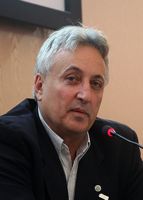
Robert Costanza Credit: Greenaccord
"There are a lot of things outside the market that are very important to our well-being, and nature capital is one of these categories along with social capital (people)."
Robert Costanza was participating in the fifth International Media Forum on protection of nature (Nov. 7-10) organised by Greenaccord, a cultural association of environmental journalists of Christian inspiration.
Greenaccord aims to create links between experts and environmental journalists so that "issues like climate change and the environment are addressed as scientifically as possible."
IPS correspondent Sabina Zaccaro met Robert Costanza at the Forum. Some excerpts from the interview.
IPS: Why should the market include natural capital?
Robert Costanza: We need to go beyond the current market. I don't think the solution is to privatise everything and bring it into the market in any sort of direct way; what we do need to do is recognise that many of these assets are public goods and that they are not well handled by private markets.
Market requires private property, and much of this natural capital is public goods, so it is not amenable really to ownership as private property. That's why we need this new sort of sector of the economy for common property, for common property assets.
But there are other mechanisms and institutions that we could devise to handle them better. We can't just leave them as open access resources with no property rights. It's not appropriate to assign private property rights. What we need is something in between – community property rights and the idea of trusts that are held on behalf of the community so that we can "propertise" these assets without privatising them. We can assign property rights and then manage them within the market context without privatising them and marking them into private market goods.
I think it's going to take a kind of redesign of the market, if you will, or expansion, or a whole different element in the system. And I think we can value those assets and we can manage them with mechanisms like this 'trust' idea I was talking about.
IPS: What concrete effect would this have?
RC: We can use that to send the right signals and incentives to the rest of the market that would make it operate in a way consistent with the direction we want it to go. We need to get the market to tell the truth about these assets; they're only giving us a very small part of the truth.
IPS: Is the market ready to do that?
RC: I don't see why not. If we were giving the right signals I think the rest of the market could certainly process those signals. If the prices of releasing carbon into the atmosphere were something closer to its real cost, that would be incorporated into the market throughout the whole system and that would change everything; every decision that gets made throughout the world would be affected by that process in a positive way.
IPS: And is the market politically ready to make the changes in the rules that are required to make this happen?
RC: Well, that is another question…I think we are close to a tipping point, or a sort of a window of opportunity, where there's enough agreement that, yes, we need to do something and we need to do that very quickly. Most importantly, I think that it would have positive benefits to the whole society that will all be better off after we do this.
IPS: Are citizens aware of that?
RC: Well, I think that's changing…we have seen a big change in the U.S. public opinion, partly as a result of Katrina (the Atlantic hurricane that hit the U.S. coast in 2005), and Al Gore's movie ('An inconvenient truth', a recent documentary on global warming), and other weather events like recent fires in California.
Everything is confirming the fact that climate is changing, so people are still wondering what to do about it, and many of these solutions that have been put forward – like changing your light bulbs and that sort of thing – I do not think that's going to be enough, certainly not if it's a voluntary kind of thing. What we need is a more systemic solution that would really change all of the signals and change behaviour in the right way.
I think the critical thing is to get the message that making these changes is not a sacrifice, what is actually a sacrifice is not to make these changes.
Even the Stern Review (review on economics of the climate change released in 2006 by the economist Nicholas Stern for the British government) makes that point very strongly, that if we do make all these changes now it would cost one percent of the gross national product (GNP); if we don't make the changes it is going to cost us 5 to 20 percent GNP.
So, that's a kind of a no-brainer decision, from that point of view. But actually getting the thing to happen politically, that's a completely different question. But as more evidence from these different sources comes out, eventually there will be a window of opportunity that will allow some major changes to happen.
 Print
|
Print
|