Languages
Wednesday, October 7, 2026



News and Views from the Global South

Girls in Afghanistan—and Everywhere Else—Need Toilets
"I never come here, just because of boys," Atifa says, pointing at the door of the stall. "They're opening the door." Atifa, a sixth grader in Kabul, Afghanistan, attends a school of 650 girls. Since they study in tents in a vacant lot, the only toilets the girls have access to are on the far side of the boys' school next door. The school is one of a very few for girls in the area, so some students walk over an hour each way to get there.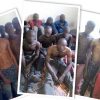
IOM Learns of ‘Slave Market’ Conditions Endangering Migrants in North Africa
Over the past weekend, IOM staff in Niger and Libya documented shocking events on North African migrant routes, which they have described as 'slave markets' tormenting hundreds of young African men bound for Libya.
Climate Change is Already Upon us & Will Only Worsen in Short Term
It is fitting that this year’s conference of parties (on climate change, COP 23) is led by Fiji, a nation on the frontlines. Last month I visited other small islands facing the impacts of a warming world: Antigua and Barbuda and Dominica. The hurricane damage was beyond belief. The catastrophic effects of climate change are upon us. Floods, fires, extreme storms and drought are growing in intensity and frequency.
Vanuatu: Community Farms Helping Small Islands Adapt to Climate Change
Here in Vanuatu, the ocean has been getting warmer and more acidic. Scientists are predicting that cyclone patterns will change, we’ll see heavier rainfalls, a wetter wet season and a drier dry season. We’re already seeing the sea rising six millimeters per year in the capital, Port Vila; higher than the global average.
Geneva Centre for Human Rights Advancement calls on Arab and Western societies to stand united against violent extremism
The Chairman of the Geneva Centre for Human Rights Advancement and Global Dialogue, Dr. Hanif Al Qassim, has deplored the rise of xenophobia, bigotry and marginalisation targeting refugees, migrants and internally displaced persons that is taking effect in many regions of the world.
On Gender Day at Climate Meet, Some Progress, Many Hurdles
“Five years ago, when we first started talking about including gender in the negotiations, the parties asked us, ‘Why gender?’ Today, they are asking, ‘How do we include gender?’ That’s the progress we have seen since Doha,” said Kalyani Raj.
How to Ensure Farming is More Than Just a Footnote in Climate Talks
If change comes from within, then climate action in agriculture must logically start with farmers. They need to find ways to adapt to and mitigate climate change. But when that involves 800 million of the world’s poorest people, they are going to require systematic and dedicated support.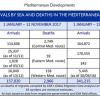
Mediterranean Migrant Arrivals Reach 157,020 in 2017; Deaths Reach 2,966
IOM, the UN Migration Agency, reports that 157,020 migrants and refugees entered Europe by sea in 2017 through 12 November, with about 75 per cent arriving in Italy and the remainder divided between Greece, Cyprus and Spain. This compares with 341,215 arrivals across the region through the same period last year.
Finance Following Growth
Economists of all persuasions recognize the critical role of finance in economic growth. The financial sector’s stability and depth are widely considered important in this connection.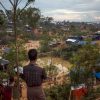
UN Migration Agency Warns of Trafficking, Labour Exploitation, Sexual Abuse of Rohingya Refugees
Human trafficking and exploitation are rife among Rohingya refugees who have fled Myanmar to seek safety in Cox’s Bazar, Bangladesh, according to interviews and community focus groups conducted in the district’s makeshift settlements by IOM, the UN Migration Agency.
The Mekong, Dammed to Die
In Laos, the lush forests are alive with the whines of drills that pierce the air. On the Mekong, a giant concrete wall rises slowly above the trees. The Don Sahong dam is a strong symbol, not only for a power-hungry Asia but also for what critics fear is a disaster in the making.International Red Cross Commends UAE’s Humanitarian Work in Yemen
The UAE’s soft power policy is a great profile that contributes to the positive reputation boasted by the UAE outside this region, the President of the International Committee of the Red Cross, ICRC, has said.
The Harsh Plight of 152 Million Child Labourers
While trillions of dollars are being spent on exploring remote galaxies, Planet Earth is still home to harsh realities that could be easily –and much less expensively—resolved. One of them is that worldwide 152 million children are currently victims of child labour.
Are Prospects of Rural Youth Employment in Africa a Mirage?
Many recent accounts tend to dismiss productive employment of youth in rural areas in Africa as a mirage largely because they exhibit strong resistance to eking out a bare subsistence in dismal working and living conditions. We argue below on recent evidence of agricultural transformation that this view is overly pessimistic, if not largely mistaken.
How US Is Taking Climate Action Without Trump
Even after President Trump announced his intention to pull the United States out of the Paris Agreement, much of the country is moving forward with climate action anyway. According to new analysis, more than 2,500 non-federal actors representing more than half the U.S. economy—including cities, counties, states, businesses and more—have pledged their support for the Paris Agreement goals. If these actors were their own country, they’d be the world’s third-largest economy.
Global Campaign for Mercury-Free Dentistry Targets Africa
A vibrant global campaign to ban the use of mercury in dentistry is shifting direction: moving from Europe to the developing world.
The Second Global Migration Film Festival Gets Underway
From Guyana in South America to Makati in the Philippines (and many other places in between) filmmakers from around the globe will soon showcase their skills as cinematographers at the Global Migration Film Festival. Organized by the UN Migration Agency, IOM and supported by UN Information Centers worldwide and with the financial support of DHL, the festival will take place in over 100 countries from 5 to 18 December 2017.
Aid Groups Sound Alarm on DRC Crisis
The Democratic Republic of the Congo (DRC) is on the brink of a humanitarian crisis and the international community must step in before it worsens, humanitarian agencies warn.
Economic Development vs. Climate Action: Rebutting Deniers and Wafflers
As negotiators meet in Bonn to put together a deal to implement the Paris Agreement, John Holdren, a professor of environmental policy at the John F. Kennedy School of Government, Harvard University, stressed that economic development and climate change mitigation and adaptation are not ‘either-or’ but must be pursued together.
Climate Change Poses Alarming Threat to Food Security in Pacific Islands
A high-level meeting of political leaders -– hosted by the Food and Agriculture Organisation (FAO) -– sounded an ominous warning: that climate change poses an “alarming threat to food systems and food security in the Pacific islands.”
Aid Groups Condemn Yemen Blockade, Warn of ‘Catastrophic’ Famine
If aid deliveries are not resumed, Yemen will experience the worst famine the world has seen in recent decades.« Previous Page — Next Page »





The Week with IPS

NEXT STOP - SDGs
Tracking global progress towards a sustainable world
Tracking global progress towards a sustainable world
