Languages
Thursday, November 19, 2026



News and Views from the Global South
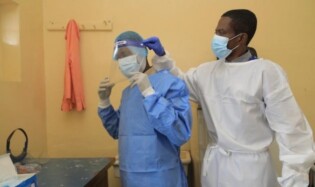
Kenya Contained Ebola With Preparation, Not Luck. Africa Needs More of the Same
Last week, on 11 November, Kenya discharged its last Ebola patient, just 37 days after the country recorded the first-ever case of the virus in its territory. If no new cases emerge over the next six weeks, Kenya will be officially declared Ebola free on 23 December. So far, zero community transmission has been recorded in the country.
Tuvalu’s Maina Talia: ‘We Are Not Here To Play. We Are Here for the Survival of Our People’
“This is about the survival of people, and we should not sugarcoat anything here at COP31. If you are trying to sugarcoat things, you shouldn't be coming. We should be frustrated all the time because we are dealing with the very lives of our people.”
Kenya Says IPCC Report Delay Debate Is About Capacity, Not Politics
The publication timetable for several climate reports has become one of the most contentious issues at this year’s United Nations climate conference, as several fossil-fuel-dependent countries want to delay the next round of scientific assessments.
Protecting Wildlife Requires Gender Equity
The United States isn’t just lagging behind the global effort to protect biodiversity, it’s pulling in the opposite direction. When the 196 nations that are parties to the United Nations Convention on Biological Diversity concluded their annual 17th Conference of Parties (COP17) in Yerivan, Armenia, last month, the only member state not there (also the only one that hasn’t ratified the CBD) was the United States. It’s an outlier on both biodiversity and the gender issues related to it.
The Caribbean Needs COP31 to Deliver Accessible, Affordable and Aligned Climate Finance
In the five years since the UN’s COP26 climate talks called for adaptation finance to double, some 3,610 lives have been lost and another 6.5 million people affected by floods, hurricanes, droughts, and wildfires across the Caribbean.
COP31’s Just Transition Paradox: Where Are the Critical Minerals in the Negotiations?
You cannot build a wind turbine, electric vehicle, battery or solar grid without critical minerals. Lithium, nickel, cobalt, graphite and rare earths are as essential to the clean-energy transition as renewable power itself.
INDIA: ‘It Used to Be the State’s Job to Enrol Every Eligible Adult. Now People Have to Prove They Belong’
CIVICUS discusses protests sparked by the mass removal of voters from India’s electoral rolls with Sanjana, a young development professional based in New Delhi who has joined the protests and volunteered at a voter helpdesk.

How Biofertilisers Help African Farmers Adapt to Climate Change
When unpredictable rainfall, rising temperatures and declining soil fertility threatened agricultural production across Nigeria four years ago, Baliqees Salaudeen-Ibrahim turned to biofertilisers to keep soil healthy, sustain her horticultural production and build resilience against the growing effects of climate change.
COP31: Leaders Put Resilient Cities on the Table. Will the Money Follow?
“Climate action has to deliver where people live,” COP31 President Murat Kurum said on Resilient Cities and Built Environment Day, part of the Leaders Summit. Cities, he said, are “where that implementation becomes real – in the homes people live in, the infrastructure they depend on and the energy they use every day.”
Assam’s Citizenship Crisis: The Politics of Expulsion
Assam’s citizenship crisis is not over borders. It is a test of whether citizenship remains a constitutional right or becomes a status that officials may repeatedly place under suspicion. Bengali-speaking Muslims have disproportionately faced reported evictions, electoral-roll deletions, detention and expulsion, while language and faith risk being treated as evidence of doubtful belonging. Recent protests in Delhi against the Election Commission’s leadership have carried that warning to the national stage. The questions are stark: who may vote, who must endlessly prove eligibility, and who pays when the state gets it wrong?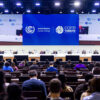
COP31: Johan Rockström Warns of Climate Tipping Points and Efforts to Sideline Science
The world is moving dangerously close to irreversible climate tipping points, making urgent action to reduce greenhouse gas emissions more critical than ever, warns Johan Rockström, Director of the Potsdam Institute for Climate Impact Research. He argues that protecting forests and accelerating emissions reductions must go hand in hand to prevent further warming and preserve the planet’s natural capacity to absorb carbon dioxide.
COP31: Four Nations Pledge $200 Million to GEF as Adaptation Costs Rise
Four countries have pledged or proposed a combined $200 million for global environment and climate funds at the COP31 talks in Antalya, as developing nations press for more help to cope with droughts, floods and rising seas.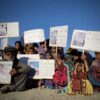
Repression in Balochistan: ‘It’s Terror Against Ordinary People’
The walls of a school assembly hall in Hanover are covered with photographs of Baloch people killed by the Pakistani state. Around a hundred people have gathered for a solemn, intimate ceremony. Candles are lit and flowers are laid in silence.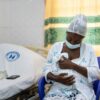
Disparities in Birth and Death
“Thou know'st 'tis common; all that lives must die, passing through nature to eternity.”(Hamlet) Although birth and death are universal human experiences, their timing and circumstances vary considerably within and across countries, contributing to significant differences in population growth rates. These differences also reflect profound disparities between privileged and marginalized populations.
Indigenous Leader Warns Energy Transition Risks Turning Their Territories Into ‘Sacrifice Zones’
Indigenous communities risk paying a heavy price for the global shift to clean energy unless governments involve them in decision-making and protect their ancestral territories, an Indigenous leader from Brazil has warned.
Energy Transition only Works if Development Works
The energy transition is reshaping economic structures across Asia and the Pacific. Where it is managed well, it can unlock new economic growth opportunities. Where it is not, it can trigger inflation and political backlash that stalls reform. The difference lies in whether transition policies are designed with socioeconomic development at their core.
New Working Group Seeks Justice for Critical Mineral Mining Communities
A coalition of African civil society organisations, representatives from the Africa Institute of Resilience Studies (an independent organisation working in research, policy, training and capacity development), and representatives from the Bank–Civil Society Coalition, which brings together seven major regional networks and civil society organisations working on climate and energy, have launched the African Non-State Actors Working Group on Critical Minerals on the sidelines of COP 31 in Antalya, Türkiye.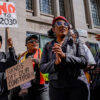
The Legal Path to Autocracy
Zimbabwe’s President Emmerson Mnangagwa, who took over when a miliary coup ended Robert Mugabe’s 37 years in power, has made clear he has no intention of limiting himself to a decade at the top. In July, he signed a constitutional amendment that lengthened the terms of the sitting president and parliament from five to seven years and pushed the next general election back from 2028 to 2030.
Africa Makes Some Gains but Faces Major Setbacks at COP31
Today (November 15) marks the second week of negotiations at the United Nations climate summit in the resort city of Antalya, Turkey.
Time to Home
Somewhere tonight, a family that lost its home to the water is asleep in a school gymnasium. The tent, the blankets and the first meal arrived within hours. But a secure home will take years. Every climate disaster ends with the same question, and few climate budgets have a line for it: where will we sleep tonight?
COP31: National Oil Companies Must Lead Global Shift Away from Fossil Fuels, Says NRGI Expert
The shift away from fossil fuels is made more difficult by the powerful, often overlooked role of national oil companies. These companies are deeply embedded in their countries’ economies and political systems.Next Page »


The Week with IPS

NEXT STOP - SDGs
Tracking global progress towards a sustainable world
Tracking global progress towards a sustainable world
