Tuesday, September 1, 2026



News and Views from the Global South
U.N. Commemorates “Africa Week”
- Despite great progress that Africa has shown with the development of agriculture, communication technology and peace and security, it still faces challenges relating to heavy debt loads, labour market woes and gender inequality which are factors that make African countries less competitive in the global market, the United Nations said at a press conference here.
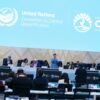
‘’Africa Week”, co-organized by the New Partnership for Africa’s Development (NEPAD), the Office of the Special Adviser on Africa (OSAA) and the Economic Commission for Africa (ECA), is celebrated this week at the United Nations Headquarters in New York, in order to raise awareness to Africa’s development.
Maged A. Abdelaziz, U.N. Under Secretary-General Special Adviser on Africa (UN-OSAA), pointed out that debates on Africa are very important because it will help discussing the struggle to achieve the priorities of the New Partnership for Africa’s Development (NEPAD).
Abdelaziz also mentioned three publications dedicated to Africa’s development which were launched on Tuesday: “Africa’s Decade of Change” published by the NEPAD Planning and Coordinating Agency, the Office of the Special Adviser on Africa and the United Nations Economic Commission for Africa; “Assessing Progress in Africa toward the Millennium Development Goals 2012” published by the United Nations Economic Commission for Africa, the African Union, the African Development Bank and the United Nations Development Programme (UNDP)); and “The 2012 Mutual Review of Development Effectiveness in Africa (MRDE)” published by the United Nations Economic Commission for Africa and the Organization for Economic Cooperation and Development (OECD)).
‘’The launch of these three publications is part of an ongoing process that seeks to keep Africa’s concern us of top the global agenda.’’
The United Nations system and African countries must strengthen their partnership to advance the continent’s economic growth, development and participation in the global economy, the President of the General Assembly said Wednesday.
“Ensuring Africa’s development should be a strategic task for the entire United Nations system,” President Vuk Jeremic said in his opening remarks to the Assembly’s discussion of the world body’s engagement with the New Partnership for Africa’s Development (NEPAD).
‘’Africa remain a top priority of the Secretary General Ban Ki-moon and we are hoping to raise international awareness on African development needs and the issues through this Africa week which started yesterday,’’ he added.
When talking about agriculture development, he also mentioned that NEPAD’s Comprehensive Africa Agricultural Development Programme has so far been signed by 30 countries since December 2011.
Furthermore, Africa has made advances in information and communications technology, particularly in the mobile phone areas, where several countries are in the fore front of pushing the frontiers on mobile phone technology.
On the other hand foreign direct investment in Africa had fallen from $43.1 billion to $41.7 billion between 2010 and 2011 and debt load is one of its main challenges.
‘’The issue of Africa’s debt problem is still a problem for many countries, particularly countries that are emerging from conflicts like Sierra Leone, Burundi and Central African Republic.’’
There is also lot of improvement on peace and security, where ‘’23 African countries would had held democratic election between August 2011 and Mach 2013,’’ noted Abdelaziz.
Ibrahim Mayaki, Chief Executive Officer, NEPAD Planning and Coordinating Agency, mentioned the three main objectives of annual ‘’Africa Week’’, are to discuss NEPAP’s implementation programs, review of the activities and partnership interactions and interact with other actors from the private sector and civil society in order to enhance Africa’s interest on development agenda.
When mentioning that agriculture and infrastructure are the NEPAD’s two main priorities, Mayaki said that ‘’the development of Africa’s infrastructure will be a key instrument in fostering the regional integration, because it will help build internal markets, help create connectivity, which are essential to regional development. ’’
Mayaki also highlighted another of Africa’s main challenge which is the creation of job opportunities for the youth, because two thirds of the population is under 25 years old.
‘’The Arabic Spring was mainly motivated by a high level of youth unemployment,’’ said Mayaki. ‘’To help us feed the debate which is taking place on the post Millennium Development Goals scenarios, we think that the issue of value addition which can lead to job creation has to be inserted in the reflection that will shape the post MDGs. ‘’ added Mayaki.
 Print
|
Print
|