
Sunday, October 18, 2026



News and Views from the Global South
Q&A: Time to Know the Unknown
Interview with Speaker of the Albanian Parliament Jozefina Topalli
- Albania is too often and too superficially described as "a European country little is known about." The issues the nation of 3.1 million is facing on its thorny road of development and towards democracy are also often met with little knowledge and loads of prejudice abroad.
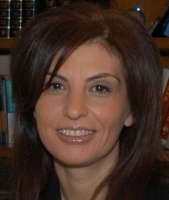
Speaker of the Albanian Parliament Jozefina Topalli. Credit:
Modern, educated and European-oriented young leaders of Albania speak freely on such ambitions, tasks and challenges, stressing that a lot of hard work has yet to be done. Among the most prominent is surely the Speaker of Albanian Parliament Jozefina Topalli, the first woman in this position.
Topalli has headed the 140-seat parliament for two years now.
IPS: Albania has signed the Stabilisation and Association Agreement (SAA) with the European Union (EU) as the first step towards EU membership. What does this mean?
Jozefina Topalli: Signing of the SAA Agreement between Albania and the EU a year ago was perceived by all Albanians as the most important event in the history of Albanian democracy, after long and continuous efforts to consolidate the rule of law and democracy. This opened a new chapter to Albania, that of integration into European structures.
It is obvious that this agreement has as its final goal Albania's integration into EU. We are doing our utmost to perform major reforms in every aspect of life. Each article of this Agreement is an obligation to be met by us, turning them into benchmarks that take us to European standards.
IPS: What does Albania expect from this agreement?
Jozefina Topalli: We certainly expect a lot from this agreement, but this does not imply that everything would come out of the blue. We are not in the emergency stage. We are ready to work closely as partners and we are conscious of the fact that member states expect a lot from us.
IPS: What do the Albanians expect?
Jozefina Topalli: I believe that what Albanians expect now is a solid rule of law. We want to reward the trust placed in us by giving positive tangible results, as well as by offering an altered image to foreigners, an image which is often quite different from the perception that Albanians have of themselves and their country.
IPS: What has been done in that direction?
Jozefina Topalli: We are doing our utmost to offer a positive climate to foreign investors by facilitating licensing procedures and by lowering fiscal taxes. Foreign investments are growing. We have had very important foreign investors who have already started work in Albania, but we are expecting more of them to come and invest in our wonderful seaside.
IPS: Which are the most supportive EU countries in the integration process?
Jozefina Topalli: The process of Albania's integration to the EU is undergoing a very important step – that of ratification of SAA by European member states, that is, national parliaments. The pace of ratification is unique. In ten months, 10 European parliaments like those of Slovakia, Slovenia, the Chamber of Deputies and Senate of Belgium, Latvia, Lithuania, Poland, Hungary, Sweden, Spain and Ireland voted in favour of Albania's integration to EU by ratifying the SAA. Other national parliaments are going through the same procedures and will ratify it soon.
IPS: Are neighbours such as Italy or Greece particularly supporting the negotiation process?
Jozefina Topalli: I would like to stress here that substantial support was provided to us not only from our neighbours, but from other countries, which although geographically distant, were quite close to us in this process. SAA ratification constitutes a great support to us. This encourages us to move ahead on this road. I would like to mention here the assistance of Austria, Italy, Germany, France, Grand Duchy of Luxemburg, and many more.
IPS: How long could the negotiations process for EU membership last?
Jozefina Topalli: We sure hope that this process ends quickly. We know that situation within EU is not favourable at this moment, as with the inner debates related to approval of the Constitution. However, this is not discouraging to us. On the contrary, this gives us confidence to work harder in order to deserve integration into EU; to deserve the attention and confidence of EU member states and convince them that Albania is serious in its commitment to become a member. Declarations of many leaders of EU member states that Europe is not complete without the Balkan countries are realistic and very encouraging for our final goal.
IPS: What are the difficulties predicted on the road?
Jozefina Topalli: We already know that the enlargement process faces hardship. Integration is and must be a process based on merit, and we will do our best to implement and achieve European standards. Our historical identity and European origin provide us with the strength to walk the right course and fill the place we deserve within the European family.
IPS: What are the challenges?
Jozefina Topalli: We have major challenges facing us, like reforms in the judiciary and election reform, zero tolerance fight against organised crime and terrorism, follow-up reforms in the economy etc. These are the priorities we are determined to achieve.
IPS: Along with an unreal image of the role of women in family and society, painted in favourable yet untrue colours in the old times, Albania has inherited problems related to patriarchal and clan organised society. How does the challenge of greater role of women fit into the activities of a parliamentary speaker or the career of politically active women in general?
Jozefina Topalli: I never consider the daily challenge as one narrowly related to woman emancipation and her better representation in a contest with men. A competition is an endeavour for personal representation and it should be treated like that.
IPS: You were not frightened by the fate of your family members who suffered so much under the old dictatorial, communist regime. As a representative of the Democratic Party of Sali Berisha, the former president and current Prime Minister, was it an easy encounter while facing men rivals in the majority electoral system of Albania?
Jozefina Topalli: Functioning through the majority election system is the true reason that the number of women in Albanian politics is lower than in other countries. It is not that this number is considerably bigger in France or Italy, countries with a long history of development and emancipation and historical feminist movements. The replacement of Albania's majority electoral system with a quota system might not be the best solution and the most preferred one, but there is no other solution for the start of women who want to embark on a political career.
IPS: What can or does make a woman a successful in politics in Albania?
Jozefina Topalli: Family tradition, education, political instinct, strong will and charisma are chief helping pillars for a woman to move up the career stages and become a part of political leadership. I would like to say that, at the beginning of my career, I learned to choose my battles as far as their importance is concerned, I learned to focus on the key issues, to face them head on, but more importantly, I learned to see positive elements even in negative issues. I can say with deep conviction that family discipline is one element I will not forget, which helped me quite a lot along the way.
 Print
|
Print
|




